Kirk Wallace – Illustration, Authenticity, and Building a Career in Public
Matt Gregory (00:13) Hello, Pat. Here we are back at the map, Trail Map. How's it going?
Patrick Dyer Wolf (00:18) Hello Matt. The map with an apostrophe.
Matt Gregory (00:20) The map. Yeah. Yeah. This is that podcast where we talk to people about their circuitous paths to amazing destinations.
Patrick Dyer Wolf (00:34) Yeah, but the destination, you know...
Matt Gregory (00:36) The destination is the path.
Patrick Dyer Wolf (00:38) That's right. You got it.
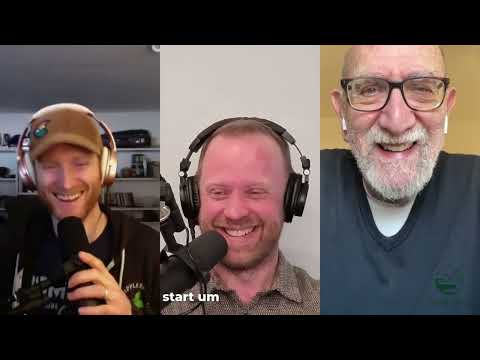
Matt Gregory (00:41) Yeah, I'm excited today we've got Kirk Wallace on the show, who is an illustrator based in Maine and really talented guy. I know that he yesterday had the film crew from the Boston Celtics at his studio. So he will get into that but cool, cool guy. So excited for that chat.
Patrick Dyer Wolf (00:46) Yes. Yeah, wild. sounds,
Matt Gregory (01:07) Yeah, so how's life going for you?
Patrick Dyer Wolf (01:12) Pretty good. got some disease going around. I'll try not to cough on you or anything. You guys have experienced some disease, haven't you?
Matt Gregory (01:16) Okay. Yeah. God, Yeah. Trying to hold out for are you next week is school vacation week. Are you going anywhere? Are you going to be home around home?
Patrick Dyer Wolf (01:29) ⁓We got Mary's parents coming up. We're going to ⁓ Jim Thorpe, Pennsylvania next weekend. You ever heard of it? It's a cute little town. That's the place. Look it up.
Matt Gregory (01:40) Nice. I've never heard of Jim Thorpe, Pennsylvania. That's a place? Wow. That's cool. That's, that's, ⁓ I'll have to go there at some point.
Patrick Dyer Wolf (01:52) You don't have to, but it's cute. You should check it out.
Matt Gregory (01:54) Okay, okay. We're going down to ⁓ Wonderful Florida. ⁓ We will be in Orlando. Heejin's mom has a place down there, so we're gonna visit her and we're gonna do a couple days, do a day at Hollywood Studios and a day at ⁓ Universal.
Patrick Dyer Wolf (01:59) Classic. What part? Heard of it. Wait, what's Hollywood Studios?
Matt Gregory (02:23) It's one of the Disney properties. And that's a fun one because my son, Will, is a massive Star Wars fan. And so ⁓ we'll be going to the Star Wars experience. It'll be really fun. We've been already, but it's a second go. ⁓
Patrick Dyer Wolf (02:26) ⁓ Sure. That's going to be great. Okay, we have not been with the kids. Only, only... It's, it is, is it ever.
Matt Gregory (02:47) It's a thing. It's a thing. It's a thing. Yeah. Well, I'm sorry about the disease. hope you guys feel better soon.
Patrick Dyer Wolf (02:56) Thank you. I hope you remain well.
Matt Gregory (03:00) Yeah, thanks. have been, Will and I have been holding down the fort this week. Heijan traveled out to Seattle. ⁓ And ⁓ yeah, it's your friend. ⁓ yeah, shout out Jess and Pat. Another Pat. No, they're out there in Seattle. ⁓ So anyway, I guess let's jump in and chat with Mr. Kirk Wallace.
Patrick Dyer Wolf (03:07) Ooh. Love Seattle.⁓ I thought you were... Yeah, nice.
Let's go Kirk.
Matt Gregory (03:34)
Kirk Wallace, it's great to have you on Trail Map. Thank you so much for spending a little time with us this morning.
Kirk Wallace (03:41) Thank you, Matt. Thank you, Pat.
Matt Gregory (03:44) ⁓ so I know, ⁓ you know, we've talked a few times, I know you're, you're up in Maine, right?
Kirk Wallace (03:50) I'm up in Maine, I'm in the woods. I'm not in Portland like everybody else is. I'm about a half hour west.
Matt Gregory (03:53) Nice. Nice.
Patrick Dyer Wolf (03:56) was gonna ask, you, half hour west of Portland, okay.
Kirk Wallace (04:00) Yeah, it's a quick hour. It's just a little, it's an easy one road to get over there and it's nice. Uh, but it definitely is, uh, I'm in the woods. I am out in the back of a barn. Um, and I've refinished it to be a studio and it's, uh, today's a warm day at like 30, 40. I'm, I'm nice and toasty in here, but you know, sometimes it's tough, but, yeah.
Patrick Dyer Wolf (04:24) I mean, I'm in New Jersey and it's like 30, 40 degrees sounds like t-shirt. It's just this winter has been...
Kirk Wallace (04:30) Yeah, dude, was like this negative seven stuff is like not fun.
Patrick Dyer Wolf (04:35) Yeah, especially when it's like negative seven and then the feels like negative 20 or whatever. It's like, I don't know. It's like they send Frank out and it's like, Frank, what does it feel like? Yeah.
Kirk Wallace (04:39) Negative 100, yeah. They need to stop with this feels like stuff. Yeah, the feels
Matt Gregory (04:47) Yeah
Kirk Wallace (04:48) like thing is just like a slap in the face where it's like, I'll let you know what it feels like. I just, it's fine. Like I just tell me what it is. It's weird. I'm not like going to the weather channel to get an opinion. I agree. There's, I have a hard stance on that.
Patrick Dyer Wolf (04:53) Yeah. Right.
Matt Gregory (05:00) I can feel it myself. ⁓
Kirk Wallace (05:02) Yeah, what the
Patrick Dyer Wolf (05:03) Yeah,
Kirk Wallace (05:04) hell? And like, yeah, that's a very subjective way to do the weather. And it seems really weird that that is the way it is. But ⁓ yeah, it's been cold. There are days out here where if it's cold enough, it's like I'm burning pellets and it's not, I'm like, it's pointless. Like it's just not getting up to temperature. Anyway, today's a very good day for all of those things.
Patrick Dyer Wolf (05:04) I'll tell you.
Matt Gregory (05:22) Yeah, we're happy to catch you on a good day. This interview could have taken a really bad direction if, yeah.
Kirk Wallace (05:24) Yeah, you don't want to see me otherwise. Yeah, it'd be bad.
Patrick Dyer Wolf (05:29) mean, anything can happen, we'll see.
Matt Gregory (05:30) Yeah, it's true. It's true. Hopefully we won't screw that up for you. Well, yeah, it's great to be in touch with you. I know you're an illustrator and animator, ⁓ and you run a studio. And I believe the studio part is called Bone Haus but maybe you can sort of fill us in. What is Bone Haus? What do you do? Tell us a bit about yourself.
Kirk Wallace (05:51) Yeah, yeah, Bone Haus is really well, it's evolved but I've been I left my full-time job in 2015 so I'm ten years deep at least and Bone Haus at first was just sort of a studio moniker for myself just so that I didn't have to feel like everything was about me and it was just nice to have like a brand that I could kind of hide behind less for the posturing of like pretending I'm a larger organization but more just because You know, the same way we like to invent stories and worlds and cartoons and stuff like that. It was just fun to kind of have a brand making a logo of a Bone Haus rather than a Kirk Wallace logo, which is more exciting to me. And I think over the years it has evolved a little bit into just I've worked with friends as much as I can. And so I think if there's a studio aspect to it, it's just the ability to work with different copywriters, photographers, 3D designers, animators ⁓ and another. Illustrators and all that type of stuff. So yeah, I mostly do commercial work mostly whimsical playful kind of character driven stuff in in the advertising and branding space probably most often And yeah, and I think the work is if if I had to describe it, it would be probably delightful and kind of charming and whimsical But usually kind of grounded in reality and intended to sell a product usually.
Matt Gregory (07:19) Yeah, well, mean, I think Kirk, I know you're a humble person, but like you've worked with some amazing big companies, know, Adobe, Apple, Google, Disney, big, big companies. ⁓ So it's clear that like, ⁓ you've been found out for your skills. And Boston Celtics, yeah, you had some Boston Celtics folks with you yesterday, we understand.
Kirk Wallace (07:40) I'm
Patrick Dyer Wolf (07:41) Boston Celtics. Can I say that? Is that secret?
Matt Gregory (07:49) That's very cool.
Patrick Dyer Wolf (07:51) Can we do an Easter egg thing where we have to mention the Boston Celtics once in every episode? We're good for this episode.
Matt Gregory (07:58) As a Celtics fan, I'm good with that.
Patrick Dyer Wolf (07:58) We did.
Kirk Wallace (08:00) Yeah, easy. And I, someone that won't be on the future episodes too often, I would love to throw that into your court to have to deal with.
Matt Gregory (08:06) Yeah.
Patrick Dyer Wolf (08:07) Nice.
Kirk Wallace (08:10) Yeah, I've been really lucky with the career so far. I think a lot of that has to do with timing and all of those things and all the other stuff that I don't like to mention of hard work and that. But yeah, I often do think about starting a career today versus starting a career in 2010 is just such a different world. And I'm, I think, happy to have already done it and not have to start it off the ground today because that is scary.
Patrick Dyer Wolf (08:39) Can you say what, I mean I know generally what you're referring to, but can you talk a little more about that? What does that mean?
Kirk Wallace (08:46) I think things like in my world, like social media and getting your work seen in maybe 2010, 11, 12, even, you know, 15, 16 was just such a different world than getting your work seen today. And for context, so much of the work that I receive is just from basically me sharing my work online, twiddling my thumbs, and then waiting for someone to email. And it has worked historically, again, because the snowball. has been rolling for so long because those early days of getting seen, I think were easier to get your eyes on work. And today I think it's also equally as beautiful and amazing that you can get discovered algorithmically, that you can have zero followers and pop off and then Nike sees a piece that you did and they can hire you. But at the same time, it is just so much more noise online and just such a crowded space that... ⁓ It's just a topic that I think and talk about a lot because students often are asking because they see my story of like, I just posted my work online and then, know, Patagonia came along and it's like, it's not that easy. ⁓ So yeah, that's kind of what I mean around it.
Patrick Dyer Wolf (09:56) Yeah, I think it's similar in the music world. It's like there's democratizing technology where it's like easier to get your feet off the ground, on the ground, get off the ground. But then it's how do you distinguish yourself and make yourself ⁓ stand apart or get into the mysterious algorithmic superhighways. I agree is.
Kirk Wallace (10:09) your feet off the ground. Mm-hmm.
Patrick Dyer Wolf (10:24) It's
Kirk Wallace (10:25) Mm-hmm.
Patrick Dyer Wolf (10:25) both exciting and daunting. Frustrating.
Kirk Wallace (10:29) Exciting and daunting is exactly what it is. And for those that see success with it, it's even more exciting, but it's easy to lose track of that. It also to me, know, whenever I talk to Matt around like my strategies with business and stuff, I'm like, I don't think it's a scalable, like, you don't want to be a flash in the pan that just pops off on TikTok and then all of a sudden, and great, maybe you can parlay it into something, but also like there's definitely something to be said about slow and steady. And I think I'm in this weird world where I'm a little bit slow and steady, but I'm also very much a product of like earlier internet. And you know, when people ask me like, how do you like what do you use your outbound marketing or your email? Like I'm like, I don't I don't know. I don't know. And I would never advise anyone to take this path because I'm just like hacking it together and hoping for the best and waiting for an email to come in. And then when they don't come in, I'm like, I don't know how to reach out to people because I've never had to do it yet.
Matt Gregory (11:24) I think I'm sure right now, Pat, so Pat is ⁓ in a band. ⁓ He's one of the two founders of this band and I'm sure you can relate, Pat.
Patrick Dyer Wolf (11:38) Big time, mean like, yeah, we, I think we're, I don't know, we appear similar in age, I don't wanna, I think, oh well I'm 40 so, one day you'll know what it's like to be old, to be old, I've got 38.
Kirk Wallace (11:46) Yeah, I've got 37. Okay. 38. Sorry. I'm there. was born in 88. I feel like also, sorry, I feel like we didn't just say our eight, like the future needs to say the age of the year that we're born. Cause that never changes. Why do we anyway? So I was born in the eight.
Patrick Dyer Wolf (12:01) Yeah. Right. 80.
Matt Gregory (12:04) That's a good move. Yeah, we could just change, forget the number. Yeah.
Patrick Dyer Wolf (12:04) 85. I'm 85. Right. Right.
Kirk Wallace (12:08) Yeah, right? Like, why are we chasing a number when we have like a static number?
Patrick Dyer Wolf (12:11) Right. Yeah, we had, I guess, some luck in the same time period you're talking about. I agree that starting now, I think I can see both sides of it because I have music of my own that I'm trying to put out into the stratosphere. it's just not doing, I assumed like, oh, it'll just, some people will see it. And it's like, no, not necessarily.
Kirk Wallace (12:37) No, no, can just absolutely not happen.
Matt Gregory (12:37) Yeah.
Kirk Wallace (12:39) Yeah, there's like.
Patrick Dyer Wolf (12:40) I was also talking to my first piano teacher actually who in his 40s moved to Montana and started the media arts program at the University of Montana in Missoula. ⁓ We should have him on the show ⁓ to talk about his path, he ⁓ spent the second half of his career at a university and his third act is trying to ⁓ sell his media, music, and web savvy to clients. now he's 70, and he's like, I've never had to cold call people, and it sucks. And it's like, ⁓ yeah, regardless of the industry, I think it's...
Kirk Wallace (13:21) Mm.
Matt Gregory (13:38) an uncomfortable, uncomfortable feeling.
Patrick Dyer Wolf (13:40) Yeah, it's uncomfortable and it's just like, it feels like dead end city. you don't, know. Yeah, I'm scared of it too.
Kirk Wallace (13:49) Yeah, I'm scared of it. I'm scared of the like right now like and part of me is I think trying to do a little bit of that lately with like shifting slowly to more content like me being more of the product of courses, the Skillshare classes or YouTube videos or partnerships with brands. And that's scary because it's a new thing and like I I know I can do the one thing well and if it's already working well, then why change? But then like my passion is driving me towards something that's maybe a little bit even more independent, like maybe more artist rather than designer or something. And ⁓ I'm taking baby steps because to take like a large step just seems scary because yeah, you might try to upload a YouTube video and then literally zero people can see it. Like there's a perfectly normal world where you upload something and no one sees it you're like, Yeah, I guess I'm starting over here. And then you're like, maybe I'll just go back to doing what I was doing.
Patrick Dyer Wolf (14:46) Yeah.
Matt Gregory (14:46) I just want to pause here for a sec, right? Because both of you guys have made it, right? Like both of you guys are, yeah, absolutely. No one told you?
Patrick Dyer Wolf (14:54) Read ahead.
Kirk Wallace (14:56) Right. I do agree, Matt, because I would never want to play coy with privilege of like, yeah, I am very fortunate. And I do feel like in many ways I've arrived. I'm still terrified every single day. But yeah, I think it is important context for the listener of like.
Matt Gregory (15:07) Yeah. Yeah. Yeah, well, no, I think it's important to acknowledge that stuff, but also to recognize that these questions, these feelings of insecurity, imposter syndrome, like, ⁓ I gonna cold call? Am I gonna put a YouTube video and get no views? They don't go away. So it's not a good measure of whether or not you've achieved anything, because here are two people that are both doing creative things that have made it.
Kirk Wallace (15:22) Hmm. Hmm.
Patrick Dyer Wolf (15:32) Yeah.
Kirk Wallace (15:41) Yeah, and it's scary every single day. And I know that like Grant Morrison, like these like incredible comic book artists that are just like the same thing every time they get down to the table and they start drawing, they're like, I have no idea. I don't think this is good. I'm not doing good. And it's like, you literally are the capstone of what comic books are. so, yeah, and I think musicians probably same sort of situation, like every musician and probably most creatives and artists and stuff. just like. satisfaction. That's why I think it is important communally for us all to celebrate and appreciate that Matt and happy to see Pat sort of take some of that in of like yeah it is good to celebrate it sometimes because we won't celebrate it alone in our studio that's for sure.
Matt Gregory (16:20) Yeah, no way. All right, well, take us on your career trail map journey, Kirk, because I know you graduated with a degree in computer science, and that's not what you're doing now. So what were you thinking when you were on the sort of computer science path?
Kirk Wallace (16:42) Yeah, I mean, you're like 12 years old or whatever when they ask you what you want to do for the rest of your life, right? You have to like, I still think about like applying to colleges and getting like student loan. Like I had no idea. And my parents, unfortunately, like, you know, bless them to hell. it like, they just didn't know. Like none of us, we didn't know, like we didn't have money. We didn't know how to apply to things. And just I remember getting through college and I can't believe that I like I'm actually in. So, yeah, so I'm going point.
Patrick Dyer Wolf (17:06) Rest them to hell is a great phrase. I'm gonna save it.
Kirk Wallace (17:08) Yeah, yeah, just I had to balance it out because there's no blessing anyone ⁓ It was I I liked computer games and I figured okay. I'll do computers. I'm told this is 2000 2004 or five kind of world where it's like, okay, let's do computers. I like computer games. I guess I'll be a computer engineer and started that and went to a pretty, local school that just so happened to have a really good computer science program, but that was total happenstance. and it was at the end of that career that we had to do a web project where it was really supposed to focus on like database design and like the nerdy part of websites. And I spent all my time like making the colors and the buttons and the fonts and being like, I think that's probably what I want to do. I really like graphic design. And then I think just like I shotgun graphic design at like right after I graduated, I started going to some of these ⁓ events like markets, art markets and just like learning about Adobe Illustrator and like the different ways that you can do it. And I just got obsessed with it. And I think And I can pause there because there's more to that story, but that was kind of the transition period right after college. It like, oh, I'm really obsessed with this. Now how do I go all in? I do remember the mindfulness of like, I want to do this. I'm going to figure out a way to just get obsessed with this. I want to be the guy that has my pictures at the art market selling them for 20 bucks. And obviously I've pivoted many, many more times from that. that was a point when I was like, whatever, 22 or 23 or something where I was like, that's what I want to do.
Patrick Dyer Wolf (18:45) This could be a boring or irrelevant question, but I'm just always curious. What has been your path of software that you use and devices that you use and technology? Do you draw things and take a picture of it? Do you use a little stylus? Do you still use Illustrator? Just what things have you used?
Kirk Wallace (19:04) Yeah, yeah, no, that's I think it's a great question. ⁓ So I yeah, I've all the other thing is like I had a Wacom stylus way before I had any business having one because my brother worked at Best Buy and could get them 50 % off. And so I was like when I was like in a bird playing Counter-Strike 1.6 on a four by three aspect ratio Wacom screen. And you know, this must be 2002 or three or something. And like, I hardly drew on it, but I just like, I like that I could draw on it sometimes. So I've been with them forever. ⁓ so yeah, I, I still draw on a big tablet that's here on my desk in front of me. ⁓ but I'll also draw on an iPad. Like my sketching usually happens wherever it needs to happen. And then, yeah, I'll take a picture of it or scan it and get it into the computer. And then I work a lot in Adobe Illustrator, which for anyone that doesn't know it's, ⁓ like a vector based software. So you're. It's very shape driven and it's infinitely scalable. You can zoom all the way in and it kind of for me ends up being like cutting pieces of paper and arranging them around almost like on a refrigerator or on a whiteboard. And you can move them and rotate them and assemble them like Legos. And then I'll bring them usually into Adobe Photoshop where I do a lot of like digital painting where I can add a lot of the texture and shadows and lighting if I want to do that. And then if I am animating it, it'll usually go into After Effects or sometimes they'll get just frame by frame animated in something like Photoshop. ⁓ So yeah, that is the, and that's been the same forever. And every once in a while there's a new program that comes out and I'm like, damn, I should try to learn Moho. And then I'm like, I think this is when I realized my age comes in or I don't know if age is synonymous with busyness, but anytime I try to learn something new, I'm like, damn, I'm not as good at learning new things anymore lately. ⁓
Matt Gregory (20:51) Totally.
Patrick Dyer Wolf (20:51) It's just that now you're so adept at the Adobe Creative Suite. It's like anything else is just quicksand. ⁓ God.
Kirk Wallace (20:56) Yeah. yeah
Matt Gregory (20:59) But Adobe has done, I mean, a pretty remarkable job of staying relevant across a lot of different software platforms, right?
Kirk Wallace (21:05) Yeah. Yeah. 30, 40, 50 years or whatever too, right? Like they've been around. ⁓ Yeah, and I'm happy to have them be, you know, replaced and they will and they do, but it's just like, yeah, it's working. It's working, it's working. And I'm at a breakneck speed where I'm like, I don't have a ton of like, I gotta get things done.
Matt Gregory (21:12) Yeah. Yeah. Yeah. They tried, I mean this is, ⁓ we don't need to spend too much time on it, but they tried to buy Figma too, right? And they didn't end up acquiring Figma, right? Yeah.
Kirk Wallace (21:34) Yeah, with a monopoly. Yeah, the European Union basically marked it as a monopoly and didn't allow it to happen. ⁓ Yeah. One thing that was happy that like at least Europe showed up for that. can we stopped buying things, like do we need conglomerates to just like have one monopolized entity to own everything? Like when can we stop? So thank goodness.
Matt Gregory (21:41) Yeah, interesting.
Patrick Dyer Wolf (21:43) Yeah, the European... Yeah, right.
Matt Gregory (21:59) Totally. Totally. in addition to like your like going out and learning things about these software platforms, like it sounds like you also, you know, would put a lot of your artwork out there. And I guess I'm curious first to ask about like developing your sense of style artistically, because like if you go to Bone Haus even though you're working for a lot of different clients, It feels very cohesive in terms of the types of work you tend to do. I'm just curious about your, did you always have that sort of aesthetic or is that something that's sort of been developed?
Kirk Wallace (22:41) It's elusive. It's yeah. So like you said, the next step was learning a bunch of stuff and then sharing a bunch of stuff and posting it. And there's that next part of the story. I, know, it's fun because you can look back at 2011 or 12, like my first post on Dribbble and Dribbble for anyone that doesn't know, it's just like a social media. It was like Instagram for designers a long time ago where you would kind of share what you're currently working on. it was really
Matt Gregory (23:05) ⁓ Three B's, right?
Kirk Wallace (23:09) Yeah, exactly. And it was really geared toward like designers, designers, designers, instead of just like you weren't getting pictures of pets on there kind of thing. so I don't know, the style is really one of those things where it's just like the less you think about it, the better off you are. I really just can bluntly put it that way. ⁓ You know, we're inspired by the things that we enjoy growing up, whether it be hardcore music or skateboarding or this, that and the other thing. the wider you can go and then you put it through your lens and when you start your copying and stealing without really fully realizing it and then you just hope that you continue to like authentically craft whatever that looks like. And I will say only because everyone says it now do I believe it but I never really, I always worried where I was like, man, I feel like all these pieces are looking fragmented and look different from each other and I have like four or five different things. ⁓ And so. you know, I think it's one of those things that's really hard to see other than, you know, I've been told that enough for me. Yeah, I guess I've got a pretty consistent style. And I think as I've evolved, I've just become more of a curmudgeon where I'm like, this is what I do. And this is all I know how to do. So I'm just going to keep doing that. And it seems to work. also find that the more I dive into specifically what I want to do, sometimes it takes a year or two, I'm starting another story. And so I'll stop it a little bit. But it's like. Yeah, the more you narrow into what you enjoy, I have found that you usually get rewarded for that authenticity and uniqueness. But that's scary too. Scary is the theme of the day.
Matt Gregory (24:38) Mm-hmm.
Patrick Dyer Wolf (24:40) People know what to expect maybe and they seek it out at a certain point.
Kirk Wallace (24:45) I think so. And I think the world is big enough and the internet is vast enough that you can get hired. You know, as I always say this, I've like, look, there's people that like want to look at pictures of feet on the internet. And like, that's like, you know, that's a narrow lane. And but like, you know, there they are. And so I don't think I'm. Yeah, right. Well, yeah. And there's create like clown feet. Like you can just keep going narrower and narrower and you will always.
Matt Gregory (25:03) Maybe not that narrow.
Kirk Wallace (25:10) And same with, know, genres of music and stuff like that. And I think similarly, like I'm not making anything that extremely out there where like I can pretty much stay in my like wide, narrow lane. And there's always an opportunity for a brand to want to pay me to do it. I think also because commercially the world has gotten a little bit different where Nike can hire you, even though you might not fit their big brand aesthetic, you might be hitting great for they might be doing a kids camp in, you know, Boston or something. And they want something really whimsical. that needs to be 20 % Nike, but also it can be really whimsical and childlike, even though that doesn't reach their larger corporate brand, I guess.
Matt Gregory (25:48) Sure, yeah. It seems like there's like ⁓ this relationship between like you as an artist putting stuff out in the world online through these different platforms. Like we talked about Dribbble, ⁓ I think like even earlier like ⁓ Tumblr and you so you put that stuff out in the world and then you've been discovered that
Kirk Wallace (26:07) Tumblr.
Matt Gregory (26:14) I mean, that's we talked about this a little bit before the episode started, I think, but there's sort of a push and a pull situation.
Kirk Wallace (26:22) Yeah, it's been frankly the only way that I've been discovered has been just sharing work online and I can pinpoint certain projects to certain like, you know, certain personal pieces that then ended up becoming large projects. And then those large projects I know, you can track it like a web of like when I did this three months later, they saw it and they hired me for this. then that project was a flagship project for me that got me four other projects. And you can kind of almost string them along. all the way from like 2012 to today where like the project I'm doing today kind of still feels somehow connected to a personal piece I did in 2012 or whatever.
Matt Gregory (27:01) Yeah. So part of that is relationships, right? mean, building relationships with people and companies and
Kirk Wallace (27:04) think so. Yeah, yeah, people especially. I think I'm, yeah, I'm always on the edge of like, you know, we have a mutual friend named Adam Danielson, who is a fantastic designer, who I think is on the other end of the extreme where he's like people, people, people, people, and he doesn't share much online. And I would feel like I'm almost on the opposite end. So compared to someone like that, I feel like I'm not a connections person, but I think I am a community person. But I don't know that I'm like, I'm not as handshaky. And I don't know that I work with this. I don't know. Also, it's changed. The last couple of years, I've really dived into having good relationships with clients, and it has rewarded me a lot. think the first 10 years I was doing this, I was just more of like a hired hit man where I would like do a thing and then probably never work with them again. And so I've tried to consciously, yeah, be more of a people person.
Matt Gregory (27:57) Mm-hmm. Yeah, so I think, again, I think.
Patrick Dyer Wolf (27:59) schmoozer.
Kirk Wallace (28:00) Of course. Big time.
Patrick Dyer Wolf (28:03) All right.
Matt Gregory (28:03)⁓ schmoozing. I feel I have such mixed feelings about it because a lot of people will be like, Matt, you're so good at connecting with people. But like my hell is like a cocktail party where I don't know anyone. I'm like, just like, I don't want to be here. Like, it's too uncomfortable.
Kirk Wallace (28:20) Yeah.
Patrick Dyer Wolf (28:22) I think there's
Kirk Wallace (28:22) Yeah.
Patrick Dyer Wolf (28:23) some kind of yin and yang thing going on with that because a lot of people I know will say that they really hate that type of thing but are good at it. It's the burden. It's the cross.
Matt Gregory (28:32) Yeah, yeah, they're motivated by crippling, crippling anxiety or something. Yeah, yeah. So yeah, and I think again, before we started recording today, we were talking about how much the illustration landscape has shifted and like how much harder it is to get discovered. ⁓
Patrick Dyer Wolf (28:40) Yeah, some cocktail of emotions and skills.
Matt Gregory (29:00) today. So I guess just for somebody that's trying to build an illustration career today, what would you recommend? What would you say to them?
Kirk Wallace (29:13) I think certain things change come and go, right? Trends come and go and even communication styles come and go. And I think there are certain things that are consistently solid that don't go out of style. And I think that's authenticity. I think that's transparency. I think that's trying to have some sort of a value, whether that be, you know, you're the person that's really loving and sweet or really, you know, humorous with the way that they present their work. But there is a meta level to the way that you share your work that is very important that people don't want to participate in, which is totally understandable, right? Because we all think our artwork should speak for itself and be hard for itself. But I think if we liken it to music, right? Like the live performance has always been a huge component of what makes a band something that people love and become diehards for and become sticky and viral or whatever the term that you want to use for is. Like the way they look, the way they perform, the way they do this, the way they do that, the live show versus the studio recording. And I think similarly with visual artists, everybody wants to just be able to just say, this is my art and that's it and hide behind the art and that's admirable. But yeah, I think stepping in front of your work is really important. Not only from a, it's just a huge amalgamation of like, it makes the work more interesting, therefore it gets more likes, therefore it gets in front of more eyes. But at the same time, I think it also, helps show art directors that you can work and you're personable and that you're fun to work with and that you can take direction well and just like the more thoroughly and richly you can share your work, I think the better off you are. Cause just images are everywhere. It's just like, forget about it. Like it's just a no, it's just like all we do is see images all day. So, and again, I'm not saying like, here's how you stand out like from like an advert by like having a bright color. or even, I'm not even really speaking, I think to a brand necessarily. It's just more just like people wanna connect with people. And I think that has changed over the years in how you do it, whether it be TikTok or Tumblr, but I think the through line is definitely authenticity. Yeah.
Matt Gregory (31:20) Yeah.
Patrick Dyer Wolf (31:21) I to me, one of, I love that answer, one of the clear follow-up elephants in the room is like AI is now here. I'm just curious how that's affected you and how you think about it and yeah.
Kirk Wallace (31:35) Mm-hmm. Yeah, I mostly don't pay attention to because it doesn't interest it doesn't excite me in any way. It can only depress me if I want it to, obviously. And it Yeah, totally. No, and I wasn't trying to bail out of the answer. But I'm like, ⁓ I mostly ignore and I agree. It's think it's doing a bunch of things. I think it's making people level up, right? It's eliminating a lot of low end jobs of if I were like a
Patrick Dyer Wolf (31:54) Sure. Or like, it threatened your work? Yeah.
Kirk Wallace (32:13) you know, respectfully photo retoucher or ⁓ somebody that just did technical packaging to, you know, get it preflighted to be able to make sure it prints really well. Those things are more in danger. So I think it's made everybody chopping out a little bit of that lower entry stuff. It's making people kind of like choke up on their bat a little bit, get more creative. Those things are probably good and healthy. Maybe, I don't know, but ⁓ it is a thing. At the same time, I do think I'm barely ahead of whatever that quality wave is of like I'm still riding the like I'm kind of bespoke or artisanal or you know those types of things and I can I think I also have ideas about how this will end up rolling out ⁓ but I think pricing, you know, is a harder thing now too, because people are more willing to spend, you know, 10 bucks for a chat GPT thing. And so it's disturbing. I think I felt the disturbance of it, particularly 23, 24 a lot. then again, I'm a tiny little, I don't need a ton of money to be successful for myself. Like if I were running a studio with 10 employees, it's scary, but I'm just like. I need a couple clients that are gonna pay me enough that I can get lucky with it. ⁓ This is kind of a non-answer all around, but like, I think it's affecting it. ⁓ And I think at the same time, I don't know if it's today or in five years or sometime, but it's gonna have that same sort of vinyl swing of people wanting to get back to, know, people are gonna want more with humans more than ever. People are gonna wanna see the imperfections more than ever. And people are gonna wanna like connect with humans. more than ever. And it's not it's not going to take us long for people to be like, wait, this is actual hell. And the other thing is like, no, I've never heard I have not heard a single man maybe it's because I'm in a really small like echo chamber. I've never heard anyone be like stoked on AI. And like, that's really I love just prompting chat GPT for images. And like, know, that's happening. Yeah, I guess there are people out there. But I'm just like, I guess I'm so insulated from them that I'm like, I really don't feel the threat of it.
Patrick Dyer Wolf (34:09) The people are out there.
Matt Gregory (34:18) Wait, Quick pause here. Vinyl swing is, did you just coin that or is that something that...
Kirk Wallace (34:25) I don't know. that's that's like, I find it.
Patrick Dyer Wolf (34:26) Yeah, I mean, we, okay, I love that. And also, are we in the like 80s moment of like new synths? And then people are gonna be like, wait, no, no, guys, like we need guitars and drums. And then it's gonna be like, but the synths are cool. And then it'll be like vintage AI, you know, techniques or something, I don't know.
Matt Gregory (34:29) because I
Kirk Wallace (34:35) Right. There's total potential for that to happen. Yeah. And yeah, I think I was taking pendulum swing probably and then thinking about vinyl and connecting with Pat a little bit as well. Maybe it vinyl swing came in. Yeah.
Matt Gregory (34:55) I love that. I love that term. I love the vinyl swing. Yeah, that's a beautiful thing. ⁓
Patrick Dyer Wolf (35:03) mean, there's always like reinvention and reinterpolation of styles and genres and things. Like there's a sine wave thing and then there's like a bigger wave and there's irregular waves and things are always being mashed up in different ways to create like what is happening now. And I think it's just in most, if not all industries, it's just kind of an intimidating time for, as you said, the lower echelon of people that work. in whatever industry you're talking about, but also just the like, it's never been at this point for like, you know, creative, the creative industries, like lawyers, doctors, it's just like, you know, it's the, and this has been.
Kirk Wallace (35:44) It only comes with creatives. Like, why can't we just replace lawyers or some or like CEOs? Like, which
Matt Gregory (35:51) I mean, lawyers are in trouble.
Kirk Wallace (35:51) robot is going to be a CEO? Yeah, yeah, that makes sense. That's fair.
Patrick Dyer Wolf (35:53) They are. are. it's like, you know, there's, it's just, I don't know. It's, it's just an interesting slash frightening slash I don't think we thought it out that well time, you know, like, yeah.
Kirk Wallace (36:07) Yeah, that's for sure. We haven't thought it out. It is I think breakneck speed is the biggest fire component of it of like it is it is too fast for it to be mindful and when you don't have mindfulness, it's usually not good.
Patrick Dyer Wolf (36:17) Yeah. Right.
Matt Gregory (36:19) Yeah, I think there's just so much personality and I think this actually segues really well. I'd like to talk a little bit more about what influences you and your style. And like, I'd love to hear more about like where you're sitting right now, like the physical studio space where you're working in Maine. Could you tell us about it?
Kirk Wallace (36:39) Yeah, sure. Yeah, I so I used to be in a big space in Lowell, Massachusetts. There was like an old paper mill that they converted and it was shared space and it was really lovely and big windows and I liked it, but it was not my own. And when we moved, we were my I was a hawk for any time when we were looking at a house, we looked for years, years, years. We looked like in the worst time, you know, pandemic type of thing. ⁓ And every time we'd go to a house, we'd look and I'd be on a hawk mission, like Hawkeye to find a studio. And when we came into this, there was this big, beautiful barn and I really loved it. And then there was this room in the back. this is like tat, this is like, there's a hayloft above me. And then this is kind like a built-in space under the hayloft. ⁓ And I looked, I took one peek in here and I was like, we'll just throw a match in there and just burn. Like it was such a mess. It was a disaster. And I didn't see a vision for it at all. And then I started chipping away at it in the middle of November when we moved in. I was like, wait a second. started ripping up the floors, started pulling all this stuff apart and seeing it and understanding that there was maybe bones to make something. And ⁓ I have before and after photos. I'm really proud of what I did because I'm not handy traditionally at all. I never knew we grew up in a condo where I wasn't allowed to put a tack in the wall. Never had a hammer. Never did not do any of stuff. And so I learned how to insulate the whole space. I put the ceilings up. I put the lights in. I did everything to it. And I'm like so stoked on how it came out and
Matt Gregory (37:55) Wow.
Patrick Dyer Wolf (37:57) Dang. Did you YouTube it or what was your approach?
Kirk Wallace (38:02) I did, I like hardly document. I have a bunch of like random, ⁓ yeah, yeah, yeah, gosh. It just was YouTube. It was just YouTube, YouTube, YouTube. And even I probably should have leaned into like friends more because it turns out a lot of people know how to do these things. Cause they all grew up with at least ⁓ a, I call a screw gun. And apparently other people call it drill of just like, I'm like, that was, but it was, it was awesome. And it was very much like a good meditative time. It was freezing, but. ⁓
Patrick Dyer Wolf (38:05) No, no, mean to learn what to do. Yeah,
Kirk Wallace (38:31) It was nice for me to really like fully cleanse this space and have it be my own. And the roofs are not, the ceiling's not as high as it was in Lowell. And I really missed that and the big windows. And there's a lot that I miss about it, but there's like no denying that this space is very much my own. And the other irony is that like, I basically just work on a laptop on a desk like all day. Like I'm not like an artist where I'm like throwing paint all over the place. It's like mostly just the space to like feel inspired, I suppose. ⁓ And also tinker and like. Every day I'm out here, I'm like, you know what, maybe I should do this or that and like start messing with things. So it's, I think it's just sanctuary kind of thing. And you know, there's books and toys and stuff all around me that I've just collected for many, many years. ⁓ But yeah, it is funny because I am basically just on a laptop all day clicking on a mouse.
Matt Gregory (39:20) Yeah, it is interesting, like the modern office, like the laptop is such an anchor. ⁓
Kirk Wallace (39:24) Yeah. And like it's more important to put the fun things behind you than in front of you because you're going to be on calls so much. You're like just trying to impress. It's more for them than for you.
Matt Gregory (39:31) Yeah. Yeah, yeah, I want to talk. I do want to talk to about like all the different content that you record there. ⁓ Because I think that that's that's interesting. But like before we leave your style, like you mentioned skateboarding. I think you also have a dog. Right. So tell us a little bit about like Kirk outside of work. Like what are you what are you into?
Kirk Wallace (39:54) Okay. Yeah, yeah, I grew up in the skateboarding world and like the kind of alternative, like hardcore punk scene, ⁓ which I think also brought me to a lot of like, you know, political activism. And I also grew up with three older brothers that were 10, 11 and 13 years older than me, half brothers. So, and they were all very, you know, so they were right in that world of showing me, I got to skip a lot of. cringey stuff because they'd be like, no, no, no, no, you're gonna listen to this instead of that. Which also robbed me a lot of some of the cool naive stuff when you're a kid too of like, you should be able to enjoy some of these less cool things, but it's never been a big problem for me. they fast tracked me a lot on style and influence and like, and I just so happen to have one brother that was really into hardcore music and then another that was really into hip hop and then another was like.
Patrick Dyer Wolf (40:30)Thank
Kirk Wallace (40:52) really into ska and so I got this like perfect triangulation of like multicultural experience inside of one very white family which was really good for me too and and then skate you know that comes with skateboarding comes with ⁓ all of the things that just I think added up and I had really great loving parents like those things I think are so important to feel fostered and loved and the ability to just like kind of play around and do whatever I never felt pressure to have to go be.
Matt Gregory (40:59) Yeah
Kirk Wallace (41:20) a doctor or anything like that. And I think that's a very irreplaceable, unteachable skill to give a child is to like let them fully kind of do whatever they want ⁓ and figure it out. And almost to a fault at times now that I'm getting older, like I have a harder time looking far ahead of like, what do I want to do? What do want to be? Because I've always just been like playing every day. And that's very much of how I try to craft my career is like, I don't want to do things I don't want to do. So I just play and I really loved working luckily. I also like, I will work really hard, but I don't want to have a job. So I think all of those things just like add up to like whimsy, like very whimsical life and very working class, like grew up poor kind of thing, which I'm like also very grateful for in its own way, but in a small loving household in. with struggles too of like my dad died early and like my dad was diabetic growing up and my brother was an addict and like it's like all these crazy things that yeah, I'm so grateful for in their own like tortured way, I suppose. Balance, I think is probably a good key word out of that, know, good and bad.
Matt Gregory (42:31) Yeah, and sort of a mentality to keep playing, I guess. Like there's a playfulness that I feel like I see in your work. I'm wondering about ⁓ Skully ⁓ which can you tell us about Skully
Kirk Wallace (42:49) Yeah, I'm wondering if I have a Skully thing around me, but Skully is started as just a logo by a friend named Richie Stewart, who I think is probably the best designer alive. Like, I think he's so smart and he did all the Bone Haus branding and he just had this idea of like, I'm gonna like, and he pretty much did that. was like, I'm gonna put like skateboarding and hardcore music and what I think is Kirk and also like Casper the friendly ghost and like all these like playful energies and compacted them into this like logo mark version of Skully. that I then was so excited by and I took and started, was like, okay, I wanna do a full illustrated version of him. And now he's very much kind of a muse, also for context, he's my logo when we talk about Skully, but mascot, brand representative, and just again, been a good way for me to like, is the analytical strategist to the business that will make sure that we actually are gonna sell the beer can that we're designing for. And then Skully comes in and kind of like torches it on fire to make sure that it stays like unique, interesting, fun and exciting and surprising. ⁓ Yeah, there's the balance. It really is like it's the balance and it's also the creative muse of if I'm gonna make ⁓ a wooden toy, there's no question. I'm already learning how to carve wood. Why think about what I'm gonna make? I'll just make Skully. I wanna do stained glass. I'm gonna do Skully. Like he's the creative muse where I just get to learn things up against.
Patrick Dyer Wolf (43:50) There's the balance.
Kirk Wallace (44:14) And he has a cool story of like his head can flip out. He's insecure about his bones because he's a skeleton. So sometimes his head pops off. And one day he realizes like if he puts his head back on upside down, he see things from like a different perspective. And it's all about like meditation and this idea that like you can like always step back and look at things differently and your insecurities are actually your strengths. And so he's just this like full ball of fun. inspiration that I can pull from if I ever need to be like, what do want to draw today? Or like, what do want to work on? It's like just dive into Skully World.
Matt Gregory (44:48) Do you have a do you have like a physical Skully in your in your space that you're interacting with?
Kirk Wallace (44:52) I definitely have to have it.Where's my toy? Skully. I have this really wonderful wooden toy that I've I've sold a couple different runs of. I have a all painted version of him here, but it's not gonna be as expressive, but he's a. ⁓
Patrick Dyer Wolf (45:06) I mean, it strikes me as like a modern secular version of like, you know, Renaissance artists are like, what should I paint? it's just like, you know, like Jesus or like Jesus and Mary. Yeah.
Kirk Wallace (45:16) Yeah, Jesus. Yeah. So this is Skully in all green version just because I did a full green. I'm obsessed with this like sage green color lately. But the idea is that he can he's a stackable wooden toy and he tips over on your desk every once in a while. And you can always like it's that's like a friendly reminder of like, maybe you need to take a step back and like take a breath and then like you can rearrange him and stack him in a different order. And just like it's just like all these different little ideas that are just purely nuggets of an idea that I'm like, eventually I could like swap
Patrick Dyer Wolf (45:25) Nice.
Kirk Wallace (45:46) Normally it's like a yellow shirt with little bones on it. He's got a sneaker and a hat and I'm like I could do different faces and different like types of shirts and different boots and like a skateboard that he could stand on you can almost like purchase like Extra parts like Lego, you know, it's all about playing and building and I also just love like things that can fall over and physics and just like things that like tumble I'm just like really into that
Matt Gregory (46:07) Dude, I think there's something really interesting here that's like a nugget that I wanna pull out that's like for people that are solo entrepreneurs, like you have to be a lot of parts of the business. You have to do the billing. have to be the creative force. And it's not just solo entrepreneurs. It's also small companies. Like you have to wear a lot of hats. And I think there's something really interesting about like something like Skully ⁓ to remind you of. like that inspiration, the sort of quirkiness, you ⁓ know, how alive your work is probably has a lot to do with Skully.
Kirk Wallace (46:44) Yeah. Good reminder.
Patrick Dyer Wolf (46:47) Also just as like something, I don't know if limiting is the right word, but just something coagulating about inspiration. There are these after school programs that I was just signing my kids up for and there's one about filmmaking. And we had just made like a family movie at home as a.
Kirk Wallace (47:07) cool. Yeah.
Patrick Dyer Wolf (47:13) present for my wife's mom and it was super fun. Like we had the kids all involved in everything. And I was like, oh, to my son, was like, Eamon there's a movie making one. And he was like, nah, I don't wanna do it. Like, I don't know what I would do it about. And I was like, why? I know it was probably just like some kind of excuse in his brain or something, but like.
Kirk Wallace (47:37) sure
Patrick Dyer Wolf (47:38) to have something that you're like, don't know what to do a thing about, like I'll do it about this is like very grounding, I think. And just like the limit is the freedom.
Kirk Wallace (47:48) Yeah, right, mean, similar to music or anything, right? It's like, if you walk into a studio, you have every access to every instrument, or even just, I think, digital tools, right? I recently got a teenage engineering ⁓ drum machine, and I've known nothing about music, period. I like music, that's the extent of it. ⁓ And the first, everyone's like, just plug it into the computer. I'm like, no, no, no, no. I'm staying on this screen only because I don't want it, one, I don't want it to turn into computer work. But I just, need it to be limiting and so that, and because I, to your point, I think I say often like, think constraints breed creativity or whatever, right? If like, if you have access to everything, then you don't know what to do. But if you just are put in a room with four tools and one idea, it will always end up being more fun and challenging and cool. So I totally agree. And that's why I think, yeah, I Skully is a good like, if in doubt, it's not like I could do anything. It's like, nah, I gotta, I have to somehow involve these four shapes.
Patrick Dyer Wolf (48:45) Yeah, I love that.
Matt Gregory (48:47) cool. ⁓ Yeah, so and I think this is maybe a bit of a new subject, but you you've done an incredible job of building a business that's multifaceted. So you've got like client work. You've got merchandise. I know you've been like a top Skillshare teacher. You've got your own YouTube series that you're working on. You're doing speaking gigs. Like there's a lot of different pieces. I'm wondering about how you think about that.
Kirk Wallace (49:24) I'm following my nose is what I've been saying. When I get excited about something, I go pretty heavy on it and it usually is not. Like the thing that keeps me most financially successful is, know, freelance illustration, art direction and stuff like that, of course. But then there's this weird thing where like a YouTube video, like, no, I'm not monetized, I'm not making a bunch of money off it, but like. then somebody sees that video and they wanna hire me for another thing. And it just, it's so much of a web of all these different things that just lead up to, ⁓ you know, you don't, I don't know what, and I don't pin it down either, right? I don't document like, well this came in, therefore I got my ROI and maybe people should or shouldn't. That's where I'm like, I just don't know what I'm doing, but I just like follow my nose and make a bunch of different stuff and find that in general people, I would say the curve over ⁓ year over year in general, my work is more fun. I'm generally compensated better for it. And I'm generally less stressed out. And I'm, yeah, I'm feeling creatively fulfilled more like, you know, on a, you know, there are months where I'm like, screwed, but like, if I zoom out, I'm like, yeah. And so I basically just keep following my nose doing things that pique my interest when they do, and then hope for the best and like,
Patrick Dyer Wolf (50:27) Sounds great.
Kirk Wallace (50:43) you know, history has said that that's a good idea for Kirk to do. That's why it's like, we're like, Kirk opens a business school and like, that's the advice. And I get shut down immediately because they're like, this is terrible advice.
Patrick Dyer Wolf (50:53) and Are you doing in-person speaking, speakings?
Kirk Wallace (50:59) That's what I really want to do more of this year specifically. I did my first couple last year and it was, it's, I did a workshop that was so fun at a convention called Crop down in Texas and it was a sold out workshop. was my first one I did and I loved it so much. And then I did, I spoke in Berlin around the Skully toy. ⁓ at an event called Picto Plasma, which was so fun. And I just wanna do more of that, because I also frankly am a little bit frustrated with when I see some of the people speaking and they're just kinda out there flipping through their work. And I'm like, yeah, I can go to your website. I want a story, tell me a story. And I think that's so much of what I hopefully bring unique to it is I wanna inspire a photographer, a poet, a writer, an artist, an illustrator. I want anyone to be able listen to what I'm saying and take something home from it. So that's a strong focus that I do need to get serious about if I want to start reaching out to the same of these places and speak more in person. I think that's my year thing. like, want to try. I also just want to travel and I want to be warm all the time. So I'm like, how can I like, maybe if I can get to like South America in like North America's winter or something, like I've got to be able to like, it's got to be a way I can dodge some of this cold by just traveling and speaking, I think.
Matt Gregory (52:05) Says the guy who lives in Maine.
Patrick Dyer Wolf (52:08) Yeah. Especially at this point in February, like, alright, let's... Yeah.
Kirk Wallace (52:16) Yes. I'm ready. I'm like, is there not like something in Mexico happening in February that they need me to speak at? Yeah, get me out there. It's yeah, today's a good day. Today's a one.
Patrick Dyer Wolf (52:24) Yeah.
Matt Gregory (52:24) Hey guys, the snow's melting. I feel hope.
Patrick Dyer Wolf (52:28) Is it melting? Nice. Okay. All right.
Matt Gregory (52:30) It is here. That's awesome. And it feels like you're following the energy. I think that one thing that we find at TrailMap is that we have lots of different disciplines of people that we talk to about their lives and careers. And whether we're talking to a fusion scientist about developing nuclear fusion for energy, or we're talking to you about illustration, like... there's definitely like common themes about ⁓ pursuing your interests, following your energy. At a sense, at a level, it's like it's a design process, right? Like it's like a, it's an iterative process where you're like, you're taking a measurement of like, how does this make me feel? ⁓ And then you're tweaking it based on what results you get back. So.
Kirk Wallace (53:24) Mm.
Matt Gregory (53:29) It's really cool to hear that you've been able to build something that works for you. And I guess, you the reality is you're a super talented illustrator too. So you have that benefit. ⁓ I'm curious, like, you know, for people that have creative interests or aspirations, maybe they've got like a day job. ⁓ Like, how do you, like... I guess the drum machine might be a good analogy. Like how do you take things on that aren't like your sort of core bread and butter that also give you energy?
Kirk Wallace (54:08) Yeah. Yeah, man, I think there's like a lot of people that are working a job that they don't super duper mega love, which is totally fair. And they I think I speak to them often when I when I speak at an event or whatever, a lot of people come up to me because I always just assume I'm speaking to other versions of me. And then I realize most of the people that are going to those are people that are at a job that they are fine with or they hate. And they want to. And but they're like, man, I really love painting or, I really love this, that other thing. And they just don't know how because it's very hard, very scary. And also there's a ton of, you know, things that make it harder, families and kids and, you know, fucking car payments. So ⁓ my methodology has always been slow and steady. And I think I like, and it's a skateboarding of like, there's people that skateboard that just, they have no business going down that flight of stairs yet and they huck themselves down and they will figure it out and learn it that way. And that's amazing. And for me, I'm two stairs, three stairs, four stairs, and I'll keep doing the same trick down, down, down until I'm like, yeah, I'm pretty sure like, I'm probably not going to totally get wrecked on this. It's going to be pretty calculated. And I think with that, with what we're talking about, it's like, ⁓ there's tipping points. And for me, the thing that I, my superpower is I have a high tolerance for work. I will, if I had, you know, when I had a full-time job, I would just work that job and then I would just keep working at night and I would just keep going and keep going. And my plate would get so full that a certain point I was like, I got a feeling if I dropped this eight hours of the day job, my plate is already still full that it would all kind of still work instead of like people always talk about like the leap into faith with like freelance. it's like, for me, it was never like this big scary thing. It was ⁓ very calculated. So I think, you know, the thing that I would hope people have is like, if you want to do it, you just got to put a ton of extra hours in because you can't just quit. Or for me, I'm like, you know, don't want just like quit your job and try it. Or I wouldn't want to. ⁓
Matt Gregory (55:47) Yeah.
Kirk Wallace (56:03) And if you're super excited about it, think it's easy for those night hours to get gobbled up. We're like, shit, I'm like spending a lot of time doing this because I'm really having fun with it. ⁓ Yeah, so I think it's that. think it's just like, unfortunately, you need to to your plate a lot for a certain amount of time. And that's easier at certain times of life too, of course.
Matt Gregory (56:25) Totally, totally.
Patrick Dyer Wolf (56:26) I got my wife a sweatshirt that says, ⁓ it's like a, it's a picture of somebody doing an ollie and it says, I don't skateboard. I'm afraid I'll fall down and get hurt. I did.
Kirk Wallace (56:44) That's a great shirt.
Patrick Dyer Wolf (56:46) not really related to anything, I do have an unrelated question. Can I do that, Matt? What is your relationship, if any, to fonts? ⁓ So my musical partner, Avi, his wife is a graphic designer. Her superpower, she's fantastic and she's many skills and she works with all kinds of crazy clients. Her superpower that we always...
Matt Gregory (56:51) Yeah, yeah.
Kirk Wallace (56:56) ⁓ yeah.
Patrick Dyer Wolf (57:16) say is that she can identify a font on sight We've used this superpower. Do you think about fonts a lot? Are they kind of an afterthought for you?
Kirk Wallace (57:32) They probably were early on. It's one of those things where it's like, gotta learn color theory. You gotta learn, like, you gotta get good at a couple of things, of course, so that you don't look like a fool. And then you can probably disregard them pretty quickly. I think for me and my school of thought overall is just like, it's weird, because I'm like a very technical person also. Like when people have questions about Illustrator and all that, like I am very technical, but I think I'm just not interested in it. And so like, I... think I have a plethora of information could tell you all about x heights and bowls and cross lines and all of that. And I just don't care now where I'm like, I think it's also just like, it's again, like this transition from like designer to artists where I'm like, now I just draw everything like I hand letter everything. ⁓ And so I'm just like, yeah, I'm like, I don't. Also, I think admittedly, when you're in the world of graphic designers that are like these nerded like, you know, just like tattooed bearded men that are just like, I like coffee and bike rides and fonts. You're just like, don't give a fuck about Baskerville or have I like, I don't care about your fonts. so when you get like, because I, you know, I was so obsessed with it for so long, and then I got a distaste for it. So it's, you know, when you get over, it's probably I think there's tons to tie in with that with music too, just like, when you're so entrenched in it, you start rejecting it and be like, I want to be like these nerds talking about fonts, stop.
Matt Gregory (58:54) you
Patrick Dyer Wolf (58:55) Yeah, yeah. There's a font of like, like word numbers on houses around here. I liken it to like grandma's houses that I can't identify. And I like, I think it's like, I'm not, you know, I'm not a graphic designer or a...
Kirk Wallace (59:08) Hmm. Hmm.
Patrick Dyer Wolf (59:19) Like, so I haven't had that like rejection moment. I'm still a little bit fascinated with it. But I guess, I guess my follow up question to this is like, you mentioned your superpower is like, ⁓ you just work a lot. Do you have another, do you have another superpower that you ever cite or, know, that you.
Kirk Wallace (59:23) Yeah. I'm told that my shape language is really strong and that is again because of a weakness. don't if I'm if I'm drawing a horse. I don't know how to draw its muscle definition. I don't know how to make hair look more coarse or more thin like I can't render things really well with shadows and lighting and like making something look really realistic. So I have to focus on shape. And so as a result I think it's a survival mechanism but I think it could also just be a strength of mine. I love shapes that are unique and interesting. therefore, again, if you relate it to graphic design, it's like it should hold up. If you can squint at it from far away, you want to know that's a horse. No matter what, the silhouette should be strong. And so I think probably if I had like a tool that was my sharpest, technically, it's probably shape language, you know, as opposed to my colors. Fine. My, you know, typography and font composition, probably bad. ⁓ But I think Attention to detail like small surprises attention to detail and then shape language are probably my like my best ⁓ tools in the belt Yeah
Patrick Dyer Wolf (1:00:45) Shape language is great phrase.
Matt Gregory (1:00:48) Well, Kirk, think we're coming up on time here, I guess, before we wrap up, like, just wondering where, if people are interested in your work, where they can find it, where they can contact you, what's the best way to get in touch?
Kirk Wallace (1:01:03) think if you are looking to learn from me and follow along, it's Instagram and YouTube, which is both just Bone Haus, B-O-N-E-H-A-U-S. And then I think if you're looking to work with me in some capacity, then it's probably, ⁓ thanks, Pat. It's B-O-N-E.H-A-U-S is my website, or just probably Googling Kirk Wallace Bone Haus kind of situation. And yeah, I think those two things are very much. the world of like follow along and hang out and maybe learn or subscribe to YouTube and stuff. ⁓ Or if you're busier than that and you just want to see the work that I do, then my website has lots of it to offer. ⁓ And as always, my DMs and my email are very open to thoughts and questions and chats and all that sort of thing. And I think information should be free. So however I can always help with anybody, I'm always happy to do so.
Matt Gregory (1:01:56) Yeah, I think there's a real generosity of spirit and of like giving your time to help other people on their paths, which is super cool. ⁓ And yeah, I admire it. So ⁓ thank you so much for your time today, Kirk. It's been really ⁓ inspiring and fun to have you on the show.
Patrick Dyer Wolf (1:01:56) I'm out.
Kirk Wallace (1:02:10). Thanks Matt. been pleasure. Nice to meet you, Matt. ⁓ Nice to you, Pat. Nice to see you, Matt. There's something there. Like the Matt-Pat thing is cool. I'm sure I can't be the first person that's watching it, but yeah.
Matt Gregory (1:02:23) yeah, we probably should rename the Matt and Pat hour. Yeah,
Patrick Dyer Wolf (1:02:27) map map map
Matt Gregory (1:02:29) everybody comes on the show, they're like, Pat, good. ⁓ yeah, yep. All right.
Patrick Dyer Wolf (1:02:32) All
Kirk Wallace (1:02:33) It was a pleasure. I loved it. Thank you guys.
Patrick Dyer Wolf (1:02:35) ⁓ Am I allowed to ask as a CODA question what you're working on with the Celtics or is that top secret?
Kirk Wallace (1:02:41) ⁓ I'm good on Celtics is open and public. I can talk about it. wait. wait. What am I doing? Celtics is resident artist for the year, which basically, among some other things is ⁓ six months, six posters. So once a month I do a poster ⁓ and they give them away in game. I think they print like five or 10,000 of them. I think it's like a first come first serve sort of situation.
Matt Gregory (1:02:46) What is it? What do you work?
Patrick Dyer Wolf (1:02:47) What is it? What are you working on? Yeah.
Kirk Wallace (1:03:11) and they're usually based around, like we just did All Star was the thing and know, February will have its own theme. So each one's kind of themed a little bit differently. Yeah, you know, there's just all sorts of like fanfare videos and like hanging out with the kids, doing a workshop, teaching them how to paint at a museum in Boston and some of that stuff. But the core of it is basically just making posters for the games that they're giving out. ⁓ And it's been pretty cool and pretty like I keep waiting for them to reject an idea, but they're like, no, sounds great. Good. You're good. Keep going. And I'm like, are you sure? Like the most recent one I threw out ⁓ is like a little bit avant garde. And I'm waiting for a response to be like
Matt Gregory (1:03:40) That's so cool.
Kirk Wallace (1:03:48) I don't really know if anyone's gonna really understand what you're doing here, but I think it's so sick and I think it's gonna be cool, so I'm hopeful that they're just gonna do the thumbs up thing is my hope.
Patrick Dyer Wolf (1:03:56) They're not rejecting it, they're alley-ooping it. Slam dunk.
Kirk Wallace (1:03:58) Yeah. Yeah.
Matt Gregory (1:03:58) There you go.
Kirk Wallace (1:03:59) ⁓
Matt Gregory (1:04:00) There you go. All right, Kirk. Well, ⁓ really nice to have you on and look forward to staying in touch. All right.
Kirk Wallace (1:04:09) Thanks guys.
Matt Gregory (1:04:13) Well, that was fun. I love that with Kirk.
Patrick Dyer Wolf (1:04:14) really yes that's great he he lived up to his name I have to say Kirk Wallace
Matt Gregory (1:04:21) Kirk Wallace. Yeah, so much energy and so inspired by the way that he follows his energy. ⁓ And I loved what he said about getting out in front of the work. Like there's so many images and I feel like, you know, while he recognized the enormity of AI, it just felt like he was saying like there's no way that could replace what he's doing because there's so much of him, so much human in what he does.
Patrick Dyer Wolf (1:04:53) Yeah, I mean it's a super hopeful approach and also I hope all those photo retouchers can get jobs.
Matt Gregory (1:05:03) Yeah. Yeah, it feels like it's gonna really restructure our whole job economy. ⁓ yeah, I mean, I was just having a very different conversation with some scientists in Boston about how grad student work is not really needed anymore because of AI. ⁓ And ⁓ so it's definitely shifting, but I think there's...
Patrick Dyer Wolf (1:05:15) Yeah. Yeah. Really?
Matt Gregory (1:05:34) There's hope in all of us being able to do more interesting work. That would be cool.
Patrick Dyer Wolf (1:05:39) I hope so, I hope so too. I hope so too. I mean, this isn't an AI podcast per se, but we can. I yeah. I loved what he was saying about the way, or a way ⁓ that you have to, creative people all want their work to stand on its own, and they wanna just be like, here it is, it's good.
Matt Gregory (1:05:46) Well, I'm a robot.
Patrick Dyer Wolf (1:06:08) people will want it, but you have to also present yourself, present your personality, show how easy and fun and engaging you are to work with. ⁓ Create a style that people can recognize. It's not just do good work. You have to present yourself and your... I mean, brand is just like a word that I'm like, eh. But like, just your style, your thing that you do.
Matt Gregory (1:06:44) Yeah, don't really buy the whole like personal brand thing. I don't think it's about a brand. think it's, you know, it's who you are. It's a human thing. It's not a brand thing. Brands are completely different. ⁓ And I think that that's like what you see. you know, there's something that I think about a lot, you know, personality is such a beautiful thing.
Patrick Dyer Wolf (1:06:55) Yeah. personality.
Matt Gregory (1:07:12) And it's hard, like, you even with my consulting business, like I try to like, try to convey myself in words and images, and it's very hard to do. And so I really admire when somebody like Kirk, like knows himself super well. And then you go to his site and it's like, ⁓ I actually can get a a get a sense for this guy just by like reading his words and seeing his pictures. He's just that he's just so good at it. So ⁓ it's a real it's a real talent.
Patrick Dyer Wolf (1:07:36) Yeah. Yeah, like the, you know, he was describing too, like the, even in his time being on the scene the last 10, 20 years or whatever, like the digital landscape has changed and like he's, you know, grateful that he wouldn't have to start now, like it's changing around you. But like what we're describing, like you kind of just have to carry that through like whatever the environment is.
Matt Gregory (1:08:04) Yeah. Yeah. mean, I think somebody who's in their mid thirties, by virtue of the fact that they're in their mid thirties, they don't want to start again. Right. But there's a next generation of, I don't know, I don't wake up with quite the same pep in my step, but
Patrick Dyer Wolf (1:08:14) Sure, yeah. Just the biological thing that happens, yeah. But like, you know, I mentioned briefly that my first piano teacher who moved like when he was 40, just like kind of started over. Like you can, you can start over. You just have to, and you know, some of the people that we've been talking to recently have, you know, not a hundred percent started over. It's just like you're using what you've learned and re, you know, applying it in a different place, in a different way, which can, you know,
Matt Gregory (1:08:31) Yeah. Yeah.
Patrick Dyer Wolf (1:08:52) can change your environment pretty significantly, but it's just always about taking what serves you and leaving the rest. I don't wanna be too cliche, but it's.
Matt Gregory (1:09:04) Totally. No, no, but it's like it's it's it's ⁓ it's almost like building a like an electrical circuit like you're carrying the energy forward and like it's you know somebody like Kirk like you can see that he's he's operating so intuitively ⁓ you know so he's he's so connected to like what motivates him and and that's just a really a beautiful thing so yeah. I enjoyed that chat a lot and excited to share it with our audience. As always, ⁓ if you haven't yet, please subscribe, like the show on YouTube, ⁓ and share it with your friends. I think we're all about that human connection here. So there's nothing like that referral of the podcast that you've been enjoying listening to. So thanks so much. Slow and steady.
Patrick Dyer Wolf (1:09:39) Yeah. Slow and steady, slow and steady.
Matt Gregory (1:10:02) building something cool here. And yeah, thanks, Pat. Great to chat. Talk to you soon. Have a good one. ⁓
Patrick Dyer Wolf (1:10:08) Always great to chat, Matt.