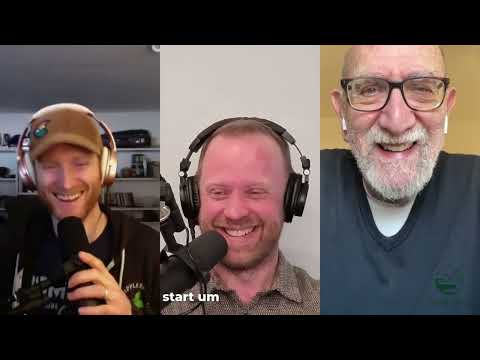
Cristina Marcalow – Upcycled Cashmere, Career Pivots, and Building a Business from Scratch
Matt Gregory (00:13) Hello, Pat. Here we are, Trail Map. We're back.
Patrick Dyer Wolf (00:14) Woo! Hey Matt, we're back. Mappin' our way through the snow.
Matt Gregory (00:22) Yeah, yeah. Seriously, the snow is there like these little ant trails around our town. just walked, ⁓ walked down to the gym and we're like ducking into doorways of stores to let people pass. And it was, was pretty awesome. There's a lot of snow.
Patrick Dyer Wolf (00:44) It's a, ours is a little bit icy, crusty, because it's also very cold, I assume it's cold there. It's like you can't, you could maybe if you're, if you weigh the weight of a child, try to walk on top of it. But then all of a sudden you plunge into icy depths.
Matt Gregory (00:49) cold here too, Yeah. Yeah, yeah, that's that's I've had that experience before this the snow in Boston right now is still pretty even though it's cold It's getting harder, but it when it fell initially it was like very very very fluffy ⁓ We still have a bit of that ⁓ Anyway, here we are in Trail Map the show where we talk to people about their paths through life and We have an exciting one today with
Patrick Dyer Wolf (01:15) Yeah
Matt Gregory (01:29) who I've gotten to know a bit in the last six months and she is building a cool business. So we're going to talk to her about that business. It's called ANU. A N U. She gotcha. And yeah, I think it'll be a good conversation. It's.
Patrick Dyer Wolf (01:41) Can you spell that? Bet that's not what you thought, listeners.
Matt Gregory (01:55) It's helpful to talk to people that are in the midst of building something new, just inspiring. it's lot of work. So we appreciate her taking the time to chat with us.
Patrick Dyer Wolf (02:05) from whole cloth.
Matt Gregory (02:07) from Whole Cloth. Yeah, yeah, yeah. Yeah, I actually have my new, where's my camera? I have my new neck warmer here. I'm gonna let her explain the concept because it's, I am planning to reveal it to her in the middle of the show. Maybe I won't even announce that I'm putting it on. I'm just gonna take my headphones off and put on the neck warmer.
Patrick Dyer Wolf (02:11) ⁓ you have one? Okay, are you gonna model it for us at some point? You don't have to do it right now. Okay. good, okay. Just put, just do it silently. Put it on.
Matt Gregory (02:37) which is made of cashmere.
Patrick Dyer Wolf (02:37) This is how we draw people to YouTube from the streaming services.
Matt Gregory (02:41) Yeah, these kinds of ⁓ this great hot content. ⁓ Yesterday, I talked to ⁓ another guy who's going to be on the show in a couple weeks. ⁓ Kirk, who's an illustrator. ⁓ And he he's he's deep in well, he's actually just restarting his work on YouTube. ⁓ And what he does is teach illustration on YouTube and talk about his illustration projects. He's just doing a project right now for the Boston Celtics. ⁓ But he's worked with a lot of big brands, a lot of small brands, and he's an incredibly creative force. And his YouTube videos, I think he got 16,000 views on his video when he put it up, which is just like, I'm like, man, we need to learn from this guy. So we'll get there. Yeah, no kidding.
Patrick Dyer Wolf (03:11) Cool. Whoa. What is, I'll have what I'll have what he's having. Can I just say, Matt, that on your behalf, I have been really impressed and a little bit, not a little dismayed with how well the Celtics have been doing this year without Jayson Tatum. They've really pulled together. Jaylen Brown has been very impressive and just the whole thing. I think a lot of people are surprised.
Matt Gregory (03:47) Yeah. Yeah. Yeah, I think it's funny, know, obviously like the stars sell tickets to these games, but team sports have teams for reasons. And when you have a team of professional athletes, you know, and I think the Patriots are another example of this. Like, you know, you don't have to be the best at everything. And if you, but if you play well together, you can beat a lot of other teams. ⁓ And ⁓ I think the Celtics, you know, yeah, I think a lot, you know, there's a lot going right for them in terms of the chemistry and like the, you know, the coaching and I kind of feel the same way about the Patriots. So it's a good, another good, I know it's annoying for non-Bostonians, but it's very entertaining for us.
Patrick Dyer Wolf (04:43) I mean, here they are again. In the bowl. The super bowl. This is a sports podcast.
Matt Gregory (04:56) It's a sports podcast. we, I watched the game on, on Sunday night when it was, I mean, it was snowing hard here. And then at one point in the, in the game, they showed like a split screen between Gillette stadium, which was getting completely like dumped on with snow. And then they showed the, the stadium that the game was happening in Colorado. And at that point, the storm hadn't started. But by the time the game was over, I mean, it was just like a complete whiteout. And like neither team could really effectively play the sport.
Patrick Dyer Wolf (05:35) Yeah, it's ridiculous that they're just like, yeah, we're still going to do it. To me, I don't know.
Matt Gregory (05:41) Yeah, I don't I kind of love that though because it's like It I mean as long as people aren't like getting injured like it brings everybody down to the same level in some ways
Patrick Dyer Wolf (05:43) No it is, yeah it's cool. Right, I mean you don't know if somebody's gonna get injured until they get injured.
Matt Gregory (05:55) Yeah, yeah, yeah.
Patrick Dyer Wolf (05:57) I should also note by the way, it is a little, I'm sure this has been noted like a bajillion times, it's just a little comical to me that the Patriots quarterback Drake Maye is a Tar Heel, where Bill Belichick now resides at the helm. It's just funny. And in the wake of being snubbed by the Hall of Fame voters.
Matt Gregory (06:11) I know. I know. Yeah, it's... Yeah, Balachek did. I didn't actually read that. I didn't read that now.
Patrick Dyer Wolf (06:21) Belichick, you hear about this? He will not be a first ballot Hall of Famer because of politics? I don't know.
Matt Gregory (06:25) Yeah. He's I Have to say he's pretty unlikable. I try I really try to like him But I don't know but he's is I mean it's hard to argue with his coaching record. So This is funny. It's become a sports podcast ⁓ But anyway, it'll be good good chat today with Cristina and let's start that now
Patrick Dyer Wolf (06:34) I think, yeah. Right. It is. Sorry. That's what we're doing today.
Matt Gregory (06:56) All right, here we are with Cristina. Thank you so much for coming on.
Cristina (07:00) Thanks for having me.
Matt Gregory (07:02) I guess maybe we could just start with a quick introduction of who you are, including maybe you can help us pronounce your last name, because I stumbled over that before.
Cristina (07:13) Yeah. All right. Well, I'm Cristina Marcalow rhymes with Buffalo. And I am the founder of ANU And you can remember how to say it because it's spelled A-N-U just by remembering it's better than new because we upcycle cashmere and turn it into athletic garments for the winner, primarily at this point, neck warmers.
Matt Gregory (07:19) And with
Patrick Dyer Wolf (07:39) What a time. ⁓ look at Matt.
Cristina (07:41) ⁓ there's one. ⁓ Matt's got one.
Patrick Dyer Wolf (07:43) Everybody pop over to YouTube, see Matt. He's stylin'.
Matt Gregory (07:48) ⁓I love this thing.
Patrick Dyer Wolf (07:51) Man, you look cozy. Where's mine? I need one.
Cristina (07:51) you I gotta get one to you!
Patrick Dyer Wolf (08:00) Here, just pass it right over.
Matt Gregory (08:00) ⁓ Awesome. Well, so I had to take my headphones off. So I kind of don't really, I can imagine what you said, but I don't really know ⁓ to get this neck warmer on. ⁓ what led you to ANU?
Cristina (08:17) Yeah, I... I came to ANU I'll just rewind a little bit before actually starting ANU to the point of where I was deciding to leave my other career path that I was on. ⁓ And... I had been in product management for a few years at that point. knew that I really loved the job, but I was really hungry to do my own thing. And hungry, I could feel a sense for myself that I wanted to be building something for myself and wanted the experience of being an entrepreneur. And my dad got unexpectedly sick with pancreatic cancer. And that just put a, my. threw my life into chaos in a lot of ways. And then I also had my second kid. And so there are all, all this upheaval kind of going through my life and kind of through those moments, I felt like I had an off ramp that like this is through this change and upheaval, like I can actually change the course right now. and so I, I left my job and I started thinking I want to start something and I had all these ideas for different businesses that I could start that I believed in. They were all connected to something that I truly believed in would be good for the world, good for community, and something that I could focus on. ⁓ And I was kind of stuck in this analysis paralysis phase for a while and feeling pretty overwhelmed. I had a young baby. It wasn't exactly clear how I was gonna move forward or which idea I would choose, which one was actually viable in the market. ⁓ And I ended up spending a day with a friend of mine who was also a young mother or mother of a young child. And we were just talking and spending the day together kind of more in a co-parenting way and talking about different business ideas. And I was also talking about how I was personally kind of going through my house and thinking about ways to reduce my own family's exposure to various toxins or just things that we could be doing in our household to kind of clean things up and that I was in a process of changing over some of my athletic wear to natural fibers. I was like, oh, I'm just getting into like, oh, I can actually run in a wool sweater instead of my polyester fleece. I was really excited about it. And I happened to be complaining with her about how I had this like secondhand sweater. It didn't fit quite right. And I couldn't find sports bras and there wasn't really a lot on the market. And she was like, well, take that sweater off. And she just cut into it and made me a sports bra. And I was like, .
Patrick Dyer Wolf (10:55) Whoa. What?
Cristina (10:55) in 15 minutes with two babies on the bed, you know? So I like holding both the babies and she's sewing and then she came back, she was like, put this on and I had a sports bra and I ran in it the next day and I was like, amazing, I was on fire.
Patrick Dyer Wolf (11:08) Did she do it like the Grinch cuts out his Santa Claus suit just like right there? Like do do do do do do do do.
Cristina (11:14) Basically, yes. was, she, yes, she basically just cut out like, you would think like someone would draw a cartoon picture of a sports bra, she just did that. And then sewed it together and she's a phenomenal.
Patrick Dyer Wolf (11:23) Right.
Matt Gregory (11:24) Wow.
Cristina (11:28) sewist, a fashion designer and had worked with in upcycling before and so we actually had several conversations together after that and we started ANU together and we started making baby clothes kind of with the passion of natural fibers and upcycling and we started making clothes for babies and to toddlers ⁓ and it was really exciting to start this with her ⁓ and it kind of got me out of that analysis paralysis was like, well, I have energy here. I have someone to do this with. And so we went on that path together. And after our first big push, production push, and we came to market, and we kind of did a pause and a reflection, it just became clear to her that it wasn't going to kind of work for her and her family to keep going down the path. And so we were just going to close up shop. It was something we built together, our baby that we loved and made together. And through that,
Matt Gregory (12:15) Mm-hmm.
Cristina (12:26) process of close it, of deciding to, okay, this might not work well in this iteration. I just realized, I could feel inside me, I was like, I actually want to keep going here. The only problem is I don't know how to sew. And once I got myself, oh, it took me a minute to go, oh, this is just another problem, like any other problem, and I can solve for it. And once I got over the...
Matt Gregory (12:40) and
Cristina (12:50) roadblock thinking I could never do it by myself. ⁓ I realized our conversations changed from closing ANU to me buying ANU, buying her out and then kind of continuing on in my own fashion. And so that kind of led to ANU changing from a baby clothes brand. And then I went through a whole internal process of like, well now what am I doing and how do I sew and what product am I making? ⁓ And eventually led me to. neck warmers and making it more of an outdoors brand rather than ⁓ a kids brand.
Patrick Dyer Wolf (13:23) I love the amount of wordplay available with the ANU It's just always, it brightens up every sentence. I gotta say, you nailed it with the branding.
Cristina (13:33) And that was a product of our partnership. Nova and I drove around and had conversations, just brainstorming ideas. And at one point it clicked. I can have a very vivid tactile memory of the moment where we both went, that's it. And it's when we decided that we didn't have to spell it A-N-E-W. Something about spelling it A-N-E-W didn't feel quite right, but we were like, we can change the spelling. And it all of a sudden felt more like a brand name that we can inhabit and make our own.
Matt Gregory (14:01) So you've had to learn how to sew. What did you know how to do that's been helpful as you've been building this? Like you mentioned product management. Yeah.
Patrick Dyer Wolf (14:11) What products were you managing, I always wanted to ask.
Cristina (14:14) Sure, my background is in EdTech. And so I came from EdTech roles in product management. And then my last role was managing the social studies portfolio at McGraw Hill. ⁓ And so that was more publishing, but across print and digital. ⁓ So very much not the garment industry or textiles. But in that role, I could feel how I loved my job as product manager. because I was getting to wear so many different hats and play a little bit of marketing and then step in and talk to the sales team and then go over and work with the content production team and then ⁓ go and talk to instructional designers and kind of step into all these different roles and I really loved that and I loved building relationships with all those different teams and being an expert in almost all of the domains as I managed the product. And I had the sense, was like, I think this is what being an entrepreneur is, is doing all the things. But instead of there being a team on the other side, it's just you. But you kind of have to do a little bit of everything. And so I think the training as product manager helped me. That's a skillset that I bring is being a jack of all trades and master of none. But now I'm having to be like, okay, have to master.
Matt Gregory (15:36) Yeah, I can relate.
Cristina (15:38) all these ⁓ pillars here, but I've dabbled in all of them. And before McGraw Hill being at the smaller ⁓ ed tech startups, actually did, there was nobody to write the marketing email, so I was writing the marketing email. ⁓ And so at those smaller companies, I actually did execute at more of the other functions beyond product manager. so I feel myself pulling on a lot of those skill sets, including the skill set of just sitting down and being like, I don't know how to do this exact thing, but I can learn and I can move forward without feeling entirely, ⁓ like I'm trained for it, but I can get there and make mistakes and learn from them and iterate at small cycles of iteration and get better and better.
Matt Gregory (16:24) Yeah, I'm wondering, and I don't mean to push you back to think about a sad time, but I'm wondering about like the moment of, you know, dealing with, both, you know, the intensity of being a new mom and also, ⁓ you know, with your dad's illness, how, how, how are those things motivating to you to like think about how you were spending your time?
Cristina (16:49) Hugely, the fact that they really overlapped so much. And I actually lost my mom not too long prior to having my first child. So between 2018 and 2024, so relatively short number of years, I lost both my parents and had both my babies. So a lot of birth and death, which just pushes you to think about, what are we on this planet to do?
Patrick Dyer Wolf (17:09) wow.
Cristina (17:17)⁓ At a time at a stage in life when we're not necessarily confronted. We're not always confronted with death so so much in our ⁓ 30s and our early parenting times, but it really made me think about how am I spending my time and life isn't all that long. I don't know how long we don't know how long we get and so it made me think a lot about how I was spending my time and what I wanted to do with the time that I have. ⁓ Specific, you know, that's what. Sitting with the death will bring what it brought to me. And then having kids layering on there, I wanted to show my kids how to be courageous and believe in yourself and enact that. I had a lot of fear leaving a very stable career path, one that was very comfortable. And there was nothing wrong with it. I loved my job, I loved my coworkers. There was nothing there that was explicitly wrong, except that it wasn't what I wanted to be doing on this planet Earth. And making that big jump was a challenge, but it was something I wanted to show my kids that I had the courage to do. And as they grow into themselves, I wanted them to know they had a mom that did that. And I don't know where this path is going, but I wanted that to be a part of our family story and to be able to show that to them.
Matt Gregory (18:42) Yeah, thanks for sharing that with us.
Cristina (18:45) Yeah. Thank you.
Patrick Dyer Wolf (18:46) I don't want to insert myself too much, but I relate so much. I lost my dad to pancreatic cancer just 10 years ago, last week, this week. And also had my first kid that year in 2016. yeah, mean, I think, if anything is going to make you reflective.
Cristina (18:57) I'm sorry. ⁓Wow.
Matt Gregory (19:16) Ha
Patrick Dyer Wolf (19:16) It's that. ⁓ Just kind of think about like. how you wanna use your energy and how you want to be an example. And ⁓ I think it's really inspiring what you're doing with that moment.
Cristina (19:38) Yeah, well first of all, I just wanna say I'm sorry for your loss and also, you know, just empathize so much with you with, yeah, having the birth and your loss of your father happen at the same time. It's just a big thing, so thank you for sharing.
Patrick Dyer Wolf (19:52) Yeah.
Cristina (19:53) I went through a process of learning how to sew and then figuring out what I was going to make and ended up with upcycled cashmere neck warmers. I was really, I'm going to double down on this and I decided to focus on this one product. And then went through a process personally of designing that product. What is it going to be? What is how, what are the patterns? So I ended up making like four or five different patterns.and then started doing a process of myself doing a couple production runs. What does it mean to make five of these in a sitting or 10 of these? How can I start doing this not just as one-off crafts, but as a scale?
Matt Gregory (20:36) Can you tell us a little bit more about your product decisions? ⁓cashmere, like why cashmere? Why neck warmers? How does it work? Tell us how it works.
Cristina (20:48) to work.
Patrick Dyer Wolf (20:48) And where'd you... How does it work? And where'd you get all the sweaters?
Matt Gregory (20:52) Yeah.
Cristina (20:54) Let's get to that piece. I'll answer, how do you get to cashmere neck warmers? Because it did feel like I was a crazy person, alone. Then I was like, what is ANU now that I'm by myself? I spent hours alone in the studio and just, you go into your mind, your mind just goes places. But that process ⁓ led me to realize that... I love my children, I love my identity as a mom, but that selling baby clothes was not probably something that I wanted to do with longevity. It didn't feel like an eternal part of me. I didn't want to be selling baby sweaters 10 years from now. And the core part of who I am, or one core part of who I am, something that has persisted over years for me, is that I'm an outdoors athlete. I ski, I... run, I rock climb, I mountain bike, whatever it is I'm doing, I'm outside, I'm pushing myself in the wilderness. that's how I came to natural fibers in the first place, was I was trying to replace my polyester Patagonia fleece with a wool sweater. And that's how I got there anyway. So I kind of went back to that, which was the core for me around being an athlete. So I thought, how can I bring natural fibers into the athletic space? This is a place that I feel natural in. I feel comfortable imagining myself going into gear shops because I know these people, I know these spaces. This feels like a place I can step into comfortably. And also I feel responsible for this community. This is a place where I feel like I can contribute something and contribute to the conversation and the culture that we're building as outdoors people. So that answers kind of the outdoors question. Now, neck warmers, that was almost a product of...well, what can I sew? And really you take a rectangle and you fold it and then you sew the tube together and you flip it inside out. It's a fairly simple sewing project. But once I thought about that, then it actually had all these other production benefits to it. It's a one size fits all product, which makes it easy for retail and for online sales. ⁓I also can, it is a standard, because it's one size, it's standardized and I'm taking all these non-standard inputs from my cashmere sweaters and I'm trying to make a standard product. So having a very standard product is actually helpful to rein in the chaos that is upcycling. ⁓ And yeah, so neck warmers just seem like a natural fit. It's also a place where natural fibers matter. ⁓ If we're thinking about.our personal exposure to microplastics and there's a growing body of research telling us that we might want to consider that exposure more than we have in the past. ⁓ But it's right by our respiratory tract. So we that benefit as well. It's where we're like up next to our nose and our mouth. We're breathing through the garment often. So I had all these cascading benefits once I was like, ⁓ I can sew it and there's all these other things that make this a really good product to focus on. So I dialed in. on neck warmers. ⁓ And then why cashmere? ⁓ Cashmere is a natural fiber and so similar to wool, it wicks moisture, it stays warm when it's wet. The thing that I love about it for this product is it's ⁓ also thin. So the wool products that I was looking at in the upcycling space were coming in a wide array of thickness, like thin. ⁓ really chunky vintage wool sweaters. The cashmere upcycling supply tends to be a bit more uniform. They ⁓ vary in thickness, but the variation is much less. ⁓ And because it's so soft, it's just an incredibly soft fiber. It's actually known in the marketplace as a luxury fiber because it is so soft.It's just great around your face. And that's what made it great for baby clothes as well. You want to put your baby in a cashmere sweater and you want to put cashmere around your face, it just feels fantastic. But it has all the qualities that makes wool a really high performing ⁓ athletic fiber ⁓ as well. And we just aren't used to seeing cashmere in the athletic context, but it works just the same. This thing will like shed ice.
Matt Gregory (25:06) ⁓
Cristina (25:16) ⁓ bead up moisture and repel it. It just feels really great in a winter storm capacity. It's really a high performing fiber ⁓ and it's just so soft. It's amazing.
Matt Gregory (25:25) Yeah. Yeah, I mean, it's good.
Patrick Dyer Wolf (25:26) It's low yield per goat I'm reading here. That's what lot of what leads to the... Well, it's very soft, but also it's expensive because it's relatively rare and you don't get a lot per goat that it comes off of. It's hard work to get the cashmere.
Matt Gregory (25:37) softness.
Cristina (25:39) with a luxury.
Matt Gregory (25:49) I was gonna ask Cristina where it comes from. I did not know that it came from goats. That's cool.
Cristina (25:53) Yes.
Patrick Dyer Wolf (25:54) That's what the internet's telling me right now.
Matt Gregory (25:57) ⁓ I just want to quickly ⁓ add, like I'm not paid by Cristina to make these statements, but it is very soft. I mean, everybody knows cashmere is soft, but I will say since I spoke with Cristina about this initially, like yesterday or two days ago, I did a lot of shoveling at our house and I wore a cashmere sweater as like a layer under my jacket. And it's like phenomenal.
Cristina (25:57) Yeah, and go ahead.
Patrick Dyer Wolf (26:08) Yet.
Matt Gregory (26:27) ⁓ as a layer and even as you get sweaty, it keeps you warm. ⁓ And so it's kind of magical. this neck warmer I've worn a lot running and it's been really a good, it's worked really well.
Patrick Dyer Wolf (26:45) This
Cristina (26:46) Awesome.
Patrick Dyer Wolf (26:46) is so applicable right now too because it's like five degrees out in the Northeast and I've been walking my kids to school and being like, I should have gotten like a scarf or something or like even like a COVID mask can do something. like, I need to get one, And also I was just telling Matt before we started that I, ⁓ no, sorry, I was telling my brother-in-law before this.
Matt Gregory (26:50) Yeah. Yeah.
Cristina (27:04) Thank
Patrick Dyer Wolf (27:15) I've been in a real purge mode, I think, since even before the new year of just getting rid of so many clothes. ⁓ And it's easy to go down a whole rabbit hole of what do we do systemically? But we're such a disposable society. We're like, ⁓ we're done with this thing, let's throw it out. ⁓ And I think...
Matt Gregory (27:22) Yeah.
Patrick Dyer Wolf (27:44) This is just such a nice, maybe tri-ven diagram of things where it's it's really functional, it's really soft, it really does the job, keeps you warm. It's not plastic, it's natural, it's an organic material and it's reusing something that's come to the end of its use. ⁓ And I think few things are that. I don't know.
Cristina (28:15) That's awesome to hear you say, wanna join my marketing team? And I struggle actually with those overlapping value props, if you will, because which one do I focus on? Where do I emphasize? And even like designing the packaging, it's a process. What is the font that's the biggest? What word do I put in the biggest font here? Is it upcycled? Is it cashmere? What do people care the most about?
Patrick Dyer Wolf (28:19) Sure. Hmm.
Cristina (28:44) And I'm learning people care about different things. so I'm still not sure how to answer that question. But yeah, there are all these different ways to come at and interact with a product, which is part of why I love it. I love all the different angles here. So let's make it go.
Matt Gregory (29:00) Cool. So you take these, this goat, well, first of all, you're not going to the goats, you're going to the thrift stores, right? What does the sourcing look like?
Cristina (29:06) That's right. right. I didn't, I didn't go back to the sourcing question, right? So, ⁓ Nova and I drove around the thrift stores and bought sweaters that after a couple of days, we're like, this is not going to work. It is time consuming. We even thought about how to offload it, like pay somebody, like, is there a way in which we're paying somebody to do this? And the math would not support that. ⁓ and so we started looking for different, ⁓ supply lines and
Matt Gregory (29:18) Mm-hmm.
Cristina (29:39) So I work with a textile recycler and it might be interesting to know that a lot of the donation boxes that you see in parking areas and like parking lots or like at small businesses, you might see them around your community. Those get rounded up and collected and then brought to like a central sorting place. And then that place has a team of sorters and they're going through.
Matt Gregory (29:43) Mm.
Cristina (30:06) all the various inputs they receive from those boxes, much of what has reached the end of its functional life, some of which is very high end garments that people have thrown out. So they have a team of people sorting and then those get kind of distributed out into different parts of the economy and the world. So they'll, from that central location, kind of get.
Matt Gregory (30:13) Mm-hmm.
Cristina (30:29) put on container ships and shipped elsewhere around the world to be sold as clothing or as inputs for a manufacturing process. ⁓ They get sold to thrift stores, they get sold to ⁓ soundproofing panel makers who chop up, you know, really worn out cotton t-shirts and make soundproofing material, things like that. I, that's where I go.
Patrick Dyer Wolf (30:44) Cool. I need some of that actually if you could put me in touch with those people.
Cristina (30:55) It's really an interesting world to step into, but one thing they serve for is cashmere, and so I'm able to buy cashmere ⁓ from that supply line.
Matt Gregory (31:05) That's cool. ⁓ And then, yeah, and obviously that ⁓ reduces the amount of like, you know, going and hunting in thrift stores for sweaters that you can use.
Cristina (31:18) Correct, it also puts me, it gives me 100 % cashmere as opposed to the thrift store route. I was looking for, it's hard to find one standard product. You're sorting through so much at a thrift store and a lot of what you'll come across is a blend of even mohair and cashmere and wool. That's an awesome sweater. That's personally one of my favorite sweaters is it includes a blend of natural fibers and I love it. But in terms of creating a standard product, now the fiber contexts are different.
Matt Gregory (31:29) Yeah. Yeah.
Cristina (31:48) So that supply line really gave me ⁓ the consistent supply, but also the fact that it's all 100 % cashmere has turned out to be really helpful and meaningful.
Matt Gregory (31:58) Yeah, yeah, cool. So I guess maybe to switch gears a little bit, like to what it looks like for you to actually run this business. Like, can you tell us like how you're spending your time right now? And I know you're balancing this with your life. So I'm wondering like what that looks like.
Cristina (32:08) Mm-hmm. Yeah, I'm wanting to spend a good amount of time with my kids. And so this is a balancing act ⁓ between letting the business grow naturally as it fits in my life and also being clear about, okay, this is a day that I have with my daughter and I'm gonna be present and focused on it. ⁓ But when I have, when there is a ball that I can move forward on one of those days easily, like running to the post office quickly with her doesn't detract too much from the day. ⁓but I can otherwise be present with her, but I'm not on my phone all the time. So yeah, that's a balancing act and knowing where to draw the line, the boundaries between personal and family life and work life is a, you know, it's something I'm constantly thinking about. ⁓ But functionally, I'm working in the studio Monday, Wednesday, Friday, and my daughter, both my kids are in childcare those days. ⁓ And so those are studio days and then. As needed, I am also taking, since those are the only days that I have ⁓ no children at home with me, those are my days to do sales missions as well. So today I had to go restock a shop in Vermont, and so I was out on the road, so that's time when I'm not actively in the studio ⁓ taking photographs of product or pushing the production system along.⁓ And then when I'm able to be there, kind of doing the things that I need to do to make things go and then using that time wisely to do the sales missions. I found that being in person is huge in terms of ⁓ that sales job. My attempts at cold outreach did not work. Nobody wants to like talk to you on the phone or answer an email. so I know that it's worth it for me to get in the car and drive and just walk in and be like, look at this awesome product that I have and that that's really working for me. So yeah, it's just about balancing ⁓ all the needs of the business and the family. And obviously I pick up the slack for our family if there's a snow day.
Patrick Dyer Wolf (34:01) Yeah.
Matt Gregory (34:23) Mm-hmm.
Cristina (34:23) It just is what it is, and so I have to kind of consistently kind of reaffirm my mindset that the business will grow as it's able to within the context of my family. Yeah.
Patrick Dyer Wolf (34:35) So your kids are young. How old are they?
Cristina (34:37)
One and a half, I have to stop saying one and a half. She's going to be two in April, almost two. And, ⁓ my eldest is just about to turn five. His birthday is next week.
Patrick Dyer Wolf (34:42) Hoof. Yeah. wow, that's great. I have a friend, we have a friend, ⁓ I forget what, this is probably a long time ago, articulated this way, but just like having young kids and trying to do your thing also. It's like when you have, it really brings into focus the, when you have available time, it's like, okay, I have to do the thing now. And you're like, just. You know rather as opposed to like if you just say lived alone and you woke up and you're like, what should I do? It's like no now I have to do the things that I need to do And that that can be like having less time to do things can be motivating in that way even though it's limiting and I guess I'm always I'm curious to always to understand how other people structure or like go at their available time in that type of context. Personally, I've recently been mapping out my day like they used to structure high school. Like we're doing math here, we're doing social studies here, we're doing this. But I'm just curious if you have a specific method, like do you have one big to-do list? Do you have like a few and you pull from them? Like how do you go about filling that precious available time?
Cristina (36:20) Yeah, have, my brain wants the schedule you're describing. It wants to be like, this is when I exercise and this is when the morning routine happens. And this is like, I want the block schedule for my life. We can't do that as a family. My husband's an architect and his work will give him a lot of flexibility some days and then not other days where he'll have to be gone for several days in a row for like work related things. so I can't nail down a week schedule. but from that becomes, think, I feel like right now our family is in a great place of, moving through that flexibility, ⁓ and carving out time for all the things that need to happen, but it is not on a set schedule. is it by on a day by day basis. I think what's been helping me in terms of the work context is thinking. Having a theme for. beyond a particular day, like a month type time span where I'm like, my focus right now is sales. The holiday push, right? I was like, I need to get as many neck warmers out into the market as possible and I am not picking my foot off the sales pedal. ⁓ And it was production, so.
Matt Gregory (37:22) Hmm.
Cristina (37:41) going through Thanksgiving, because I didn't have ton of, I didn't have stacks going into Thanksgiving and Christmas season. We were making them and selling them. And so it was just like hardcore, focusing on production and me driving and selling as much as I can around Vermont. ⁓ And then coming back, it's been now taking my foot off that pedal and thinking, okay, how do we refine production processes? How do I find new sales channels? And that's kind of a focus for the next, you know, that's been my focus for the next month and a half. And I've, so that has led me to prioritize Instagram ads and I'm learning about that and spending my, but I'm choosing to spend my time more on that than I am on driving around. I'm not continuing to drive around to different ski. I learned a lot already from driving around to ski shops. I know how that sales channel works. Now I'm learning about how the Instagram sales channel works. ⁓ so I think just having like a bigger focus. helps me prioritize things. ⁓ And then I use to-do lists. Yes, I do use to otherwise, because something, even though it might not be directly related to the exact, the bigger focus that I have for whatever month I'm in, there are certain things that invoice still has to go back out or I still need to like restock the person who ran out. So I do use to-do lists to do that and have my own like organization systems to like rein it all in.
Matt Gregory (38:43) Mm-hmm.
Cristina (39:07) I don't know, did I answer your question?
Patrick Dyer Wolf (39:09) Yeah, I mean, we could probably have a beer about this for like two hours, but yes. ⁓
Cristina (39:14) Thank
Matt Gregory (39:14) Yeah, I think it's interesting though. Like, I mean, I think if you work at a big company, there's a whole process and at least in the bigger companies I've worked in, like there's a whole process of like every year you go through the strategy planning process where you're thinking like three to five years out, what are the things we're going to do? And then right after that, you go through the operating plan process where you're like, okay, in the next year, how are we going to, you know, do the pieces of what we need to do in the in the three to five year process. And I think what I'm hearing from you, and I feel this exact same thing in my own life right now, like ⁓ your strategy plan, like you've got, you've got like some constraints, not, they're not even constraints, they're commitments that you've made to like your children, to your husband, to your family, to your, you know, exercise, like whatever those things are. And then you've got, And depending on the person, like those are those are negotiable or not. And then and then you've got like, you know, the the rest of everything that you want to be doing and you're filling your time doing those things. You're prioritizing like on a monthly basis. OK, this is the focus of the month. Yeah, so that's all feeling familiar. I think I guess one thing that I've been thinking about lately is like when you step back from that, you're really busy like Do you have like a an articulation for yourself of like what success looks like? Like what do you what do you have to do to know that this is like going to work for you?
Cristina (40:48) That's a great question. guess the zooming out beyond the month to month focuses that I've been talking about, think my broader goal for this year is to learn as much as I can about each pillar of the business. So production, can I scale up cycling? ⁓ And so focusing on that, that was kind of. October, let's say September, October, ⁓ working on coming up with those systems. So that's a pillar. There's the production pillar. There's the sales pillar, there's marketing and there's, operations. And so by changing my focus, ⁓ kind of with each little chapter, I'm just hoping to build up the body of knowledge that I have around the business. And then my, my success.
Matt Gregory (41:41) Mm-hmm.
Cristina (41:45) Like, I be, like, it'll be successful to me if, let's say by March, by the spring, early spring, if I can take everything that I've learned from all of those pillars and all of those focuses and say, is this a viable path? Is this continuing to feel viable or what will make it viable? ⁓ Because we're still so early. So getting to the point where I can,
Matt Gregory (42:09) What does viable mean?
Cristina (42:11) Yeah. Understand like, the numbers really work? Am I going to be able to scale this to the point where I'm not just making, pulling money for myself, but able to grow the business and operate at a place where I have a couple of employees, you know, you don't set, you have to sell a lot of this one product in order to make the business work in order to fund the studio and, and, and, ⁓ you know, make it work. So. If by the springtime, that's kind of the success that I'm targeting towards at this moment, ⁓ is yeah, to just learn as much as I can to be able to confidently answer those questions and be like, it, am I gonna go through another cycle? Am I gonna kind of keep going down this? Am I gonna reinvest and kind of pursue this?
Matt Gregory (42:43) Mm-hmm. Mm-hmm. Yeah.
Patrick Dyer Wolf (42:58) When did you start?
Cristina (43:00) About this time last year, Nova and I were getting started. We had already gone through the like magical sports bra making moment. Oh, by the way, I didn't even mention this. When she did that, she then took the scraps from my sweater and made my baby pants. So I went home with a sports bra and baby pants from one sweater. You guys, was a magical moment. It was so cool. Okay, but yeah, she's so skilled. So there's that, that.
Patrick Dyer Wolf (43:17) Bra and a pants? Wow.
Matt Gregory (43:21) Wow, to have real skills.
Cristina (43:27) And then we were actually getting started about in January of 25.
Matt Gregory (43:31) Mm-hmm.
Patrick Dyer Wolf (43:33) Okay, got it.
Matt Gregory (43:35) So I guess, like, because this podcast is focused on, like, ⁓ life paths and life choices, like, I'm wondering, like, I know, I get that there's a whole business viability question, but in terms of, Cristina's life, like, what does ANU do for you?
Cristina (43:54) man, that's a, so in terms of success and, like feeling like, is this the right path or does this feel right for me? ⁓ I had a moment in the fall where I came back from one of those sales missions and I had gone into the several ski shops and it's not, those are not easy conversations to go and be like, will you buy the thing that I made to somebody who's just, you know, running their ski shop? but I came back from that and I felt so energized. I was just like, I love my product.
Matt Gregory (44:00) Yeah.
Cristina (44:23) I love talking about it. really believe in it. I feel good about being in this space. And I texted my husband and I said, I want to, this is my job. I want this so badly to be my job. And I have felt that in the studio too, just like working out kinks in the production system.
Matt Gregory (44:35) Yeah, yeah.
Cristina (44:43) and prototyping new products or just getting down to work and like, and laying out the designs for 50 designs. And that feels good as well. So I'm feeling for me, I'm getting that sense of varied, a varied work life where I get to use a lot of different muscles. I get to be creative. I get to be precise. ⁓ I get to dabble in a lot of different modes of thinking and being. All of that really works well for who I am as a person. ⁓ And days when I'm working, I, on the whole, feel just energized and good about it. And I knew that from my experience as product manager that I would love that type of work, because as a product manager, that's kind of what you're doing. And now that I'm layering in the fact that I truly, 100 % believe in my product, it does everything that I personally would hope for and want.
Matt Gregory (45:26) Yeah.
Cristina (45:40) for from a job.
Matt Gregory (45:42) That's super cool.
Patrick Dyer Wolf (45:42) Do you ever, ⁓ I don't know if exactly miss is the word I'm looking for, but do you ever yearn for the sort of like structure or lack of total personal accountability that your old job had or elements of it?
Cristina (46:02) Oh man, sure there are times where it's the fact that somebody else was managing or responsible for the financial tracking, right? Somebody else owned that and I would participate in that. The weight of the responsibility was distributed.
Patrick Dyer Wolf (46:23) Yeah.
Matt Gregory (46:30) Mm-hmm.
Cristina (46:30) in a bigger context and so yeah, so that ⁓ now the weight is feels really on me and that feels like a lot of pressure. I also miss, I don't have thought partners always. And so a friend might just ask me how I'm doing and then it's like, actually 20 minutes later you didn't mean to like, now it's a board meeting. I actually just needed a CEO session, thank you. So yeah, there are times when I, ⁓ yeah, they're
Matt Gregory (46:48)
What do you know about marketing?
Patrick Dyer Wolf (46:53)
Yeah.
Cristina (46:59)
things that you just miss when you're not a part of a bigger company. All hands meetings that are like a thousand people big and you're anonymously on a Zoom call and can just bang out an hour's worth of dishes. That was really nice. I don't get that. Yeah, I just like positioned the laptop so I can see whoever's screen sharing at the time and just scrub away at my pans. ⁓
Patrick Dyer Wolf (47:16)
Yeah. You're like, I'm at work right now.
Cristina (47:28)
No, I don't get to do that anymore.
Patrick Dyer Wolf (47:30)
So you do,
I mean, obviously, you alluded to, you do do the bookkeeping and all that kind of stuff, everything, or have you outsourced any of that?
Cristina (47:42)
outsourced to QuickBooks. Yeah, I'm responsible for that. I'm not working with an accountant. I do have some people who can advise me, ⁓ but yeah, it's on me right now.
Matt Gregory (47:43)
Hehehe.
Patrick Dyer Wolf (47:45)
Yeah.
I,
yeah, I gotta say, so like I, for our, I'm a musician, and for our band I've been doing, I'm the QuickBooks guy. I gotta say it's really interesting to me now, accounting, and just like thinking about any business situation now, I'm thinking about like, nah, I'd really like to get a look at their books, just to see. I think it might just be that I'm 40, like.
Cristina (48:02)
Nice.
Matt Gregory (48:07)
Mm-hmm.
Take a look at the P&L, that old P&L.
Patrick Dyer Wolf (48:20)
It's just interesting to me now to think about it through that lens, because I've had to do it now for years. it's kind of boring from 30,000 feet, but it's really like, it's kind of everything. How does it all fit together? ⁓ I don't know if you feel that way, but that's how I feel.
Cristina (48:41)
Absolutely.
Yeah, well, I'm waiting for the moment where I'm gonna be able to, I haven't even really had the head space to dive into the numbers from November, December into January, but I'm waiting for the moment to like dig in, because to your point, that's where the story is. ⁓ And so ⁓ I'm looking forward to taking that time to really spend a lot of time with the numbers and see what story they're telling. I also developed a sense of cogs over the summer.
⁓ cost of goods sold. ⁓ that was theoretical. I was like, that was back of the napkin and I've just been running with it. And I actually feel like it's fairly good. ⁓ it's fairly close, but I got to .... I need to, now I have so much more data at the time. It was like how much I could spend so much time analyzing cogs, but I actually haven't made more than 20 of these things. Now I've made.
Patrick Dyer Wolf (49:16)
cost of goods sold.
Matt Gregory (49:27)
Evening.
Cristina (49:42)
several hundred and I can really go in and figure out how much cashmere is being used, how much time is being spent on each step of the process. And so now going through process of refining that, comparing that to cost, I'm really excited to dig into those numbers. It takes time. In companies, that's like a whole job is to do that work. So I need to carve out that time and make that my focus for a minute. And I'm looking forward to doing it.
Matt Gregory (49:49)
Yeah.
I also think that in my experience with launching products, you really don't want to look at the numbers too quickly because the beginning is just expensive and it's not really reflective of where you can get. And I think for you, there's an emotional... You need to maintain the emotional momentum too that you've got going. And so... ⁓
Cristina (50:32)
Hmm.
Matt Gregory (50:35)
You know, early in the conversation, you talked about like self doubt and, you know, questions like that. And honestly, the vibe that I'm getting from you in this conversation is that you're, you're, you're got, you got some good momentum, but like, how are you dealing with the, emotional side of like keeping going?
Cristina (50:53)
Mmm.
Yeah, I feel excited to keep going. ⁓ Do you mean, yeah, the kind of identity as like CEO or like self, yeah, like kind of questioning myself, that kind of thing? ⁓ Yeah, there are times where ⁓ that voice can come in and ⁓ say various,
Matt Gregory (51:13)
Yeah, yeah, yeah.
Yeah.
Cristina (51:25)
negative things to me from within myself. ⁓ What a jerk. Including that these are just neck warmers. Who cares about neck warmers? But then I go into a ski shop and I'm like, there's actually a lot of neck warmers here. This is a product in the market. But there's so many places and times I can doubt ⁓ myself, including I'm not a sewer. What am I doing making a product that requires sewing? And then I remind myself a ton of business. This is
Matt Gregory (51:28)
at church.
Cristina (51:52)
an odd business in that it ⁓ is built on a craft, but the lady who started Swell Water Bottles was not like at her home being an expert water bottle maker and then started the water bottle company. I'm sorry, I can't remember her name off the top of my head. ⁓ But she figured out how to get it manufactured and then brought it to market. Are you saying her name? Do you know it? I listened to her How I Built This episode. ⁓
Matt Gregory (52:10)
Sure.
I said I'm sure she's lovely.
Okay.
Patrick Dyer Wolf (52:19)
nice.
Cristina (52:20)
But I just have to remind myself it's okay that I am not a lifelong sewer and that I'm going down this path. So ⁓ I do have those voices coming in and I have to sit with them and ⁓ talk to myself about them. But I truly believe so much in the product and in ⁓ the broader idea of just pushing on
cracks in the dominant culture that says we need more plastic stuff, and in particular that we need new synthetic garments to be outdoors, I get excited about pushing and introducing little cracks into that mindset. And I'm not here to say that we ⁓ don't use synthetics ever and we don't buy new products ever, but can we consider ways of
introducing new ways of thinking into the outdoors industry. And that really fuels me and keeps me going. It's a little bit of a rebellious streak, frankly, that kind of ⁓ will help me overcome some of those moments that are a bit more wobbly.
Matt Gregory (53:29)
Yeah, that makes sense.
Patrick Dyer Wolf (53:30)
I love
that mindset about creating cracks ⁓ because thinking about a huge issue or about ⁓ trying to change something big can be very frustrating and like where would you even start? There's no way we're gonna get rid of synthetic materials or whatever but it's just like...
introduce an alternative, see what happens. ⁓ And I think it's, you a lot of people might have an idea like that and just be like, well, it would never work. And it's like, well, maybe. And I think you can apply that to a lot of different situations, not just selling products, like, you know, kind of talking to myself here too, but just like, you know.
if you're up against something ⁓ that seems like it couldn't be changed, it's always good to remember that things are always changing and will continue to change. the way they change is up to how we change them.
Cristina (54:47)
That's right. And the scale of the problem is so big. the fact that the amount of products coming into this country every single day on container ships makes me nauseous. I think about that when I go to the recycling place where I get my cashmere, I stand there and I look at everything in the waste stream. They're receiving 50,000 pounds of textiles a day.
Patrick Dyer Wolf (55:02)
Crazy.
Cristina (55:15)
And I said that the volume of just that waste stream is nauseating. It's awesome in the biblical sense of the word. And then I think about the warehouses that are receiving new products. that scale is so big. to think about affecting any sort of change on an individual level with a problem that is so massive is debilitating.
Patrick Dyer Wolf (55:24)
Right.
Cristina (55:44)
but finding ways that we can make impact. And then even noticing that even if it's just with this for me, having the neuroplasticity at this age in my life being like, I don't have to wear, I've been running in polyester fleece for decades. I can change that. Like I can think about something differently with my brain and like introduce a new way of thinking that in and of itself is a win.
And then the fact that it's incrementally better for the planet at a scale that has no actual, that doesn't make any difference. It doesn't matter. It did change how my brain is thinking and how I perceive the world and helps me step outside of a ⁓ marketing message that I received from the world. I grew up into the outdoors world being told you have to have synthetic materials to be safe outside.
Matt Gregory (56:32)
Mm-hmm.
Cristina (56:40)
⁓ And then questioning that and going, I can step outside of that. I can question it. can, that even just has a personal impact on me. And then the broader, the impact on the broader ⁓ culture is, there as well, but getting caught up in the scale, it's, it can be overwhelming.
Matt Gregory (57:00)
Yeah, I think the cracks are great metaphor ⁓ for what you're trying to do and trying to change big things. And it's very exciting. And I think, know, as somebody who's aligned with kind of the mission of what you're trying to do and seeing, you're delivering like a product that actually delivers on because there are I think there are a lot of examples of better for the planet products that suck.
⁓ you know, from a usability perspective. ⁓ And so it's exciting to see something that checks a lot of those boxes, but actually also delivers on quality from a customer user experience perspective. You know, just in the interest of trying to like distill things that could be helpful for listeners to the podcast, like, what would you tell someone else who's thinking about starting something, you know, mission driven or starting something like like what you're doing with ANU ?
Cristina (58:01)
Yeah, I think you mentioned time, that product development takes time and at first costs money. And I think just allowing yourself some space to explore ideas and prototype ⁓ and knowing you're not going to get to the right. I felt so much pressure to make the right neck warmer quickly and then they're all coming out weird at first. It's like deep in the depths of despair. But I think just
acknowledging iteration and ⁓ giving time ⁓ is important.
knowing that each step along the process feels totally, it feels like a crisis. Like how will we ever get, how will I ever be able to like get production scaled or how will I ever get this product to hang on a shot? How am going to get a hang in on the shop in the market? It felt like a crisis to create my cardboard packaging, but moving through each.
Matt Gregory (58:56)
Which is so nice.
Cristina (59:00)
thank you. Yes, the cardboard
packaging really brings it together.
Matt Gregory (59:03)
You crushed the packaging, unboxing
experience. I should do an unboxing video of ANU.
Patrick Dyer Wolf (59:08)
I gotta see the cardboard packaging, because I wasn't already admiring how you put them on the rocks. The rocks are good.
Cristina (59:14)
That was
another one, photographing the product for the website. I was like, getting product photography, getting the white background to be uniform, getting the product to have the light on it. All of, every single step along the way felt so hugely impossible at the start of it, but then working through. ⁓
Matt Gregory (59:17)
Yes.
Cristina (59:36)
you'll just unlock the doors. The doors will unlock with time and effort. And if you know how to use your resources, whether it's the internet or a friend that you can call up, I called up a friend who knew how to do product photography and he helped me and I still, my photo studio is still literally duct taped together. It's not, but he gave me enough that I needed to get the product coming together, the product shots coming together.
But use the resources you have and let yourself make mistakes. ⁓ The doors will unlock even if they feel totally, totally closed to you at the moment. There is a way to unlock each door and just keep knocking. Yeah, keep trying to find new ways to open the door. If it's not the internet, then a friend. If it's not a friend, then just trial and error and prototyping, but there is a way. Yeah, I think that's what I got right now.
Patrick Dyer Wolf (1:00:29)
You can.
can phone a friend, it's one of your three lifelines.
Matt Gregory (1:00:36)
Absolutely. ⁓ Cool. Well, Cristina, thank you so much. And I guess before we wrap up here, can you just share where people can find ANU if they want to check one out or buy one?
Cristina (1:00:36)
you
Great. My website is made-anu.com. M-A-D-E-A-N-U.com. I'm also on Instagram, anu.social. ⁓ So check us out.
Matt Gregory (1:01:05)
Hmm. Cool. And then you've got some
retail locations that are like we talked about the one in Vermont.
Cristina (1:01:10)
We do, yes. So if you're in
the Northeast, ⁓ I'm at ski shops kind of around Vermont. I'm at, at Berkshire East, which is in Massachusetts. There's a few shops. ⁓ The Norse House is by Stratton. ⁓ Mount Snow Ski Works is a great new ski shop at the base of Mount Snow.
I'm at a couple snowboard shops, Invasion Snowboards, also at the base of Mount Snow, and Darkside at Killington. Basecamp is a backcountry ski shop at the base of Killington. They also carry ANU. I'm not getting everybody on the list. The Boot Pro at Okemo they ⁓ were one of the first people to actually respond to an email, and I was like, okay, I can, this is a door I can go through.
So shout out to Boot Pro. ⁓ So yeah, different ski shops around outer limits here in Greenfield is my favorite show.
Matt Gregory (1:02:11)
Wow, that's awesome. You've
got a real network starting to grow. yeah, as in ANU owner, I say get one. Like they're warm, they're really good. And I have worn it skiing too. It's also just a phenomenal ski season. So there you go.
Cristina (1:02:15)
Yeah.
Get one! ⁓
Patrick Dyer Wolf (1:02:29)
Matt, I like
Cristina (1:02:29)
It
Patrick Dyer Wolf (1:02:29)
the...
Cristina (1:02:29)
is, it is such a good ski season. we are so lucky.
Matt Gregory (1:02:31)
Yeah.
Yeah. It's snowing.
Patrick Dyer Wolf (1:02:33)
finally is snowing again.
Matt, you look dignified in the ANU. I think it's your new vibe. Some people just wear a scarf casually inside. I think this is you.
Matt Gregory (1:02:38)
⁓ thank you.
Yeah, yeah, we, we are big neck warmer fans in our family and ⁓ Will my my seven year old son he's in second grade he like he does not take his neck warmer off like all winter. So, yeah. Yeah, it's, it's comforting. Yeah, then you're like god I I need to, I need to close my neck.
Cristina (1:03:01)
It really is a cozy feeling. Once you get used to having it, you want your neck held.
Patrick Dyer Wolf (1:03:03)
living that cozy life.
Matt Gregory (1:03:12)
⁓ Cool. Well, Cristina, it's been such a pleasure to have you on. I think you're such an inspiration. I'm psyched for you about what you're doing. ⁓ And I think it's just, you know, keep going.
Cristina (1:03:20)
Thank you.
Thank you, thanks for having me. This was really fun to talk with you guys. I really appreciate the opportunity and the chance to just sit down and chat with you. It was really nice.
Matt Gregory (1:03:28)
Yes.
Yeah, for sure. Cool. All right.
Well, that was such a pleasure having Cristina on. I feel like she's in the thick of creating something new and ANU, and she's doing an amazing job with it.
Patrick Dyer Wolf (1:03:46)
She's doing it. think she, it's like at a really interesting phase, because she's only a year in. So she's like totally up and running. mean, her web presence is fantastic. She's selling products, but it's just been a year. It's like still, it was just born. And so, I mean, it's really exciting, inspiring, I don't know, whatever other words.
Matt Gregory (1:04:03)
Mm-hmm.
Mm-hmm. Yeah.
Yeah.
Yeah. I mean, I've worked so I've worked a fair amount in like consumer goods and mostly the companies that I've worked for have been companies where like the company will contract with the manufacturer and the manufacturer build like, you know, thousands, hundreds of thousands of a product. And I think there's like a new wave of consumer goods companies that's coming out now that's ⁓ much more
⁓ constrained in terms of scale. It does its own manufacturing ⁓ and that have founders that are deep into the product that are like really like geeking out about the product. And I think it really benefits product. It also really benefits ⁓ the way that you can do sourcing. You know, when you're when you're producing something at like a massive scale, you have to like buy, you know, ⁓
Patrick Dyer Wolf (1:04:48)
Mm-hmm.
Yeah.
Matt Gregory (1:05:11)
Commodities, know, you don't you don't buy like, you know upcycled products Typically, ⁓ and so it's it's cool that it's cool that she's doing it at this scale to start I think it really you know, it allows her to do a lot
Patrick Dyer Wolf (1:05:26)
I mean, I don't know how many of you out there have read the Lorax, it sort of seems to me like ⁓ maybe we shouldn't have progressed into multinational corporations. Overall, I don't know exactly how to unwind that totally at this point, but it's hard for me to think of an example of something that has gotten better.
Matt Gregory (1:05:42)
Yeah. Yeah.
Yeah.
Patrick Dyer Wolf (1:05:56)
when it's super scaled to the point where somebody can't be personally involved in the business. ⁓ And I think, obviously, the quote downside of that for the consumer is the stuff is going to be more expensive. I think that's why people resist it.
Matt Gregory (1:06:03)
Mm-hmm.
Patrick Dyer Wolf (1:06:15)
is because now we're used to going to H &M or Target or whatever, and we're like, oh, a t-shirt costs $8. Right? That's tough to undo in somebody's mind to be like, well, no, I'm going to pay three or five, two or five times as much for something than I used to for these reasons, which I might agree with, but I'm on a budget. It's tough.
Matt Gregory (1:06:22)
Mm-hmm.
Yeah. Yeah.
Yeah.
Patrick Dyer Wolf (1:06:44)
And you
know, whatever sector you want to talk about that in, food, whatever, like...
Matt Gregory (1:06:47)
Yeah,
I think about this a lot and I, I, unfortunately I think it's one of those complicated things where it's not, there isn't like one answer, ⁓ because like we rely, you know, we rely on medicine that's created at scale We rely on, you know,
Patrick Dyer Wolf (1:06:58)
No.
Matt Gregory (1:07:10)
A lot of people rely on very cheap food and, you know, some for a percentage of the population, even cheap food is expensive. So it's and it's nutritionally devoid. So it's like it's a real it's a real challenge. Like I think there's benefit in industrial scale. But, you know, it's cool. It's cool that companies like ANU exist and that those of us that can afford to buy, you know, a nice
neck warmer able to support ⁓ the kind of cracks that Cristina is creating in that system. So I thought it was, and I really enjoyed, you I think on Trail Maps so far, we've had a lot of people that are like, are established in their careers, have done amazing things. And it's just really fun to have talked to somebody who's in the thick of it and building something new.
Patrick Dyer Wolf (1:08:03)
Yeah, in the thick of it and having recently done a pretty big pivot away from something she was good at. I like how she described her previous job fit her brain pretty well in terms of being able to do several things at once. Which I think is kind of, I think our brain wants that. Our brain wants to do a few things. It doesn't want to just do one thing.
Matt Gregory (1:08:29)
Yeah, I mean, that's certainly the way my
brain is too. Yeah. And I think back to our episode with Steph, which has been one of my favorite episodes, the landscape architect. ⁓ And landscape architecture is another one of those multidisciplinary fields that you're drawing from a lot of different types of expertise in doing the work. I don't know. For me, those are the coolest jobs because you're...
Patrick Dyer Wolf (1:08:31)
Yeah, maybe not R, I shouldn't say R. I think a lot of people's brains work.
Matt Gregory (1:08:57)
you're just getting to do a lot of different types of things.
Patrick Dyer Wolf (1:08:59)
Yeah, there's, I've, yeah. There certainly are people who are experts at one thing. I mean, it kind of was the case when we were talking to Nathan and talking to scientists who specialize on one particular thing. I, he, you know, he was a fisherman. I think, I don't know, I'm going back to my original thing. Our brain wants to do different things. Yeah.
Matt Gregory (1:09:06)
Yeah.
Yes.
I buy it. buy it. buy it.
⁓ Well, Pat, it's been ⁓ wonderful to have this convo and looking forward to our episode next week and get yourself and your family an ANU neck warmer. Goes really well with the Trailmap sweatshirt, ⁓ also available. ⁓ And yeah.
Patrick Dyer Wolf (1:09:39)
I was
gonna I'm gonna be so cozy I was just gonna say I don't know what kind of shipping is available on her website if I am hopefully I can get it for the next episode so we can just be we're not even gonna comment on it we're just gonna be wearing her yeah but we're at this tip we're at the tip of the spear we're at the crest of the wave
Matt Gregory (1:09:51)
Just very warm necks our guests are gonna be like, what are those guys really cold? What's going on?
That's true. That's true. All right. Well, have a good one.
Patrick Dyer Wolf (1:10:08)
alright brother see ya
Matt Gregory (1:10:09)
See ya.