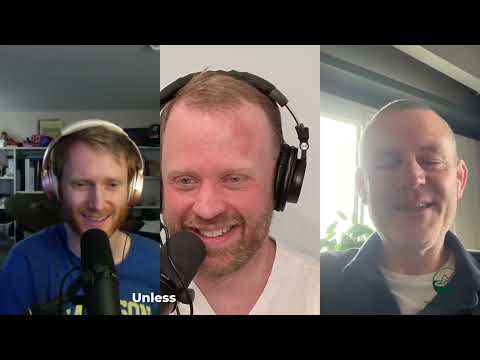
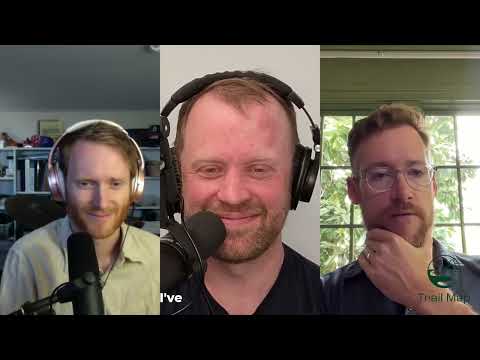
Mike Hanas on Teaching, Leading Schools, and Learning to Loosen Knots
Matt Gregory (00:12)
Patrick, how's it going? Happy Friday. It's Friday where we are.
Patrick Dyer Wolf (00:13)
Matthew.
Happy Friday. It's probably Tuesday where the listener is. I don't have my Trail Map sweater on, but I had it on earlier and it's right over here. I just want you to know that. Yeah. It's still the comfiest. Great. I've only, it's only been through one wash, I think. You know how it goes.
Matt Gregory (00:20)
Yes.
It could be.
good.
How is it aging?
Yeah, yeah, no, it's a comfy, it's a comfy article clothing. Actually, I just got some small sizes. So my son, Will was wearing one around and he's like, this is a very comfortable sweatshirt. I was like,
Patrick Dyer Wolf (00:53)
It is. the smalls, that's cute.
Matt Gregory (00:56)
Yeah, it's an extra small. ⁓
Patrick Dyer Wolf (00:59)
We're doing pretty good at like standard white guy avatar right now. We're both like...
Matt Gregory (01:04)
I I know. I talked to Heejin
about this this morning. I like with the with the our facial hair and haircut like it is it's a
Patrick Dyer Wolf (01:12)
Yeah,
it looks like a Bitmoji or whatever they call him now, your, you know, just your Apple avatar. It's just like...
Matt Gregory (01:19)
Yeah.
I guess the only thing we can say that's good is we're aware of it.
Patrick Dyer Wolf (01:25)
Yeah, that's all we can do.
Matt Gregory (01:27)
That's all
we can do. Well, we were just talking about ⁓ upcoming guests that we might have on. And of course, it's our policy not to name names until we've come to an agreement.
Patrick Dyer Wolf (01:43)
First we have to kick ass before we can do that.
Matt Gregory (01:46)
Yeah, but we've got some great, think I'm feeling energized about a handful of folks that planning to reach out to and there's also one idea that I have which could introduce a little bit of B-roll and ⁓ maybe visiting a little bit of ⁓ a factory of sorts. Some field work, yeah, ⁓ I'm very, very excited about that.
Patrick Dyer Wolf (02:05)
That's exciting too, some field work.
I wonder if one day we'll bring in a correspondent as well. That's further down the road.
Matt Gregory (02:14)
⁓ Right from
the field. That'd be cool. please send any correspondent job applications to and use the subject line correspondent application.
Patrick Dyer Wolf (02:31)
Send your correspondent correspondence to.
Matt Gregory (02:33)
Yes, yes. Yeah.
I wonder if I should edit out my email address. I don't know if I want.
Patrick Dyer Wolf (02:39)
You could do it comedically, like some funny sound effect.
Matt Gregory (02:43)
Yeah, or just bleep it, you mean?
Patrick Dyer Wolf (02:45)
Yeah, where it is like a long bleep. ⁓
Matt Gregory (02:47)
Yeah.
I think I'll do that. I think I'll do that. And then I'll keep this part where we talk about it. ⁓ we really are showing how the sausage gets made.
Patrick Dyer Wolf (02:52)
Yeah, and you could.
Right. You
could put a black bar over your mouth so people can't lip read it.
Matt,
Matt Gregory (03:05)
I don't know.
Patrick Dyer Wolf (03:05)
what do you think about Jayson Tatum coming back?
Matt Gregory (03:09)
Mm-hmm. It is. we're back to the sports podcast thing ⁓ I don't know. I haven't heard anything like So I don't think he's gonna come back I think
Patrick Dyer Wolf (03:11)
Yeah, we are sports podcast.
this season.
Matt Gregory (03:27)
He might, but I kind of like, if they, like, they're playing really well right now.
Patrick Dyer Wolf (03:34)
Yeah, right. so he's like, he's "guys," he needs to chill, I think, but you know, I'm not, he needs to chill and rest more.
Matt Gregory (03:40)
What's that?
Yeah, and I like Tatum. I think he's a good guy. He seems like a good, good, good character. But honestly, I think I might trade him.
Patrick Dyer Wolf (03:55)
I mean, he went to Duke.
Matt Gregory (03:57)
That's true. Yeah. Well, my brother went to Duke, too, but for graduate work.
Patrick Dyer Wolf (04:00)
sorry. Sorry.
He's a good, he's a good, he's a good, he's one of the good ones.
Matt Gregory (04:06)
I might trade them.
Patrick Dyer Wolf (04:09)
Wow, honestly, I'm surprised.
Who would you want?
Matt Gregory (04:15)
I
just wonder if we've been limiting ourselves by trying to make Brown and Tatum play well together and both of them trying to play well together has an impact on how much one of them can shine. Because Brown has really shone this season.
Patrick Dyer Wolf (04:33)
Right.
I remember when they won, I remember seeing Jaylen Brown's face, because he won the MVP, right? And just the relief on his face. I'm recognized for my efforts. And yeah, when you have two type A people, it's crowded.
Matt Gregory (04:43)
Yeah. Yeah.
Yeah. Yeah.
thing is, don't know if they're type A. Like,
don't know if Tatum is type A. No, no, no. I mean, it's an interesting question. Just he has a, would say, a bit of an atypical personality for being such a dominant basketball player. yeah, well, I honestly have been a pretty bad fan this season. I haven't been watching a lot.
Patrick Dyer Wolf (05:00)
That might be the wrong term. That might be the wrong.
I'm just gonna grill you more and more the more you don't watch. I'm like the analytics.
Matt Gregory (05:30)
I mean, honestly, it just doesn't really work with my life right now, watching live. Well, that's for sure true, but hanging out with a fam, know, and I have yet to inspire the next generation of Celtics fan. ⁓ So anyway, ⁓ got a fun one today with Mike Hanas and ⁓ shout out.
Patrick Dyer Wolf (05:36)
Yeah, staying up late, it's not great.
play us.
Yeah, that's okay.
Matt Gregory (05:58)
And thank you again to Margy Campion for ⁓ teeing that up. She's a, in addition to being Pat's mother-in-law, a great ⁓ and loyal follower of the show. And just an opportunity to call out too, that anyone who's a listener, you know, if you have somebody in your life that inspires you, that you you think has an interesting path or you yourself have a story that you want to tell, please do reach out to us.
And you know, Mike is actually the first show where I don't have a pre-existing relationship with a guest, which is very exciting. And I think it was gonna happen and now it's happening and I'm excited to try this on for size.
Patrick Dyer Wolf (06:46)
can't thank Margy enough for all of her support and all of her types of support and love, including this one. And if I'm honest, I'm a little bit nervous to talk to Mike because he's sort of a mythic figure in my life. He's been referred to for like 20 years, ⁓ you know, and I've never really had a conversation with him. But I'm excited and ⁓ I think it's going to be a great one.
Matt Gregory (06:57)
yeah.
Yeah.
Yeah, me too. Cool. Well, let's jump right in.
Matt Gregory (07:16)
Mike, welcome to the show. It's so wonderful to have you here.
Mike (07:20)
Thank you, it's good to be here. Feels like a special treat.
Matt Gregory (07:24)
⁓ Well, we're really pleased to have you and Margy speaks very highly of you. ⁓
Patrick Dyer Wolf (07:31)
has for many years. This
is a long time coming for me to get to talk to you. I'm very excited.
Matt Gregory (07:36)
Yeah, totally. Well, I guess to open it up, you know, I know as an undergrad in college, you studied classics, and then spent, 40 years in education teaching leading almost 20 years as a head of school. And now you've maybe you've been doing it all along, but you're a coach. And so I guess maybe you could just ⁓
sort of walk us through that journey a bit.
Mike (08:10)
Sure, ⁓ and thank you for the question. I should say as I begin, among the factors that have informed my journey, and more than informed it, but animated it, ⁓ fuel injected it, have been the number of big hearted people I have met. None more big hearted than Margy
So ⁓ that she's introduced me to you guys ⁓ makes a difference in terms of my happiness about being here. ⁓ I'm sometimes asked these days, ⁓ I sometimes cross paths with folks from college who knew me as a classicist, or at least that was one of the identities attached to me. And occasionally a fellow classicist will ask whether I consider myself a ⁓
or Romanist or ⁓ something else that I, the truth is I no longer identify with. ⁓ I don't, ⁓ I benefited immensely from my ⁓ formal education in Latin, in Greek, and in ancient history. And there are ⁓ countless ways in which I tapped into. ⁓
what I learned, including the content, as a teacher, as an administrator, and including as an executive coach and a consultant. But I think the most important factor in forming my journey related to my experience as a classicist
is that it was a study of what it means to be a human being. ⁓ When we think about, when many of us think about things like the classics, we think about the languages, Latin and Greek, and we think about big figures like Homer and Cicero and Virgil and authors from the classical age. ⁓ But what those people were doing was telling stories ⁓ about...
a human experience. ⁓ What they were doing was ⁓ asking questions about ⁓ what it means, what makes for a meaningful life. know, Cicero was writing about friendship and trying to figure out what makes for a good friend. ⁓ Those kinds of, those essential ⁓ questions and life experiences are what I continue to take with me and make ⁓ significant use of in my career. I began teaching
⁓ coming out of college in 1985, a long time ago. Having tried to get interested in other things, I remember going to pre-law ⁓ programs, presentations while I was an undergrad. I think I went to a Procter & Gamble ⁓ information session. ⁓ But for a number of years, I had thought I might be happiest ⁓ in a classroom, ⁓ in a school community, ⁓ in a gym with... ⁓
Matt Gregory (10:47)
You
Mm-hmm.
Mike (11:04)
people playing basketball. And I was lucky enough to have a couple of job opportunities in 1985. I began my teaching career at a boarding school in Massachusetts called Tabor Academy. And I knew almost immediately that I was at home in that environment.
In fact, ⁓ I've been told by the person who hired me that there was some reluctance on the search committee to do so because I was so soft spoken. They wondered if I would actually ever say anything in a classroom and if I did, if I would be heard ⁓ in speaking it. ⁓ on my very first day as a classroom teacher at Tabor, I taught my first ancient history class. And thank goodness I was in a boarding school setting and could run across the street to my apartment to change
my shirt because I was so nervous doing it I had sweat through the shirt.
A day or two later, my department chair walked into my classroom, ancient history classroom, and I was on top of a desk pretending to be Odysseus. I may have been at that moment that ⁓ I was made certain that I ⁓ was at home in that environment. ⁓ One of the beautiful things about my ⁓ journey has been that it's included a journey through the independent school world. And ⁓ there are a lot of things to say about the independent school world.
Patrick Dyer Wolf (12:03)
You
Matt Gregory (12:20)
Mm-hmm.
Mike (12:24)
especially in a time when public school resources are limited and dedicated professionals in those environments are working as hard as they are in circumstances as adverse as they face.
But one of the gifts of an independent school experience is that there's a lot of latitude for someone to grow ⁓ if you are interested. And I'm, ⁓ you know, I'm a deeply curious person. I love to learn. It may really be the only thing I'm any good at, to be honest. And I loved learning about how to be more effective teacher of Latin and Greek and ancient history. then I loved learning more about how a school operates, operations like admissions and college
Matt Gregory (12:44)
Mm-hmm.
Mike (13:08)
counseling ⁓ and administrative leadership operate and I was lucky enough to be asked ⁓ early on and then throughout my career if I'd be interested and willing to take on more responsibility and different responsibility. ⁓ for me those were always opportunities to learn ⁓ and to be of use. ⁓
That's one of the things I value most in my life, have valued and continue to value, being of use. So throughout a school journey, I've been afforded again and again and again opportunities to try to be of use. in some cases, those responsibilities have felt big, challenging, depleting even, but they've also always felt like privileges to be asked to help with something that's hard.
Matt Gregory (13:59)
Yeah, it's interesting. I also was very fortunate to go to independent schools from kindergarten through high school. I went to Fessenden and then to Middlesex School. And this sort of safe haven that these independent schools create in the best of times is so magical for the students that
go to the school because it is such a place to extend yourself. It's safe. It's a place to extend yourself and learn. And I actually had the opportunity to work at Fessenden too in the ESL program for a couple of summers.
You know, I think it also affords that of the people that work at these schools. it creates, you know, it's different, but it creates that kind of environment where like growth is very possible. I hear that in your story.
Mike (14:45)
Yeah,
it's a great gift. ⁓
It's what also informs, you know, the latest, the more recent chapters of my life. I loved my, I've loved a lot about my time in each of the schools at which I've worked. I loved serving as the head of Carolina Friends School. I loved my time as the head of San Francisco Friends School. And I moved on from that, which I loved a lot about in no small part because a lot of the work had become familiar and I didn't feel like I was done learning. I'm still not done.
learning. ⁓ That's what led me to explore possibilities for another chapter of trying to be of use ⁓ maybe in settings or in context other than ⁓ in the front-facing leadership role of a single school.
Patrick Dyer Wolf (15:34)
I've gathered from reading a little bit about you and from talking to Margy and various other things that ⁓ you, I don't know if enjoy is the right word, but you get yourself into situations where, I think you used the phrase on your website, untangling knots. I can relate to that. It's something I find myself kind of drawn to and it's like a,
It's like going to, it's sort of like learning. It's like you're walking towards something that's difficult because like that's where the excitement, the challenge, the, at some point the reward is. ⁓ I guess I'm just wondering if you can talk a little bit about how you like to go about untangling knots, maybe some of the context that you've done that.
in the different places you've worked in the past and now.
Mike (16:39)
Yeah, it's one of the most satisfying and meaningful aspects of work and what's really a vocation for me, Pat. ⁓
Yeah, I deeply love the fact that I get the opportunity to help create the conditions that lend themselves to loosening of knots. I think it's fair to say that I assumed a lot of responsibility as a boy growing up in Chicago in my family context. I couldn't have been more fortunate in terms of who my mother was and her love for me ⁓ and my sister. And my dad, by his own admission,
wasn't well equipped to be a father and ⁓ that lent itself to me taking on roles you know that we we might say you know ⁓
I took on sooner than I should have or sooner than where I'd deal. ⁓ In retrospect, I tend to think of myself as exceedingly lucky ⁓ because I ⁓ had the opportunities to assume responsibility that I did. So I've been assuming responsibility for a long time. ⁓ I think one of the things that those relatively early childhood experiences, certainly adolescent experiences, ⁓ made me aware of was that I
I could be in difficult circumstances and not be overwhelmed by them. You know, could bring to them a kind of non-anxious presence and could bring my curiosity. ⁓ I benefit, I should acknowledge, you know, I'm privileged in that I'm a 6'5" white guy. ⁓ I can stand in a space and not feel physically threatened. ⁓
⁓
in spaces that other people might. That has helped me, that has aided my desire to be helpful in difficult circumstances. Sometimes the work, ⁓ the loosening of the knot involves helping an individual feel heard, reconnect with her or his or their values, ⁓ what really matters most to them, what might be ⁓ in play beneath the
surface of an operational question. trying to decide, someone might say to me, know, I can't decide whether to stick with this job or not stick with this job. And ultimately that's, there's a question in there to answer, but ⁓ it's sometimes ⁓ fruitful for individuals to dig a little bit beneath the surface of that and ask, know, what's important to them, what their values are, what's ways in which the values, they do get to bring their values to life in that setting, ways in which they don't, whether they, what it might take to change their current circumstances to make more room for their
values to come to life or what they might look for in another setting. Other times it's work with a group. I'm sometimes called in when groups of people include folks who are yelling at each other. And I'm not a trained mediator or a conflict resolution specialist, but I'm called in with some frequency in those settings. And again, I think I benefit from being 6'5". I walk in a room and people look up and think, oh no, is he about to yell at us?
And then I speak fairly softly ⁓ and naturally, and people are a little discombobulated by those two features. And when you're discombobulated, you're not yelling at anybody anymore. I've had ⁓ one per... Yes, somebody ought to ⁓ franchise that. ⁓ Pat, there we go. ⁓ To get it to a specific experience, the most...
Patrick Dyer Wolf (20:07)
So you use the discombobulation technique. I like that.
patent that.
Mike (20:24)
significant experience I've had in this involved work I did my part in, not alone, at Carolina Friends School while I served as the head of school there, when it became apparent to me through a group of alums that they had been, they identified as the survivors of sexual misconduct perpetrated at the school between 35 and 40 years before I arrived.
There were a whole bunch of choices to make ⁓ about whether to...
lean into that and learn more or to hide, ⁓ to hope it would go away. There were choices to make about how to investigate, choices to make about how to bring our espoused values at Carolina Friends School to play in the work, ⁓ and some painfully difficult steps along the way. It took about two years to move through the work. ⁓ I worked closely with a group of alums. I worked closely with law enforcement and child protective services.
We hired and outsourced an investigation. ⁓ It was by far the most ⁓ demanding work I've ever done. ⁓ It was one of those privileged responsibilities to have the chance to try to do it well. ⁓ Everything didn't work out ⁓ in the way that I hoped. I'll be specific. ⁓ For example, I became increasingly committed to
⁓ transparency about what we had learned through the investigation, what we were doing about it, ⁓ and even identifying the perpetrators, ⁓ which I had come to believe, to be convinced of, as I still am today, was the right way to be most supportive of the survivors, including a whole bunch who had not come forward ⁓ and didn't until we were fully transparent.
Matt Gregory (22:24)
Mm.
Mike (22:28)
One of those perpetrators committed suicide. ⁓ And ⁓ I'm not free in my life to think that there is no connection between the dots of my choices, including the choice of transparency, and that person's ⁓ act. ⁓
⁓ And ⁓ I don't regret the commitment to transparency. I wish I had known enough to put something in place to ⁓ protect him from himself and make ⁓ his participation in our truth-seeking possible. He had expressed a desire to do so.
Anyway, you know, could I could say more about that if you'd like, but I'm naming it because I've never had a there's I've not had any situation, any set of circumstances that I've had a part to play in trying to ⁓ loosen knotiness get closer and closer to the truth, ⁓ convey, communicate things that it's hard to say, ⁓ that it's easier to choose not to make public easier not to have to express. But that ultimately, I believe ⁓
Well, to this day, I believe that we at Carolina Friends School became a stronger community as a result of our commitments to things like truth-seeking and transparency in the way we did that work.
Matt Gregory (23:49)
you mentioned like facing these knots, these challenging situations, like you're able to maintain this calm. And I'm wondering like, what is it a value system that you have? Is it the value system of the communities that you're part of? Like what allows you to maintain that?
Patrick Dyer Wolf (24:09)
I don't want to stack, I don't want to question stack too hard, Matt. I know we're trying not to do this, but I know, I know that, you know, Carolina Friend School is a, a Quaker school. I'm just wondering how, if I don't know if you were brought up Quaker or if you came to it when you got to Carolina Friends I'm just wondering your relationship to that. those.
Mike (24:09)
Uh-huh.
Matt Gregory (24:12)
no, I know what-
Mike (24:27)
Yeah.
these are integrated questions, turns out, as I receive them, Matt and Pat. I was born and raised Catholic. ⁓ And I was born and raised Catholic by my mother. And my mother is the first answer to your question, Matt. ⁓
Matt Gregory (24:30)
Perfect, just like we planned it.
Mike (24:48)
⁓ My understanding of Quaker values ⁓ became increasingly important, but only alongside ⁓ my mother. My mother was the best teacher I've ever had. My mother was a living example of ⁓ non-anxious presence and of creating conditions. My mother was able to finish only a year of high school before she had to find work. Her family was navigating depression circumstances and she had to get a job. She got her first job at a Peter Pan.
Peanut Butter Factory on the far south side of Chicago.
Never graduated from high school and she was the best teacher I ever had. Teacher as creator of conditions for people to learn, explore possibilities, wrestle with problems, loosen knots. My favorite story to tell about my mother is, you know, when I was in high school and had my driver's license, I was playing a lot of basketball and I was playing at a high enough level to think of myself as an athlete. So I was a non-drinker and before the term was popular,
essentially the designated driver for my peer group, my friends. My group of friends, by the way, were known as, we called ourselves the celebate seven. We were really good at Latin. I mean, we...
Patrick Dyer Wolf (26:04)
What?
Mike (26:06)
We kicked ass in the state Latin competition and didn't in social settings of all kinds. I'd play a basketball game on a Friday or Saturday night. My friends would come to the game. They'd wait for me after the game. I would drive us to the party or the gathering, wherever it was after the game. ⁓ They'd have drinks and other things, and then I'd drop everybody off at home and I'd make my way home. My mother would be half asleep on the couch waiting for me. ⁓
Patrick Dyer Wolf (26:10)
Semper Ubi Sub Ubi.
Mike (26:36)
I was getting home after midnight, sometimes 12:30 1, maybe 1 30 in the morning. I'd park the car, I'd walk up the steps, I'd put the key in the lock. And as I was doing so, almost inevitably, my mom would have awakened, she'd be opening the door from inside the house, pull it open. And the first thing she would say to me was, remember 1 30 in the morning, hungry, babe? And I always was. ⁓ So we'd make
Matt Gregory (26:53)
you
Six five.
Patrick Dyer Wolf (27:03)
Of course.
Mike (27:05)
We'd make our way to the kitchen and she'd make me ridiculous amounts of food. And we'd sit at the kitchen table and she would not pepper me with questions. But after a couple bites of a sandwich, she might ask, so how was the game tonight? Did any of your friends go? Michael, does Dave Bonoma still like that girl? Do you think he'll ever ask her out?
Matt Gregory (27:10)
Aw
Mike (27:34)
Michael, is there anyone you like? She was the person, she was the parent in our group that my friends would tell you it was hardest to admit they had done something wrong to, much more so than their own parents. They didn't want to disappoint my mom. ⁓
Matt Gregory (27:46)
Mm.
Mike (27:50)
And she, so she is the first answer to your question. My first answer to your question, how did I, what conforms my, whatever ability I have to bring non-anxious presence to condition setting. And then to your point, Pat, once I got to ⁓ Carolina Friends School and had been, ⁓ had become, started to become familiar with ⁓ friends practice, as someone who was not and is not a Quaker, I've never been a member or an attender
of a meeting. I'm sometimes referred to as what's called an unconvinced friend. So in that faith tradition, people identify as birthright friends, birthright Quakers. They identify as convinced if they join after becoming familiar and get welcomed into a And then I'm part of a group that's known for finding ourselves very much at home in that setting without ever officially becoming a member.
Friends values, including a commitment to truth seeking. Quakers believe that truth is continually revealed. At their best, members of a Quaker community or a Friends school ⁓ are relentless in their pursuit of the truth. In fact, they try to catch themselves when they think they have figured out the answer as if there is a singular static answer. ⁓ Quakers also believe that there is that of God.
⁓ or what we might call light or uniqueness, ⁓ in everyone. And it is the responsibility of members of a friend's community to answer that of God, that light, that uniqueness in everyone. Those two values were two of the values most alive alongside my mom, my mom's voice saying, Michael, just take care of those men, those survivors. ⁓
Matt Gregory (29:37)
Mm.
Mike (29:40)
nothing informs whatever I have of that kind of skill Matt, the non-anxious presence, than ⁓ my mother's model, my mother's example, and those kinds of values.
Patrick Dyer Wolf (29:54)
Those are some excellent pillars to be standing upon, I think. ⁓
Mike (30:00)
Yeah.
Can I go on a little bit? ⁓ you know, it's a ⁓ I couldn't agree more, Pat. And at this stage in my life, among the things I pay attention, I'm paying a lot of attention to is how
Matt Gregory (30:02)
Yeah, yeah, please.
Mike (30:12)
⁓ that they are such important pillars doesn't mean they're always easy to live, to embody, right, to operationalize. A lot of my work with individuals and with groups, as I said earlier, is grounded in ⁓ attention to their ⁓ espoused values, their expressed values.
And then considering when is it hard to operationalize those values, right? I value my family and that doesn't mean that I've always ⁓ only done things that. ⁓
look clearly like a manifestation of my value of my family. ⁓ Right? I value curiosity. ⁓ I value kindness. That doesn't mean I'm always kind. So I think a lot at this stage in my life about ⁓ the importance of ⁓ holding the tension that our highest hopes, our highest aspirations, our expressed values ⁓ serve and ⁓
⁓ and aren't necessarily as easy to bring to life as we'd like.
Matt Gregory (31:20)
What's important about that tension?
in your own life, in the way you choose to live.
Mike (31:29)
Yeah. In a word, think it's ⁓ acknowledging it makes possible getting closer to living with integrity, right? To... ⁓
Matt Gregory (31:43)
Mmm.
Mike (31:46)
to ⁓ admitting when I have failed, that I have failed, and when I have failed, to owning failure and trying to, you know, we sometimes, you know, we teach kids when you mess up, the best thing to do is to fess up, and then you'll have a, you might have a chance to fix it. ⁓ I have a dear colleague who uses that, still uses that phrase quite regularly, mess up, if you mess up, you want to fess up, and then you get to fix it. ⁓
Yeah, so in a word, that's, makes, can get closer to ⁓ living with a sense of integrity, a sense of if you believe in a soul, your soul being intact. Not perfect, right? Not undamaged, not not unwounded. Yeah.
Patrick Dyer Wolf (32:31)
I feel like that is a thing that I often... ⁓
and missing in a given situation is that sort of humility about, you know, one's own imperfectness. ⁓ Because there's, think, you know, I mean, it's been true forever, but it feels very magnified in our current media environment, know, social and otherwise, that it's very...
It's very common to point out the shortcomings where you see them. It's very rare to acknowledge them in yourself and understand how they're related to the shortcomings you're pointing out. ⁓ I don't know if that's a question really, but.
Mike (33:23)
It reminds me
of a number of different sources that helped me try to do that, Pat. My favorite, have a favorite Ted talk of all time. It's Benjamin Zander's talk. I think the title includes some reference to classical music, but it's ultimately about, it's partly about that, much ultimately, much more about leadership. And it culminates in Zander ⁓ suggesting that ⁓ at our best when, ⁓
when something's not going well, when something's amiss, rather than looking out ⁓ to locate responsibility, we ask ourselves, I ask myself, I might ask myself this question frequently, what am I doing that this person who's angry or disappointed or frustrated or furious, what am I doing that this person's eyes are not shining? It's the hardest question to answer, sometimes the hardest question to ask, shit.
Patrick Dyer Wolf (34:12)
Mm-hmm.
Matt Gregory (34:18)
You're good.
Mike (34:19)
You may need to edit that out. Your choice. It's difficult. Yeah, to confront. ⁓
Patrick Dyer Wolf (34:20)
We'll do a car, car horn.
Mike (34:28)
I own this. And this is a big factor in my work these days, to be honest. ⁓ Maybe this gets back to one of your earlier questions, Matt. ⁓ I'm often working with an individual. I'll try to be more specific. I'm sometimes working with ⁓ someone in a designated leadership role in an organization, an executive director of a nonprofit or a founder or a head of a school and a board chair. And ⁓ they have called on me because they're struggling. They're butting heads.
a whole lot of tension in that relationship. And often ⁓ my work with them is ⁓ centered on the possibility and what it would take for ⁓ that which seems impossible to say or nearly impossible to say to be said.
And sometimes that's easier to get to than it seems. Sometimes I simply help ⁓ the leader and the two people in conflict adopt a new pattern of checking in periodically with two questions. ⁓
What's the most supportive thing, well, one asking the other, what's the thing I've done over the course of the last month that's been most supportive of you and your role, most supportive of you doing your best work? What's the thing that I have done over the course of past month that's actually made it harder for you to do your best work? And then receiving those same two questions in turn from the other. People working really closely together who ⁓ spend a couple of months and start to adopt a little practice like that. ⁓
change the dialogue and the tension has the potential to become not continue to be debilitating, infuriating, depleting, but actually become the potential to become generative.
Patrick Dyer Wolf (36:16)
do you find yourself able to do what you've been describing when you are not the mediator, but you are one of the parties involved that might be, you know, switching in and out of seeing red? And are you able to put on that hat when you're in that situation?
Mike (36:40)
I don't know how well I do. I hope the fact that I'm aware, I pay attention, I try to be aware when my immersiveness in the circumstances has the potential to get in the way of me bringing the facilitative kind of role I want. I hope that helps.
⁓ I'm sure I don't get it right ⁓ all the time. ⁓ Yeah, it's a poignant question, Patrick, because there are times when I'm not only facilitating, but I'm invested in some particular way, especially when I'm called for help by people I have established relationships with, people ⁓ I have some history with. Yeah.
Patrick Dyer Wolf (37:37)
Yeah, I mean, I'm sure there were many phases of it, but the situation you were describing at the school that lasted two years, I'm sure it developed into both situations, ⁓ sometimes maybe both at the same time. ⁓ And yeah.
Mike (37:54)
Yes.
Matt Gregory (37:59)
Right.
Patrick Dyer Wolf (37:57)
the mediator, also being someone who's personally invested and vulnerable.
Mike (38:04)
Yeah, something that helps, I'm not sure if this is gonna get close enough to what you just referenced, Pat, but. ⁓
This is a Quaker, you know, I've learned a lot. I learned a lot ⁓ in my years of being a member and having the roles that I did in Quaker context and friends education. One of my favorite takeaways, one of the most meaningful lessons I've learned is about the possibility, there's an expectation in the world of friends meetings that when a group is coming together to make a decision, ⁓ every member of that group has ⁓
responsibility as an individual to do their individual discernment. In other words, to do the homework, to do the thinking, to be in the conversation so that you come to a meeting where a decision is gonna be made with an opinion about what should happen. And then, brace yourself for this, guys, your job is to expect your mind to be changed.
Patrick Dyer Wolf (39:10)
Tough ask.
Mike (39:10)
It's ⁓
a huge ask, isn't it? And even the naming of it as a possibility, ⁓ as an aspiration, makes room for it to be more likely to happen. ⁓ And when friends decision making is happening at its best, it's precisely what people do.
Patrick Dyer Wolf (39:13)
Yeah.
Mike (39:33)
They bring the product of their individual discernment and they share it with the group. They release it to the group and then they expect their minds to be changed and they listen differently to the person who's actually sharing the exact opposite point of view, exact opposite suggestion. ⁓
Patrick Dyer Wolf (39:51)
And aspect of it, and you can speak more to this than I can, is that you're sitting often, I think, in silence in this type of process, and then someone is speaking out of the silence. Which just that in and of itself, sitting in silence in a group is so rare. And just waiting for, you know, to be moved to speak, I think is just like an equally significant flipping on its head of
modern convention.
Mike (40:21)
Yeah.
Yes, Quakers believe that wisdom begins in silence.
the kind of silence that allows for deep listening and for what Friends, capital F, refer to as the still small voice ⁓ inside any one of us to start to rise. In my work as a coach and a consultant in facilitative contexts, ⁓ groups I'm working with for the first time are sometimes surprised by how long I will wait after asking a question ⁓ for someone to weigh in.
Matt Gregory (40:50)
I'm sorry.
Mm-hmm.
I feel like ⁓ one word that we haven't used, I don't think, in this conversation is reflection. And the connection, I think that's what we're talking about here, is the importance of reflection. ⁓ know, individual reflection, group reflection. everything that you're describing sounds...
inherently simple like of course I should have my own opinion about something or like of course I should have you know, and then I should come to a conversation with an openness to the other person being being right. ⁓ guess I'm wondering like what why is this why does this seem simple yet? It's clearly not happening enough. Like what's what's the blocker there?
Mike (41:47)
A short answer would be ⁓ time, busyness, a sense of urgency about other things seemingly more important than ⁓ pausing for a moment to reflect, Matt, to ask, OK, what just happened there? Then maybe to ask, what did I bring to that?
experience that may have contributed to its success or to its failure? What was someone else offering that ⁓ it may be worth our returning to consideration of because if we had followed that path, things might have turned out differently. What do we want to take away from this experience ⁓ that might help us make an even better decision next time? ⁓
The reflection doesn't have to take an enormous amount of time, but it requires a different kind of time. You're probably familiar with the quote, I think it's most often attributed to Viktor Frankl. goes something, the Holocaust survivor, psychiatrist, who in the quote go something like, ⁓ "there is a space between stimulus and response. ⁓ In that space, ⁓ there is room for a choice.
And in that choice, our power and our growth rests." I don't have the quote exactly right. I'm sorry for that. But reflection is about creating that kind of space between stimulus and response.
Matt Gregory (43:21)
Yeah.
I'm wondering for people who are busy, who, and I mean, there is a bit of a, I think there's a bit of a tactical element to like what we're bringing people with the show, ⁓ where like people might be inspired by something they hear in terms of somebody's life path. I'm just curious, like for people that maybe don't feel connected to their, the way that they feel, like what are some of the ideas that you share with your
coaching clients or whomever you're working with or even employ yourself to facilitate reflection. Is this something that like, do I take a piece of paper and write down how I'm feeling? What do I do to reflect?
Mike (44:13)
some of all of the above. But I don't want to leave you with that. ⁓ I ⁓ think you begin by ⁓ deciding ⁓ maybe there's something to gain from doing more of this in my life or adding this to my life. If you come to that decision, you can start really small.
In work with a client, ⁓ for me, we always begin our work in developing and sharing what I tend to refer to as operating manuals. So I have a whole bunch of different questions. I'll pick a handful of those questions to share with a person I'm going to begin a working relationship with. And then we'll share our responses with one another. And the questions are things as simple as ⁓ what energizes you and what depletes you.
⁓ What's a birthday treat that would bring a smile to your face? ⁓ What's one of your pet peeves? ⁓ How do you like to receive feedback? A question we in supervisory roles ask far too infrequently. ⁓
Patrick Dyer Wolf (45:10)
You
Some people probably
not at all. ⁓
Mike (45:27)
I sometimes admit that that's my first answer to the question. I don't actually like to receive feedback. I've received enough to last a lifetime. ⁓ And then I remember how valuable it can be, and my response is actually that I'd like it to be, I prefer that it be actionable. ⁓ If it's just coming in to tell me what a horrible human being I am and terrible decision I made without me able to do anything about it, ⁓ it's harder for me to...
Patrick Dyer Wolf (45:31)
Sure. Yeah.
Mm-hmm. Yeah.
Mike (45:56)
⁓ I was even worth it. ⁓
Patrick Dyer Wolf (45:58)
And it's sort of like you're trying
to hone, it's a two way honing of a skill because asking for, you know, asking for something ⁓ is one half and then you have to train somebody else sort of towards what you need. like, you could map that onto any sorts of other human activities, but it's like, it takes the dancing of two things.
This is sort of reminding me, I don't know if you are a fan of Marshall Rosenberg, Nonviolent Communication. Yeah, this is reminding me a lot of that book.
Mike (46:21)
Yeah.
Yeah. I'm also thinking on another end or side of a continuum of ways to do this, Matt, in answer to your question. I have a colleague who's ⁓ told me recently about a way in which ⁓ he is using AI, ⁓ believe it or not, to support reflection. And what this individual does is...
Matt Gregory (46:47)
Okay.
Mike (46:54)
And he's provided enough information about ⁓ who he is, about his work, to then ask AI, and one of the AI tools for some prompts for reflection. ⁓ And ⁓ finds the questions that the either Claude or GPT or whichever tool he happens to be using to be ⁓ worthy of at least consideration on the drive in to work.
if not ⁓ in the journaling practice that someone might have. ⁓ I think a big step is really is that first one, coming to deciding and then acting upon the idea that I'm spending some time thinking about ⁓ who I am, ⁓ how I'm.
what I say is important to me and ways in which I'm actually operationalizing, embodying those things supposedly important or not is where it all begins.
Matt Gregory (47:50)
Yeah. I think
it can be scary too, you know, in addition to all the time and, you know, how busy everybody is. It's a, it's a, you know, it can be a vulnerable experience.
Patrick Dyer Wolf (48:02)
I have a lighter-hearted question before we go. I mean, we share a few geographic pinpoints on the map. Carolina Friends School is in Durham. I lived in Chapel Hill. My wife's family is all in Chapel Hill. San Francisco Friends School, by the way, is in a great central location in the city of San Francisco. I was just looking at the map.
⁓ I, I'm in a, I'm in a band with guys who live all in the Bay Area. I'm frequently out in the Bay Area and Chicago, you grew up in Chicago. I have my mom's brother and his kids live in Chicago and my, on my dad's side, my cousin, ⁓ is actually now he's been a ⁓ sports broadcaster his whole life, but he is now the.
play-by-play guy for the Chicago Cubs. my question to you is, are you a Cubs fan or a White Sox fan? All right, there you go.
Mike (49:02)
I am a Cubs fan. In
spite of having grown up on the South Side, yeah, my...
Patrick Dyer Wolf (49:08)
Wow, yeah. Don't tell Obama.
Mike (49:11)
My uncle, ⁓ Unks, whose full name was Walter Leo Wardzalla, took me to my first game. It was at Wrigley Field, and I was hooked. I don't ⁓ hate the Sox the way some in Chicago ⁓ bring to life their loyalty, ⁓ in part because my mom, after working at that Peter Pan Peanut Butter Factory, then began work for the Board of Education in Chicago as a lunchroom attendant at our local public school, which meant that she was off
during the summer, supposedly off. ⁓ She had to find another source of income, so she worked concessions at ⁓ the old Comiskey Park when the White Sox were in town, and at Wrigley Field when the Cubs were in town, and she would bring me with me ⁓ to games. I would bop around from seat to seat over the course of the game and stop by her stand to get a hot dog when I was hungry.
Matt Gregory (49:51)
wow.
Patrick Dyer Wolf (49:58)
That's great.
That's awesome.
Matt Gregory (50:04)
what
an experience. That's fantastic.
Mike (50:07)
Yeah. I'm thinking
that reminds me of two other quick things I'll share. You know, when you're thinking about how to create a more reflective space with anybody, maybe it's with a group of friends. ⁓ One of my favorite questions to ask is, you know, how did, where'd you grow up and how did where you grow up shape you? ⁓
Matt Gregory (50:25)
Mm.
Mike (50:26)
I, in many ways, I identify as a product of Chicago. Not Chicago as known as the windy city, ⁓ but sometimes Chicagoans, Native Chicagoans identify as the city as the city of broad shoulders. ⁓
I consider myself having enjoyed the privilege of having been able to walk side by side with a lot of people and groups and occasionally take off of their shoulders and put on mind whatever they happen to be carrying. I don't necessarily have solutions to the problem. They often have the solutions in them, but it's a privilege to be able to relieve them of the load for a little while.
Another question I really enjoy asking these days, especially in the professional context, is, goes something like this. You guys might have fun with this after the podcast. ⁓ Knowing yourself as well as you do, what makes you hard to work with? ⁓
Matt Gregory (51:23)
Hmm.
Patrick Dyer Wolf (51:26)
Sometimes I work too hard.
Matt Gregory (51:28)
Hahaha
Well, think that's gonna, we're gonna have the longest conclusion ever to this episode as Pat and I work through how to answer those questions.
Mike (51:32)
Food for thought.
Patrick Dyer Wolf (51:36)
Yeah,
Mike, great answers. could, I mean, we'll probably have to meet up in person sometime so I can ask you more questions.
Mike (51:47)
I'd welcome that. Let me know when that band is playing in the Bay Area or here in the Triangle.
Patrick Dyer Wolf (51:52)
Yeah, yeah, we'll
do. We'll do.
Matt Gregory (51:55)
They're amazing. ⁓
Mike (51:55)
Matt, you've been a gracious host, ⁓
asking good questions, meaningful questions. Thank you for that.
Matt Gregory (52:02)
Well, it's been fantastic to have you on. Thank you again for your time. And I hope that we'll stay in touch. And yeah, thanks. Thanks so much, Mike.
Mike (52:11)
You're welcome. Good luck with this. Good work, you guys.
Patrick Dyer Wolf (52:14)
Thank you.
Matt Gregory (52:15)
I could talk to him for hours and learn so much. What a guy. That was really a fun conversation.
Patrick Dyer Wolf (52:18)
What a guy. That was awesome.
I'm gonna wake up in night sweats now that I forgot to ask him some stuff on my list here, you know, such is life.
Matt Gregory (52:31)
So Pat, you know yourself so well. ⁓ Why would people say you're hard to work with?
Patrick Dyer Wolf (52:35)
Do I?
Ugh.
Well, you know, sometimes I'm just too generous of spirit. No. ⁓ man, I, I loved how he, was practicing what he was preaching by, like he really paused before each answer and thought about what he was going to say.
Matt Gregory (52:54)
It's tough.
Yeah, yeah. Now,
can, having gone through the whole coaching education, I can tell Mike would be just like a master class at coaching.
Patrick Dyer Wolf (53:10)
Yeah.
⁓ didn't get it. One thing we didn't get into was the ⁓ Solvitor Ambulando, Walking and Talking. was going to ask him about multiple TV shows. I was going ask him about Joss Whedon, West Wing, The Walk and Talk, and then, of course, The Bear. I always try to bring up The Bear because it's, you know, Chicago. It's so Chicago. And, you know, we didn't really get into baseball that much, but.
Matt Gregory (53:29)
Yeah.
Yeah, well.
Yeah, think the reflection that he encouraged is we all need to be doing more of it. It reminds me again of that Artist's Way book ⁓ and the morning pages that are part of that prescription ⁓ that I think I've done a bit of. But I often, I'm kind of a verbal reflector ⁓ and I feel like ⁓
Patrick Dyer Wolf (53:53)
Yeah, for sure.
Matt Gregory (54:08)
when I don't have somebody to talk to about the way that I'm feeling, don't have another avenue for processing.
Patrick Dyer Wolf (54:16)
I have never been good at writing down reflection. I mean, I'm sure it comes with practice. my reflection now is doing podcasts. ⁓
Matt Gregory (54:21)
Yeah.
Yeah.
Yeah, no, mean, it's a, and this works for me being, verbal.
Patrick Dyer Wolf (54:37)
And I actually do, you know, I have, I think I've mentioned to you, I do ⁓ some, you know, long form WhatsApp voice memos to some of my friends, which I actually, I call that the podcast. That's what we call it. It's, know, I'm gonna podcast you. Okay, gotta work through something.
Matt Gregory (54:47)
Mm-hmm.
That's cool. Were we just talking about the voice memos and sending voice messages? I think we started to maybe didn't get there. ⁓ But I have a couple of friends that I get them from. ⁓ I have one friend, Sam, who's in Scotland. And ⁓ his voice memo is like you can often hear his footsteps walking through the Scottish, you know, like,
Patrick Dyer Wolf (55:00)
I think, yeah, I think so, yeah.
Hehehe
He's Ambulando.
Matt Gregory (55:25)
I'm Ambulando and I love that. It conveys a sense of place that you wouldn't get just listening to, just reading a text, full production value.
Patrick Dyer Wolf (55:40)
Yeah, it's full production value.
Can I just pose to you a question that I couldn't quite, I had it vaguely in mind for him, but that I couldn't quite materialize just so I can maybe go to sleep at night later, is a lot of what I think he has done and continues to do is it's the bringing together of two disparate things, two parties, two ideas to try to make them.
Matt Gregory (55:51)
Yeah.
Patrick Dyer Wolf (56:10)
understand each other or, ⁓ and, ⁓ you know, in a lot of ways, it's the question for any time, but it's the question of our current moment of like, why are we so polarized? And it's almost like if you wade into the waters of mediation in certain elements of that context, like you're almost shunned by both sides. ⁓
Matt Gregory (56:23)
Yeah. Yeah.
Patrick Dyer Wolf (56:38)
See, I'm already, this is part of it and I couldn't connect it. The other part of it that I was trying to thread the needle into this fabric was, ⁓ you know, he, we were talking about how he studied the classics and he even mentioned how he was, ⁓ you know, at some point standing on a desk pretending to be Odysseus. I think I've mentioned to you about ⁓ our family book club, maybe.
Matt Gregory (57:07)
Mm-hmm, you did,
Patrick Dyer Wolf (57:08)
So we recently read The Odyssey, ⁓ and I was supposed to read it in high school and I don't think I really did, or maybe I was sleeping while reading. ⁓ But it was great to read, it was a really great recent translation by Emily Wilson, I think her name is. Totally ⁓ great to hear a woman translate something like that.
and she's clearly brilliant. Odysseus as an avatar of Western mythology to me is pretty, you have the hero's journey and the slaying of a dragon. The end of the Odyssey is he comes home and kills all the suitors and then reclaims his home. And it seems very ⁓ just like...
Yin and not Yang or whichever one that would be. And I just wanted to ask him about his study of the classics and Western mythology and the hero's journey and how that integrates into a balanced approach to problem solving and like...
Matt Gregory (58:08)
Mm-hmm.
Patrick Dyer Wolf (58:31)
I don't know, I could have written this question much better, but I would have loved to get into that broad area.
Matt Gregory (58:39)
Yeah,
yeah, that's, that feels like it would be interesting to hear his thoughts. ⁓
and how it applies to kind of today's challenging societal conflicts. ⁓
Patrick Dyer Wolf (58:57)
Yeah, yeah,
just that like, you know, I feel like we're still kind of living in a like, might makes right world and like, you know, Hollywood is built on kind of like a maverick guy who has no commitments or, you know, doesn't build anything, just kind of like kills a lot of people. Like, it's, that's just kind of our mythology. ⁓
Matt Gregory (59:20)
Yeah.
Yeah, I don't know if you heard the latest White House ⁓ video that they put out. They used footage from like the Counter-Strike video game of war planes. And that was part of their promotional video of the Iran War. I do think that there are a of people who are engaging with ⁓
Patrick Dyer Wolf (59:24)
That's very broad strokes, but.
Thanks,
Matt Gregory (59:49)
what's happening in the world is like kind of a video game. And it fits this kind of this journey that you're describing.
Patrick Dyer Wolf (1:00:02)
Yeah.
Matt Gregory (1:00:02)
where
I think that the real progress sits more with getting together with people who you disagree with, being clear about the way you feel, and then being open to the idea of somebody changing your mind, like Mike was advocating for.
Patrick Dyer Wolf (1:00:21)
Yeah, and
I don't think that's going to happen too much on the internet. It just doesn't go that way.
Matt Gregory (1:00:28)
Yeah, it's not this.
Yeah, it's not the way the internet's set up, but ⁓
Patrick Dyer Wolf (1:00:31)
Yeah.
You gotta sit in a room in silence. We need more silent rooms.
Matt Gregory (1:00:37)
Yeah. Yeah. ⁓ mean, I think about, the world is challenged and scary right now. ⁓ I still feel hopeful and I guess ⁓ hopeful that that maybe that, those kinds of conversations will happen. I don't know, man, it's tough.
It's tough when in politics, all the political leaders are kind of talking past each other, or they're entirely talking past each other, and it's all for their own sound bites.
Patrick Dyer Wolf (1:01:11)
Yeah, totally.
I mean, it's difficult on a person-to-person basis.
Matt Gregory (1:01:19)
Yeah.
Patrick Dyer Wolf (1:01:23)
As with many things, think it's like, pick your cliche kind of, but be the change you want to see in the world. We were talking to Cristina about making the cracks in the ⁓ behemoth. ⁓ And it's not that that's even easy, but just doing it with people in your life, in your orbit, trying to...
be reflective and be willing to have your mind changed. It's really hard.
Matt Gregory (1:01:56)
Yeah, and I think following
Mike's model, it seems very much the way that he's, you know, tried to untangle knots in his own path. And so I guess that's something that we could all take out of this episode, is like, how can we do that in our own lives, you know, at our own scale? Because you don't have to... I think that kind of the social media fallacy is that we can do it at a larger scale.
Patrick Dyer Wolf (1:02:17)
Yeah.
Matt Gregory (1:02:26)
⁓ But it's not really, I think you can be much more, you can affect a lot more change if it's at your scale.
Patrick Dyer Wolf (1:02:37)
Totally, yeah.
Matt Gregory (1:02:38)
⁓ I think that was a great conversation and ⁓ one that I want to reflect more on myself.
Okay, well have a great one, Pat. Great conversation. Talk to you soon. Bye.
Patrick Dyer Wolf (1:02:51)
All right, later.
Bye