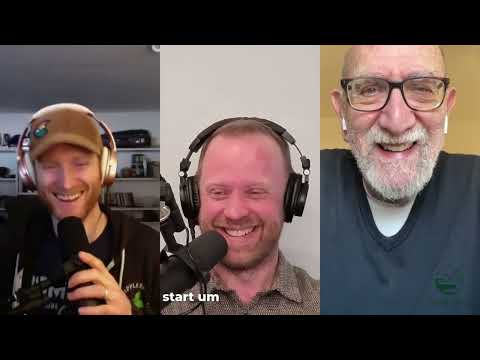
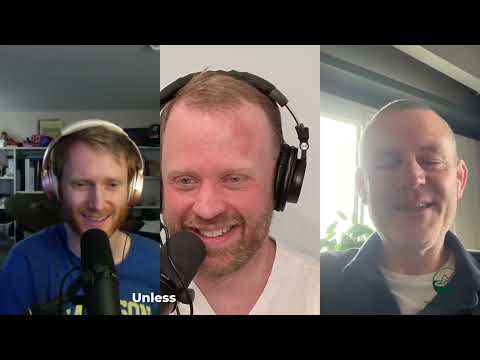
Hunter Marston – Southeast Asia, Think Tanks, and Building a Career in International Affairs
Matt Gregory (00:13)
Hello, back at Trail Map.
Patrick Dyer Wolf (00:16)
Matthew.
Matt Gregory (00:17)
How are things?
Patrick Dyer Wolf (00:20)
Good man. Happy spring. How are you?
Matt Gregory (00:21)
Good. It's here.
It's here. ⁓ I went for a nice long walk this morning and it's nice. It's warm.
Patrick Dyer Wolf (00:32)
Yeah, such a relief. Psychologically, more than anything.
Matt Gregory (00:35)
It is a relief.
Totally. Yeah, doing well. ⁓ We had a really busy birthday weekend here. Our son turned eight. My dad turned, yeah, turned 70. So it was a real party weekend. Yeah, double trouble.
Patrick Dyer Wolf (00:47)
Happy birthday, Will.
Wow, double trouble. That's awesome. I was just
talking to a mom picking up, Eamon from ⁓ keyboard lessons who there were like four different birthdays happening this weekend. It's, you know, that takes a toll. But that sounds like that could be, that could.
Matt Gregory (01:05)
Yeah.
⁓ yeah. It does.
spring sports and birthday parties, parents are busy.
Patrick Dyer Wolf (01:18)
Right,
right, that's right.
Matt Gregory (01:22)
Well, today on the show, we've got an old and good friend of mine who is doing interesting things with his life, Hunter Marston. And Pat actually met Hunter first, think, and maybe not first, but one of the first times in Vietnam when Hunter was living over there. I don't know if you remember that.
Patrick Dyer Wolf (01:29)
Good old.
That's right. We're
fellow gingers. that accurate? Yeah.
Matt Gregory (01:51)
Yes, yes, yes,
that's accurate. ⁓ And Hunter is now ⁓ deep in the foreign policy world, which is not a world I know a lot about, but I'm excited to learn from him today.
Patrick Dyer Wolf (02:06)
Yeah, it's a world that's very interesting to me, yeah, feel like ⁓ John Goodman is gonna be yelling at us that we're out of our element.
Matt Gregory (02:15)
Yeah, yeah, we might be, we might be, but Hunter's nice. So I'm sure he'll, he'll, he'll, he'll be kind. So, uh, yeah. So I think, um, probably should just jump right into the conversation. Huh? Okay.
Patrick Dyer Wolf (02:18)
Donnie? No, no, yeah.
Yeah, he'll teach us.
Let's go.
Matt Gregory (02:33)
Hunter, welcome to Trail Map.
Hunter (02:35)
Hey Matt, hey Pat, good to be here.
Matt Gregory (02:38)
So cool to have you here. were, ⁓ Pat and I were reminiscing a little bit in the intro that actually, I think Pat's first time meeting you was in Vietnam when you were living there. So, and I know that you guys have been in the same room a couple times since then, like at our wedding, et cetera, but really good to have the two of you guys here. And Hunter, guess maybe to...
to kick things off, do you wanna do just like a little bit of an intro for yourself?
Hunter (03:14)
Sure, as in who am I? ⁓ Sure, ⁓ I am Matt's high school buddy and cross-country running teammate. ⁓ I am also a Southeast Asia analyst and a trail runner. I live in Washington DC. ⁓ Yeah, I could go on, but I'll keep it short. ⁓ I'm a father of two. ⁓
Matt Gregory (03:17)
Yeah.
Go on, go on. You can share a little more. Yeah.
Hunter (03:40)
And let's see, I finished my PhD in Australia a couple years ago and so I'm an international nomad of sorts.
Matt Gregory (03:50)
Yeah, and what was your PhD on?
Hunter (03:52)
I did my PhD in international relations, specifically focused on Southeast Asia and US-China rivalry.
Matt Gregory (03:59)
Very cool, it feels timely. ⁓ Well, yeah, so I mean, I know you've spent your career, ⁓ you described yourself as a nomad. I know you've lived in Vietnam and ⁓ got your PhD in Australia. I'm wondering like, you we grew up outside Boston. I'm wondering how that time traveling has kind of shaped.
the way that you understand Southeast Asia and the politics there. Time travel.
Patrick Dyer Wolf (04:30)
time traveling.
Hunter (04:32)
⁓
Yeah, time travel would help to expand my understanding of much of the world, traveling ⁓ wasn't something I grew up doing. ⁓ I had grandparents in Florida, so we spent the majority of ⁓ vacations, spring break and ⁓ Christmas vacations going down there. So when I finished college, I had a burning desire to... ⁓
get out, see the world, and as you've mentioned Vietnam, that's the first place I went. I taught English for a couple years over there ⁓ and I had the travel bug. I traveled around mainland Southeast Asia quite a bit. ⁓ I have ⁓ been back to Vietnam several times. I've lived in Thailand, ⁓ Burma, ⁓ Australia periodically and for differing periods of time. ⁓ And also,
I guess seeing, you know, not to play too much into the time travel metaphor here, but seeing a place nearly 20 years ago in a developing country, that's a long time. you know, every time I go back to Vietnam now, the city I knew, Ho Chi Minh City, has expanded so much. And yet the sort of vibe and the popular mentality people have looking to the future, looking at
their livelihoods, economic opportunities, the positivity and optimism is just so pervasive. And personally, I can't imagine, I mean, we grew up during the big dig in Boston, we've seen a lot of change in Boston, Seaport, know, new neighborhoods go up. But the scale of and pace of change in places like Vietnam is just ⁓ pretty mind blowing. And to observe that and to see a place over the course of a couple of decades, and I'm sure I'll continue to.
go back, ⁓ it does cement a certain understanding of what the regional, what the region is going through writ large, which is ⁓ massive economic change, societal changes, not so much political change. I mean, that depends where you go. For instance, Myanmar has gone through a series of political crises, military coups.
reversals and ⁓ tentative steps towards democracy in the last couple of decades. So a lot of upheaval in the region. It makes places that we grew up look, you know, stable and ⁓ vanilla in a sense. You know, I love Boston. I love Brookline. ⁓ So nothing against it. It's just a world apart from Southeast Asia.
Matt Gregory (07:06)
Yeah. It's interesting. Like most people who, I guess if we make the assumption that most people aren't traveling the world the way you do, like most of us live in kind of in one sort of sense of reality, like, you know, for people in the Boston area that maybe grew up here and haven't traveled as extensively or lived in other places like you have, like there's sort of one normalcy. And I'm wondering like,
for you to hop around to these different places. Like, you feel like it's changed the way you see home?
Hunter (07:48)
⁓ I think so. think going away for extended periods of time makes you appreciate home more. I mean, I think we got that sense, ⁓ or at least I did from the boarding school experience and then again, college. But I think there's more nostalgia and appreciation. know, for instance, going back to visit my mom now in Brookline and going for the old 5k loop around the reservoir that I've done since I was 20.
⁓ I do appreciate more now the sort of local, you know, roads and restaurants and things like that, that I used to love and still go back to occasionally. ⁓ But also, like I mentioned, just seeing change on a global scale and having that sort of home base of continuity and something familiar, I think is important to everybody ⁓ to a different extent.
Patrick Dyer Wolf (08:43)
You mentioned before, ⁓ I guess, of a sense of optimism that you were picking up on, specifically in Ho Chi Minh City, which is where we met. I don't know if you would expand that to the region more broadly, but ⁓ I guess I was just wondering, just looking at your CV, you are a part of and have been a part of many different organizations over the past years and decades. ⁓
Can you characterize from your own point of view, your level of optimism or feeling about how our geopolitical kind of tectonic situation is evolving? Do you feel worried about US-China relations? Do you feel like there's possibility for...
good things to happen? I guess I'm just wondering about a picture of your, given all these vantage points that you've had and the experience you've had in the region, like how do you feel right now?
Hunter (09:53)
Mm-hmm.
That's, it's a difficult question. So geopolitically, I think bottom line, I'm naturally an optimistic person. ⁓ When it comes to something like US-China relations, I would argue that I think we're in a better place now, a more fundamentally stable relationship, even if it has competitive dynamics than we were in a decade ago. The first Trump administration declared
⁓ Great power competition was sort of the central premise of their foreign policy and China was demonized to an extent and then along came COVID which exacerbated ⁓ tensions between the two superpowers. And I think there was an overemphasis and this is true even dating back to Obama who was ⁓ much more emphasizing
economic statecraft and diplomacy, but there was fundamentally a military dimension to American competitiveness and foreign policy, which ⁓ is hard to overlook, especially when we're talking about $1.5 trillion defense budgets. So I think the military dimension of the US-China relationship remains on a competitive footing. ⁓ But there's the question of how much do institutions matter versus, or the
structure of geopolitics versus individuals. Xi Jinping has ⁓ done certain things to antagonize China's neighbors, revamp the country's military and nuclear arsenal, expanding missile silos and things like that, which make the US apprehensive. And the US has done things to make China apprehensive, tit for tat reaction cycle.
But I think at the same time, Trump is something he's in enigma in many ways, but he's a lot like ⁓ Nixon in a way. They said only Nixon can go to China, which paved the way for the ⁓ US-China detente during the Cold War, which aligned the US and China against the Soviet Union at the time during Henry Kissinger's ping pong diplomacy in the 1970s. I think something like that holds for Trump as well. His first administration was so antagonistic towards China.
⁓ We had talk of the Wuhan virus and things like that. ⁓ Accelerated freedom of navigation operations in the South China Sea, forward deployment of ⁓ US troops and Marines in Australia, et cetera. ⁓ But at the same time, Trump is mercurial. He can reverse his position as we've seen with the whiplash inducing reversals of policy in the last... ⁓
year when it comes to the Middle East conflict, nobody knows what he's going to do by the end of the day with regards to Iran. And I think ⁓ there's sort of ⁓ a quiet or cautious sense of optimism that when ⁓ Trump and Xi meet next month, this meeting has been postponed, that anything's on the table, really. ⁓ When it comes to AI competition, the US and China, the private sectors and the governments have sort of mismatching policy incentives.
Obviously, the US has typically restricted the export of some sensitive technologies to China. Trump has more or less reversed that, allowing the flow of advanced chips to Chinese industries. So some of the competitive dynamics have actually reduced under Trump. And therefore, think overall, if you look at the vibe, I think the big picture is...
We're not in a terrible place right now. I think the relationship could go anywhere. It could dramatically deteriorate, of course. But I think structurally, there are incentives pushing both sides to work together on some level.
Matt Gregory (13:39)
That's Hunt, I feel like there's so much noise in politics right now. And especially if you digest your news from like CNN and, you know, the Fox News or wherever, it's just headlines and there's no substance. And what you just shared with us is substance. may be less like for the average American, it may be less ⁓
Patrick Dyer Wolf (13:40)
great answer.
Hunter (14:02)
Hmm.
Matt Gregory (14:10)
accessible or like it might take more time or be less like sort of, I don't know, headlines are titillating. I feel good when I hear you share a sense of optimism, given how close you are to, you know, analyzing everything that's going on. Like, do you have any thoughts for our audience about ways to
really engage with what's going on in the world
Hunter (14:38)
Don't watch Fox News. ⁓ Don't get all of your news ⁓ by social media. I'm not the best example here. I wouldn't call myself a doom scroller, but I do access a lot of news through X or Blue Sky, which is just that sort of rapid fire, fire hose type digestion of media. ⁓
Patrick Dyer Wolf (14:40)
Yeah.
Hunter (15:02)
I get a lot of newsletters, so I sort of pick and choose selectively cultivated or ⁓ curated content. ⁓ But I don't turn on the TV for news. ⁓ That generally helps me. But then again, I miss some big things. I wasn't aware the Artemis launch, the day it was happening, I got that right after. ⁓ So you tend to miss some of the more immediate things that are happening here. Whereas,
Matt Gregory (15:10)
Mm-hmm.
Mm-hmm.
in the moment.
Hunter (15:29)
I'm focused on something related to Southeast Asia or US-China competition and I miss things that, oh, I should have, I wish I was aware of that. But it has its advantages as well. Sort of zooming out and taking a, you know, quieter, slower approach to the news cycle certainly helps. And in Washington, that's sort of the, it's not the norm by any means.
Patrick Dyer Wolf (15:54)
Yeah, I turned off my Apple News notifications. I was getting them from every publication. was just like, bap bap bap bap bap bap. And I was just like, I'm just going to turn them all off. And I think it's honestly been a net positive for me.
Hunter (16:04)
Mm-hmm.
Mm-hmm.
Matt Gregory (16:07)
Yeah, and then I mean, how, in terms of like architecting, like, I mean, you talk, like just hearing you talk about the region, like, you're an analyst, you've got like a point of view and like you're collecting facts. I'm wondering have you always naturally been that way? Just like asking those questions and trying to paint a picture in your own head and have a perspective like,
Or is that something you've learned?
Hunter (16:34)
I don't know, honestly. I think I've always been reluctant to declare expertise on anything. And sort of, I've been predisposed to the slow collection of facts to try to build my own understanding of something. You know, when it comes to this whole field of South East Asian foreign policy that I work in now, it was sort of an accident that I arrived in the field of interest that I would now work in.
But being exposed to travel in South East Asia, reading a lot about the history of the region, I hadn't learned a lot about the Vietnam War until I was there and I just devoured a lot of books and history. Throughout my time there, I learned a lot more about international development and economics, some political theory, and then I went to grad school and studied a lot more of that. But it's taken, you know, essentially nearly two decades of
living in the region and working on that part of the world to feel like finally I have some degree of mastery where I can speak with confidence on these topics. And I think, you know, just a degree of humility helps to keep that sort of perspective in check and rather than run away with thinking, you know, everything about the particular field you work on. I think that's probably helpful in many different professional fields too.
Patrick Dyer Wolf (17:58)
No doubt, a degree of humility goes a long way.
Hunter (18:00)
Hmm
Matt Gregory (18:02)
What
role has learning languages played in getting to know the cultures you've been part of?
Hunter (18:13)
⁓ Well, in the case of Vietnamese, it was very helpful in getting a more ⁓ everyday perspective, engaging with neighbors, talking with people at restaurants and in the market, and just gaining an appreciation for the culture there. ⁓ So I think I was in Vietnam for about six months just listening, taking in.
the sound of language and tones and everything before I actually tried deliberately to sit in a classroom and learn some Vietnamese. You know, it starts with just everyday encounters where you're bargaining and, you know, ⁓ haggling prices. You learn numbers, you learn the word for the basic essentials you need every day, ⁓ and you go from there. ⁓ But it definitely gave me a lot more ⁓ adaptability and ability to ⁓ get mastery over those everyday sort of...
know, situations that ⁓ I didn't have to confine myself to the tourist district where people spoke English. ⁓ And that's very useful for really gaining an appreciation of the place you live in. In the case of living in Myanmar, I struggled a lot more with Burmese language. I studied for two years. ⁓ I lived in the country for three or four months and I've been back twice. ⁓ And I never...
got any degree of mastery over the Burmese language, partly because the script is so different. At least Vietnamese has a Romanized script, so you can sort of see it and engage with signage visually. ⁓ Burmese, the script is different, and the tones are simpler actually than Vietnamese. You only have three tones. But my vocabulary was sort of stuck in taxi directions and menu, food ordering conversations, ⁓ and I never really got much past that.
Patrick Dyer Wolf (19:41)
Mm-hmm.
How, maybe you've ⁓ alluded to this, but how did you ⁓ choose Southeast Asia when you graduated? had that been an interest before, or how did you come to that?
Hunter (20:12)
No, no, I should explain. ⁓ So in undergraduate, in college, I studied classics and religious studies. I took a lot of courses in Buddhist philosophy. I studied abroad in India in a Burmese Buddhist monastery.
And I think, you know, at a sort of subconscious level that probably planted a seed that got me interested in Burma more specifically, although at the time being in India, I was more interested in India, in the history of Indian Buddhism. So I just had a sense that I wanted to go back to Asia somewhere, somewhere interesting and ⁓ not necessarily be in ⁓ somewhere like Tokyo or Seoul or Beijing that was, ⁓ you know,
massive and more advanced city. Ho Chi Minh was, you when I was living there I was on ⁓ basically a gravel road, a dirt road, back in 2007. That sense changed a lot as I mentioned. ⁓ But I just wanted to go somewhere off the beaten path and ⁓ it was an adventure to me. ⁓ Being back in Asia, being able to explore places I knew nothing about. Like I said, reading a lot of history, learning the language, learning a lot of the history of ⁓ mainland South Asia and how it was connected through
both the Vietnam War or the American Wars, they would call it in Vietnam, but also history of colonialism, French and European presence in that part of the world. And so I came to Southeast Asia and Vietnam through that sort of interest in India, tangentially through Buddhism. And then in 2007, watching Buddhist monks in Burma protest against the military dictatorship at the time.
I got very interested in Burma and Myanmar and read up a lot on the situation over there. And in 2007 jumped from teaching English in Vietnam to working in a civil society organization in Thailand and Burma, which was directly working in the sort of policy and civil society space in the Burmese political transition.
Matt Gregory (22:13)
Super cool. ⁓ And you probably had no idea when you signed up to teach English in Vietnam that you would end up doing that.
Hunter (22:22)
⁓ No, I didn't. I still say to friends of mine who taught English in Vietnam or lived with us in Ho Chi Minh City at the time that I'm still going back and working on these countries and these issues professionally because of this initial exposure. the pure accident of it gives me more appreciation for it, the fact that I am lucky to have stumbled into this ⁓ very fascinating part of the world.
Patrick Dyer Wolf (22:50)
I Matt, I mean I'm sure you feel similar in many ways, I loved visiting Vietnam. ⁓ This was 2009, is that right? ⁓ Really beautiful, really different than here. ⁓ One of the things that I, know, first sound bites that come to my mind when I'm describing the trip to people is how, in Ho Chi Minh City specifically, you know, there's a lot, I'm sure many things have changed in the 20 years since we've been there, but.
Hunter (22:58)
Mm-hmm. Sounds right.
Matt Gregory (22:59)
think so, yeah.
Patrick Dyer Wolf (23:19)
At the time, there were many, many motorbikes, all kind of flowing, lots of areas of like not traffic lights, they're just kind of like traffic would just flow. this is, know, pedestrians, you just have to walk across the street and make eye, move at a steady pace, make eye contact with whoever's coming. And you know, like the streets just kind of flow and then people flow around each other in a way that like Americans aren't calibrated for that, you know.
they need some sort of like, you stop and I go, you know, like there's no kind of, I don't know if that type of thing, you know, translates more widely into the culture, but it just seemed like like sort of a poignant indicator of a cultural difference for me. Does that resonate with you at all?
Hunter (24:09)
Yeah, absolutely. ⁓ As an American, we cherish our personal space. ⁓ The Vietnamese do not ⁓ have the same ⁓ privilege of ⁓ personal space. It's just not something that they're as accustomed to. ⁓ And I think to a certain extent, I got used to that. ⁓ One thing I never got used to was the level of pollution, just the smog, dust, dirt in the air, and traffic and noise, noise pollution, ⁓ which eventually get under your skin. You have to...
Patrick Dyer Wolf (24:14)
Yeah.
Hunter (24:39)
find ways to escape somewhere like Ho Chi Minh City if you're there long term. The majority of Vietnamese probably don't have that luxury. So that's something I didn't take for granted. But personally, coming from the places I've come from, the noise and just the honking and nonstop buzzing of the city, ⁓ it takes a lot out of you. It's taxing. And the smog and dirt you're ingesting through commuting on a motorcycle,
scooter to ⁓ your workplace. It is not the healthiest environment. ⁓ there are aspects to living in a developing country and city of, I forget the population of Ho Chi Minh City now, it's probably 15 million or more. ⁓ Just the massive... ⁓
⁓ throngs of people and bikes and now more cars and more motorbikes too. ⁓ There are problems of a developmental nature that Vietnamese and the Vietnamese government are dealing with that to an extent this is part of the philosophy or the motivating factors behind the big dig in Boston trying to bury highways and things like that and allow a more free flowing city. ⁓
because of course, Boston emerged ⁓ back in the 18th century before the ⁓ advent of cars and things like that. So the city, the scale and the layout of it are much more organic and messy. ⁓ That's true in Ho Chi Minh City, on a scale of, the population is so much bigger and denser ⁓ that the scale of these issues is enormous to deal with. And now they're trying to build subway systems ⁓ under all of this.
on a basically sea level, ⁓ in a sea level city. you're dealing with these enormous structural, infrastructural issues that developing countries around the world are trying to figure out.
Matt Gregory (26:44)
Wow. I can't imagine the change like since you were there 20 years ago. I can't believe it's been 20 years. That's insane. But ⁓ I just am brought back.
Patrick Dyer Wolf (26:44)
and even bigger. Yeah.
Hunter (26:49)
Thank
Yeah, not like 20.
I first went in 2007, so getting there.
Matt Gregory (26:59)
Yeah, yeah, not quite 20. Thank you, Hunter, for reminding us how young we are. ⁓ I just I'm just brought back to, you know, experiences that I had in Vietnam experiences that I had with you in Vietnam sitting, you know, in a restaurant on the corner of a busy street with no doors. ⁓ And, you know, just small plastic tables.
and like ⁓ steaming hot. What's that?
Patrick Dyer Wolf (27:31)
The biahoes.
The biahoes, the little bars, remember those?
Matt Gregory (27:35)
Yes,
yeah. ⁓ A steaming bowl of pho ⁓ in front of you on a hot day. Like don't think it dropped much below 90 while we were there, including at night. ⁓ And local beers. And there was just, like it was an incredibly welcoming culture. ⁓ I guess I'm just wondering, can you tell us a little bit about your experience? I understand all the hustle and bustle.
Hunter (27:43)
Hehehe.
Matt Gregory (28:04)
but like what are some of the things that you loved about the culture of being there?
Hunter (28:10)
Yeah, I mean, you just mentioned it, the welcoming nature of Vietnamese people. And I think that's especially true in southern Vietnam. People say I've been to Hanoi a handful of times. I can't say I know it as well. But in general, the South is widely viewed as very open and receptive, but also more materialist. This is the stereotype, right? And the
culture in Hanoi up north is a bit more conservative, a little bit more like Boston in that like we don't directly engage with strangers type of thing. ⁓ So some of my formative experiences in Southern Vietnam were meeting veterans of the war on both sides, ⁓ some of whom showed me bullet wounds from American soldiers and said, you know, I love America. ⁓ The society had moved on so profoundly from the memories of war. And to be real, there are still
there's still a great deal of trauma in the country and even evidence of, you know, continued ⁓ Agent Orange defoliation and birth defects from the massive destruction that we inflicted on the country, as well as, you know, veterans of the war who have suffered a great deal and never received the care that they needed ⁓ mentally or physically.
But by and large, the people I met who had fought in the war had just moved on. And they saw the change in the country as extraordinarily positive. Despite some of the country's ongoing political problems, economic inequality, multiple generations of Vietnamese have seen their country transform so dramatically. mean, if you think back to 1945, they had just fought off the Japanese Imperial Army. The French were back. Then there was a civil war.
⁓ resistance against the French colonial occupation, which ⁓ had lost decisively by 1954. Then the Americans came, invaded in support of the French and then stuck around and created South Vietnam. I mean, this is just decades and decades of struggle ⁓ following, incidentally, about a thousand years of Chinese occupation and attempts to subjugate Vietnam. So the sense of optimism that I spoke of earlier stems from all of this, that Vietnam is an independent country.
It's now unified and cohesive and the future has been, or the present ⁓ intervening decades have been, ⁓ witnessed to enormous economic growth and finally a degree of political stability which people don't take for granted.
Patrick Dyer Wolf (30:47)
Can you ⁓ explain a little bit about what you mean by hedging? I saw that your doctoral thesis was about hedging, I assume, by the states in Southeast Asia. I guess it's similar to what I would think of as hedging, but can you explain about what that means?
Hunter (31:11)
Sure, ⁓ Yeah, so when I was studying ⁓ hedging for my PhD, it specifically ⁓ focused on hedging between the United States and China, how Southeast Asian countries were trying to balance their relations with these competing superpowers, each of whom to subtle degrees or not so subtle degrees, tried to exert pressure in countries to choose sides one way the other.
The majority of countries in Southeast Asia prefer hedging because it keeps their options open gives them choices Allows them to do business and trade with both China and the United States China is now the largest trading partner of all of Southeast Asia The United States is still a bigger investor But China's catching up. So these countries they they need to play the competing superpowers off of one another and also diversify their relations with countries like Japan Australia Korea India
to sustain economic investment, but also just to indicate that they're not going to choose sides. They're not China's lackey. They're not a proxy of another power. And aside from the Philippines, no countries have formal treaty alliances in Southeast Asia. So they're not bound to one power or another. That's essentially what hedging refers to. And it's also something I would argue we practice in everyday life, right?
someone ⁓ asks you an uncomfortable question, you respond with a degree of deflection, you choose based on the circumstances to sort of defer to someone and just be polite or to defy, to push back a little bit. And hedging is all about that combination of deference and defiance, that subtle blend of ⁓ indecision and the active sense of not making a choice is a choice. ⁓ That's what I mean by hedging.
Patrick Dyer Wolf (32:56)
Do you think it's overall, the hedging of many of the states is a stabilizing force, geopolitically? It's like mom and dad are fighting, but the kids are keeping it a little bit chill. I mean, how do you think it shakes out overall?
Hunter (33:05)
Thank
Yeah, I do. think that's sort of a very profound question because most of the scholarship on hedging is all about sort of how does hedging manifest? Does Singapore choose to do one thing with China and one thing with the United States? How does Vietnam manage diplomatic visits ahead of state?
⁓ General Secretary To Lam is traveling to Beijing now that he's president and will he do the same with the United States? There's a lot of symbolism in that. But the sort of next order consequence where you would take this is how does this manifest in regional order building? If everyone is hedging, is that destabilizing by drawing in and inviting greater superpower competition or is it stabilizing by saying we're going to sort of
create this zone of non-alignment and push back on great power competition. I'd argue it's a little bit of both, but probably more stabilizing than destabilizing. And I don't think that's necessarily appreciated in Washington. We haven't gotten to it yet, but I'm working on a book project loosely based on the dissertation and thinking ahead to the conclusion chapter and some of the recommendations, the policy implications for Washington. I would argue that actually this is sort of an ideal scenario for the United States rather than seeing Southeast Asia
gravitate towards China or a sort of sinocentric sphere of influence, that the United States should encourage the autonomy of these smaller countries in order that they aren't going to align with one country or another, even though that might be sort of the second best scenario to aligning with us. You know, if you're looking at international relations from a realist perspective, that's obviously what we would want. But short of that, I think the region's economic
political and security futures are more stable overall because of hedging.
Patrick Dyer Wolf (35:11)
Yeah, I mean if they aligned with us then, you know, China would probably feel backed into a corner and that could be bad.
Hunter (35:16)
That's right.
That's right. And
countries might do something. mean, the greater, the large powers might do something desperate. Like, you the origins of the Vietnam War, for instance, the domino theory that pervaded thinking back then is if we let one country fall, then the whole region will fall. And therefore we got inordinately invested emotionally and militarily in Vietnam, a country across the world whose security and situation mattered very little to our overall grand strategy.
Because we saw this conflict through the lens of domino theory, we ⁓ sent hundreds of thousands of troops to this tiny country in conflict to ward off the global spread of communism.
Matt Gregory (36:00)
I think I understand ⁓ based on context what it means, but can you just quickly define domino theory?
Hunter (36:01)
Thank
Yeah, so basically the thinking was the Soviet Union was ⁓ rapidly expanding its influence around the world, turning countries communist in its orbit, ⁓ that it was providing assistance to Vietnam and to other countries in Southeast Asia to try to cultivate communist political parties. China did the same thing supporting communist ⁓
resistance groups in countries like Burma in the Cold War and we thought if one country goes red then the whole region goes red and that that's bad for US interests on a global scale because it forecloses trade, it forecloses diplomatic relations and it creates a communist bloc that's antithetical to US interests.
Patrick Dyer Wolf (36:53)
Can you, ⁓ I mean, really we should read books about this type of thing. Vietnam is technically a communist one party state currently, is that right? But it's a socialist oriented market economy. Is that sort of like a hybrid? I mean, how do you view what the...
Hunter (37:08)
Yes, technically.
Patrick Dyer Wolf (37:21)
economy of Vietnam is.
Hunter (37:24)
Mm-hmm. Yeah, bingo. I mean, this is something Vietnam has struggled with since the 70s and 80s when Economic growth was much slower and poverty was much greater ⁓ To what degree does the dominant single party allow? ⁓ market forces to you know in the independent ⁓ trade unions and and
entrepreneurial spirit to gain steam. At what point is that a political threat to the party versus do they need it to undergird economic growth? And I think so far they've arguably struck that balance quite well. They're targeting 10 % economic growth year on year ⁓ and yet the party remains in charge since 1975 ⁓ or earlier actually. ⁓ And leader to leader there's subtle change in that in the general, the
the Vietnamese Communist Party at the top echelons. ⁓ Some analysts would say the former General Secretary Nguyen Phu Trong, who passed away two years ago, was an ideological type of leader that for him, ⁓ his Marxist worldview still undergirded and informed his policies more generally. Vietnam has always been very restrictive of civil society, trade unions. There's zero political opposition. ⁓
legal opposition political party in the country. So they have a very tight grip on politics. Economically though, the country is very capitalist in many ways and there's gradually been the reduction of state-owned enterprises and some of the terms of recent international trade deals that Vietnam has signed on to, such as the Trans-Pacific Partnership, contain key provisions about the allowing of
independent trade unions, which were for a long time seen as a threat to Vietnam, the Communist Party's political ⁓ hold on power. the country has relaxed controls over the economy to a certain extent, but at the same time, the military and the Communist Party still remain in firm control over a lot of land rights and state-owned enterprises, which have ⁓ very important ⁓ influence in the country and especially over sensitive technologies. ⁓
So Vietnam's semiconductor industry, for example, is tied very closely to the defense sector. The military itself is a major owner of land across the country. on a certain level, the country is still very Marxist in that regard and that the Communist Party retains political and economic control or dominance. But at the same time, society has seen the relaxation and then the ⁓ allowing of ⁓ companies and entrepreneurs to gain, you know, to ⁓ flourish and
that economic inequality has also produced some frictions in the country.
Patrick Dyer Wolf (40:16)
do they have anything like robust social services or safety net or some of the things that I think people talk about when they label stuff as tending towards communist in the United States is like things, funding things, public things, not just state control or kind of a firm authoritarian grip or whatever, but like.
Those type of things? Do they have those type of things?
Hunter (40:43)
Yeah, so they have social safety nets, they do have universal health care, although the health care system has enormous problems and because of ⁓ economic inequality and the generally less developed nature of the economy and average wealth of people, there's still sort of a pay to play and bribery has flourished. So for instance, know, wealthy people can...
get fancier access to nicer doctors and equipment and technologies than the average citizen. So that's been a major issue. And I think the health care system is not something to replicate in other countries. It's different than Cuba's, interestingly. think Cuba's health care system was long a point of pride. ⁓ Very similar socialist country, but the Vietnamese, I don't think, have as advanced or developed a health care system.
Matt Gregory (41:35)
Interesting. So I think we should ⁓ shift gears a little bit here. ⁓ I'd to hear a little bit, Hunt, about what it's looked like for you. So you were an English teacher in Vietnam. You shifted over to doing more like policy work. then you've gone, you've ended up getting your PhD.
You've done writing for Foreign Affairs and for the New York Times. You've consulted with governments. You've like really built credibility in the field. And I'm wondering for people that are listening to this, maybe who are still in school, who are newer voices or who have an opinion about something, they want to dig into something. Like, what does it look like to build credibility in a ⁓ field?
Hunter (42:26)
⁓ Well, thank you for deeming me credible. ⁓ I think it's... That's right.
Matt Gregory (42:30)
I'm personally not sure to be honest, but I think ⁓
for our audience.
Patrick Dyer Wolf (42:37)
It's credible to suggest that he's credible.
Matt Gregory (42:39)
Yeah.
Hunter (42:40)
Yeah,
I mean, it's kind of a fake it till you make it type thing, right? It's like once you get one publication, you can say, you know, I've published with Foreign Policy, and then you can pitch something to somewhere more prestigious and you know, then you can add that to your ⁓ resume. So you're sort of slowly rolling that ⁓ boulder up the hill or snowball as it collects mass. ⁓ But yeah, it's tough. ⁓ It's a long game. ⁓
Matt Gregory (42:48)
Hmm.
Hunter (43:07)
You know, I started practicing writing around the time I was living in Thailand after my time in Vietnam. So 2010, just tinkering with a blog to develop that skill of sort of writing about the world as I saw it and, you know, practice that more throughout grad school, ⁓ various jobs, learning both academic writing and then the op-ed style of writing, cable writing in the US embassy in Burma, which we haven't touched on, but that's another...
you know, ⁓ chapter.
of course. ⁓ But yes, so it's just a slow ⁓ accumulation of a portfolio that you can point to and as it grows it gets stronger. ⁓ And then with the publishing stuff specifically, you develop sort of a network of editors who you can shoot things to and pitch ideas to and say, hey, would you be interested in this? And ⁓ as you get better at writing, know, they're probably more likely to say yes and accept future pitches.
Matt Gregory (44:08)
Mm-hmm.
Patrick Dyer Wolf (44:09)
If I'm reading your LinkedIn, right, it seems like you're active in at least three roles. that right? You're non-resident fellow at the Eurasia Group. You're an adjunct fellow at the CSIS Southeast Asia program. And you are a Southeast Asia associate at 9DASHLINE Do you think of yourself?
Hunter (44:26)
Yep.
Patrick Dyer Wolf (44:37)
as sort of, I don't know, I don't think freelance would be the right word, but ⁓ how do you think of your roles coexisting in this way and ⁓ how do you spend your time, I guess? How do you give your time to all these roles?
Hunter (44:54)
Yeah, no, it's a fair question. It is confusing. ⁓ And there are a lot of people like me in Washington wearing multiple hats. Some of these roles I picked up during the PhD, like 9DASHLINE Some of them are more temporary, like the Eurasia Group is a one-year fellowship. CSIS is a bit more open-ended. ⁓ None of them are full-time. All of them allow different writing opportunities, speaking opportunities, you know... ⁓
workshops and roundtable type things. So for instance later this week, I'm holding a workshop for the book I'm working on at CSIS. I owe the Eurasia group a couple op-eds or a podcast here and there. But by and large, you know, the last year since I left a consulting job at DAI doing consulting on South Asia's sort of macro economy and political relations, I've been working on this book project, which
I'm fortunate to be able to do because of these non-resident positions that are not full-time gigs. So it's a precarious ⁓ line of work. know, since taking on the PhD, I left a full-time job to do the PhD. When I got out of the PhD, I moved to Washington thinking I had a job lined up that eventually fell through. the freelancing, you you collect some titles that allows access and a bit of credibility, but it's, you know, I've been paying for healthcare out of pocket for the last year, so it's not ideal in many ways.
⁓ But it expands your network. For the Eurasia Group, I have network of peers in Washington as well as ⁓ New York where Eurasia Group is based. So I'll be going to New York for a retreat in a couple of weeks. ⁓ And that's kind of the way you sort of build credibility and make connections and learn what other people are working on and collaborate with other people.
Matt Gregory (46:44)
Cool. I ⁓ want to talk a little bit about your broader life. ⁓ And obviously, like we met again in high school. ⁓ And we were friends. We also were together on the cross-country team. ⁓ And ⁓ I don't think either of us were convinced by cross-country running. I seem to recall at least one practice where we kind of hid in the woods so we didn't have to do the full run.
Patrick Dyer Wolf (46:44)
Interesting,
Matt Gregory (47:13)
⁓ And now I get notified on Strava because you're running really massive distances ⁓ fast. And I'm like, is this the same Hunter? Like what's happened here?
Hunter (47:18)
Okay.
Patrick Dyer Wolf (47:27)
It's easier
to do things when you don't have to do them, you
Matt Gregory (47:30)
Yeah.
Hunter (47:31)
There's something to that.
Matt Gregory (47:32)
So, and I know, I also know that you're a ⁓ father, husband, like you've got, ⁓ you've got other stuff going on in your life besides your, your work. So maybe could you talk a little bit about, about that, that the rest of your life?
Hunter (47:49)
⁓ Sure, yes. Running is probably one of my, if not the ⁓ top hobby, at least in terms of time that I spend with it. ⁓ You're right. So if we didn't fall in love with running cross-country, you know, it might have planted a seed, but I think I've always gravitated towards trails. When I moved to Australia for the PhD, I started doing a little bit more trail running. At that time, I think I'd run...
a of marathons and a few half marathons. So I was, you know, more experienced in the road running. But where I was living in Australia, in Canberra, there were big nature reserves very close by. ⁓ It was a great way to explore. And I sort of fell in love with that. And the community was great. ⁓ And it's just, know, there's a sense of adventure to it and freedom. You know, I still in Washington live close to Rock Creek Park. So I love even this morning, you know, I on the trails there. ⁓ It's a great way to sort of
get out, hear the birds, clear your head. And yes, I've done my fair share of ultra marathons now. And by that, mean 50 kilometers or a hundred kilometers, which essentially you're getting to all day events and big outings. Since having our second child, I've not done any ultras. I've dialed that back quite a bit. And now I'm doing more like, you know, a half marathon here. I ran the DC marathon last fall. I ran a 10 mile race on Sunday.
Patrick Dyer Wolf (48:57)
Well.
Hunter (49:17)
⁓ So, you know, I'm still active, but ⁓ not as much in the ultramarathon distances.
Patrick Dyer Wolf (49:23)
How are your knees? Have you ever had any knee trouble or any other joint trouble?
Hunter (49:27)
Uh, not so much knees. No, I mean, I've had just about every other issue like, um, metatarsal stress reaction, IT band issues, shin splints. Um, and I think I've kind of cycled through all of those and finally found some resiliency in my forties. Uh, some of that is, you know, being married to a, someone who's trained as a physical therapist is very helpful. Laura's an expert in that department, but also,
just working in bit of strength work, know, squats and the basic stuff that builds up some resiliency to injury. ⁓
Patrick Dyer Wolf (50:00)
I was
gonna say, I've recently come to a weight training regimen with my wife, which has been more regular and consistent than any weight thing I've ever done. And I think that, for me, has been way more stabilizing to my overall body. More than stretching or yoga, or strengthening. ⁓ And then the other part of it too is
getting in and out of a parasympathetic nervous state. I think that goes a long way. You're doing exercise, you're running really hard or you're weight training really hard, you're in the fight or flight, then you gotta get out of that. That's crucial. You gotta get back to the recovery stage. And I think a lot of people neglect that. then so their body's just like, well, are we still doing it? Are we fighting bears? What's happening? And ⁓ for me, that's been awesome. It sounds like you're...
Hunter (50:53)
Heh.
Patrick Dyer Wolf (50:57)
you've found a good balance too.
Hunter (50:59)
Yeah, I think so.
Matt Gregory (51:01)
We actually have a PT who's coming on the show in a couple of weeks, who's a runner and a PT in the Boston area and excited to chat with her about all this as well. yeah, mean, so it sounds like running's become a big hobby. is it, so you said clear your head. It's form of, I imagine, stress release and just like,
Put some balance in your days.
Hunter (51:33)
Yeah, you know, the other thing is I learned early in the PhD is it shakes loose some things when you're... ⁓ I don't know if it... Pat used some neuroscientific language that's a little bit over my head, ⁓ but there's sort of the... You know, you're focused on sort of everyday mechanics of, you know, foot striking and, you know, that, and it just stops the basic chatter in your brain.
to an extent where something you were wrestling with earlier in the day, how do I structure this ⁓ chapter of my dissertation or what's my research puzzle? ⁓ And you're not actually thinking about those things when you're running, but suddenly something clicks in your mind, just, you know, ⁓ generating ideas or fresh thinking where it's from something that was in your sort of subconscious that bubbles up and is suddenly clearer during a run. So occasionally that happens.
but I end up generating, you know, the idea of an op-ed or something like that from a run when I was just going out and not actively thinking. so there's something going on there too, where it has a relationship with the creative process, but also of breaking up your day. Something I really appreciated about the PhD was that the lack of structure and requirements of me being in an office physically from X hour to X hour meant that I could
go and sort of make my work day around the hours that suited me. Meetings here or there, but also I could go out for a lunch run, not stress about, need to be back in the office because my supervisor's coming to look over my shoulder and make sure that I'm there. That's not really the case. It's all on you to sort of hold yourself accountable. But the relationship between running and writing, as Haruki Murakami has written about before, more famously, I think is...
is something that I've found is quite helpful.
Patrick Dyer Wolf (53:31)
Yeah, there's a meditative quality, I think. How old are your kids? You have two kids?
Hunter (53:33)
Mm-hmm.
That's right, yep, four and almost two.
Patrick Dyer Wolf (53:39)
That's a tough, that's a little bit of a tough zone though, I gotta say.
Hunter (53:45)
Yeah, yeah, especially our one
and a half year old. He's very active.
Patrick Dyer Wolf (53:50)
Yeah, they tend to be. They tell you about the terrible twos. They're not as publicized as the three-nager and the four-nado, which are also true things.
Matt Gregory (53:50)
You
Hunter (53:52)
Thank
Mmm.
Right. Our little guy is learning
to throw things and loves flushing every toilet any chance he gets. Sometimes those two combine into throwing something in the toilet and flushing it faster than you can catch it.
Patrick Dyer Wolf (54:07)
Why not? It's right there.
Matt Gregory (54:07)
Nice.
You're right.
Patrick Dyer Wolf (54:11)
All
right. It follows.
Matt Gregory (54:17)
Well, I know that we're coming up on time here and I want to say thanks again for spending some time with us. I'm wondering what's next for you? What's the next frontier for Hunter?
Hunter (54:33)
Yeah, well, ⁓ Heraclitus once said that ⁓ everything is change. I'm quite used to this now, but it's more shocking having little kids and embracing change in life. But you the job market, as I think I alluded to with the sort of freelancing nature of what I'm currently working on, the job market in Washington over the past year or so has been very difficult in my think tank field.
⁓ I've just accepted a position in Australia, so we're actually as a family moving back to now Sydney ⁓ quite soon. And I'm taking on a new role in a different think tank, an Australian think tank, where I'm going to continue working on Southeast Asia. Very excited about that. And yeah, new chapter. I'll be there for about three years. That's the contract. ⁓ It's a bit uncertain and ⁓ exciting new challenges.
Patrick Dyer Wolf (55:24)
a new chapter and hopefully some new chapters on your book as well.
Hunter (55:28)
I hope so, I hope so.
Certainly some long airplane flights will help with that.
Patrick Dyer Wolf (55:32)
Yeah.
Matt Gregory (55:34)
Well, that's really exciting. Congrats. I'm curious about the, know that you guys have a home in DC and ⁓ you mentioned having a family, but also the importance of embracing opportunity. ⁓ Yeah, how are you sitting with that?
Hunter (55:55)
Yeah, I think that that's exactly right. mean, there's a bright side and then there's the sort of overwhelming side where you think we just moved into a house two weeks ago and now I have an Australian visa and I'm moving again in a matter of weeks. ⁓ It's stressful and I think it will be stressful for, you know, my wife and the kids as well. Obviously, it's not easy, but, know, ⁓ to throw out sort of the...
much repeated trope, kids are resilient, you I'm sure we'll have a great time. I'm trying to look at the bright side and see the adventures and new things on the horizon, ⁓ repeating some trips we've been on before, you my daughter was actually born in...
Canberra in Australia, so she'll get to go back and her little brother, my son, will get to go and enjoy those experiences that we didn't expect to have with him ⁓ this soon. So there's a lot to look forward to, but also some challenges, obviously, in sort of figuring out the logistics, moving things, finding new schools, you know, we've already started on a lot of that process. ⁓ So, yeah, mixed emotions. But, you know, we're also looking at as a sort of necessary temporary
detour ⁓ and that will return here. I'm still committed to building roots and we love our community here in Washington and I'm hoping that in a few years the think tank space and the general sector of work that my wife and I are in, my wife's in healthcare policy, ⁓ that all of this will have improved and that as a country we will get through these really turbulent ⁓ and often depressing times.
Matt Gregory (57:34)
Yeah, I almost asked you about this earlier in the conversation, but if you don't mind just spending one moment on, know, I've seen you use your personal platform on Facebook and stuff for sharing your concern and frustration with the current administration. ⁓ And I'm wondering, like, ⁓ yeah, how do you think about like
⁓ about like sharing your perspective personally on everything that's going on, with the current administration.
Hunter (58:12)
Yeah, well, when it comes to social media, you know, in the last, this time around, this Trump administration, I've tried to be more ⁓ of an analyst and less of a, you know, I'm trying not to rant on Facebook, for instance, ⁓ but to essentially convey why these are boneheaded ideas to carry out in policy and practice ⁓ from a position of empirical grounded, you know, the research and analytical side of things that ⁓
have developed and partly that's just sort of protection of my professional brand but also ⁓ Because I just don't think that you're gonna get as much engagement ⁓ or change opinions when you're just putting out sort of You know a rant ⁓ But I you know, I think people might have the same reaction in a way like those who disagree with it are gonna just ignore it ⁓ But maybe occasionally get someone who's more willing to engage or think I haven't thought about it that way
Matt Gregory (58:55)
Yeah. Rats.
Hunter (59:11)
And when you're not coming off as ⁓ being, ⁓ can I swear on the show? Being an asshole. ⁓ I think you're, that's not a bad one. I'll just keep it professional. When you're not coming off as an asshole, people are much more willing to say, okay, I get where you're coming from. And I think hopefully in the long run, that's where we're going to start rebuilding connections and repairing societal divides.
Patrick Dyer Wolf (59:20)
That's not even...
Yeah, yeah.
Matt Gregory (59:37)
I hope so.
Patrick Dyer Wolf (59:39)
Yeah, and maybe even getting offline altogether in some ways.
Hunter (59:42)
Yeah, it's tricky
because in my line of work and so many others, I mean, it's really helpful. You know, I share things on LinkedIn, I get follows and, you know, people seeing, you know, what I post and engaging with it. And, you know, I think it's been instrumental to sort of building my own credibility, as we talked about earlier. And also, you know,
Patrick Dyer Wolf (59:49)
Right.
Matt Gregory (1:00:02)
Yeah.
Patrick Dyer Wolf (1:00:03)
Absolutely.
Hunter (1:00:04)
Journalists and things like that, you know engaging with media having impact people find you through social media and call you and you know message you so I think I'm still stuck in the social media world for better or worse, but also I like to hope it's for better because it's a great way to share things that I've written and ideas and find opportunities and it I've I think I've developed something of a healthy relationship with the world of LinkedIn and You know, I don't use X as much anymore. Now I use blue sky more
⁓ But, you know, we're finding our way through this as a world and society. I'm not part of the TikTok generation per se, ⁓ but, you know, I've found that there are still some redeeming corners of the social media nexus.
Matt Gregory (1:00:50)
Yeah, I guess as a way to wrap up this episode, I'm wondering for people that are interested in your work, like what's a good way to follow you?
Hunter (1:01:02)
⁓ well, you can find me on LinkedIn. I do share a lot there. ⁓ I would say X, but I'm not posting a lot on it. And I don't really have a website. So yeah, that's kind of it. Blue Sky, I do need some followers at Blue Sky. I gave up thousands of followers on X because it became a toxic waste pit. And Blue Sky is just not as exciting when you have such a small follower base.
Patrick Dyer Wolf (1:01:18)
guy.
Yeah.
Matt Gregory (1:01:32)
Well, we will do our best with this episode to promote you and share some links. ⁓ Thank you.
Hunter (1:01:32)
It's like speaking into the void.
Patrick Dyer Wolf (1:01:39)
Yeah.
Hunter (1:01:40)
Thank you. And likewise, I love your guys' work
and I'm going to continue sharing it, blasting it up.
Matt Gregory (1:01:45)
Thank you. yeah, it's been a real pleasure, Hunter.
Patrick Dyer Wolf (1:01:45)
That's awesome. Thank you.
Hunter (1:01:50)
Five stars, like, follow, subscribe.
Matt Gregory (1:01:52)
thank you for sharing your expertise with us and kind of how you got where you are. yeah, I wish you the very best of luck with this move to Australia on a personal level. I'm sorry that you won't be here in Boston to go get burritos with me at Anna's Taqueria ⁓ for a couple years. What's that? Shout out Anna's Taqueria.
Hunter (1:02:09)
Shout out Anna. Shout out Anna Stakaria.
Matt Gregory (1:02:15)
But hopefully you'll come back and visit every once in a while. Okay. Well, thanks again.
Hunter (1:02:19)
Of course.
Patrick Dyer Wolf (1:02:23)
Great to see you, Hunter.
Hunter (1:02:23)
Thank you guys for
having me. This was really fun.
Matt Gregory (1:02:27)
I don't know if you noticed it, but it's so cool how people who are professional talkers and thinkers on specific subjects, like they snap into this other mode when they're talking about the thing that they do. And it's like, wow, that's strong. That's a strong muscle.
Patrick Dyer Wolf (1:02:44)
It's a muscle, yeah, it's a skill. Yeah,
I'm usually fumbling for words personally, but you got it all. All the words.
Matt Gregory (1:02:50)
Yeah.
You got all the words.
Yeah. Yeah, it's there's so much about that conversation that that ⁓ I enjoyed and and probably the one of the most resonant parts for me was, ⁓ you know, this this experience that Hunter's had growing up in the Boston area, you know, and then getting to know this other part of the world so well.
⁓ And like the, you know, maybe the threads of similarities, like, you know, the way we sit down for a meal, enjoy time together, but then also like how different these worlds are. even just like how much Vietnam is just in a different part of its development and history of the United States is. And so you're almost getting to live multiple lifetimes, you know, in having an experience, in having ⁓ a path like Hunter has.
Patrick Dyer Wolf (1:03:51)
Yeah, no doubt. there were a lot of points in the conversation where I had to resist temptation to go down a full rabbit hole into something totally unrelated. He came to Asia through an interest in Buddhism. I was like, ooh, we can talk about that for a while. ⁓ just, yeah, having been there myself, ourselves too, in Vietnam, and having that context and memory.
Matt Gregory (1:04:07)
Yeah. Yeah.
Patrick Dyer Wolf (1:04:20)
of what an interesting, place it is with a really complicated history vis-a-vis the West, the United States, France. Complicated is a real euphemism there. Yeah, I think it's a really interesting place that he's put himself into to sort of be intimately
involved with how people of influence in our country and our culture are experiencing and thinking about, ⁓ he's sort of like a ⁓ portal, like an intermediary for a lot of people, I think. I think it's a really interesting place to be.
Matt Gregory (1:05:12)
Yeah. Yeah.
Yeah. I think about all of the anxiety that is, you know, I feel it. And I think a lot of people feel it in our country just about like the world today. you know, are we, you know, like the scary, scary stuff like the ⁓ international conflicts, you know, the war with Iran, the China relationship and
I think there's so much benefit to context for all this stuff that doesn't take away the scariness of it entirely. I think it just, at least for me, I find it comforting. Like Hunter, during the first Trump administration, Hunter recommended a podcast to me called Deep State Radio. And it's a
really well done podcast where they bring in a bunch of foreign relations experts. Many of them are regular contributors at Financial Times, know, New York Times, like they're they're top top thinkers. And I at least feel more much more optimism listening to those people, even if like sometimes, you know, they're they're kind of like, what the fuck is going on right now in the world? You know, ⁓ but like generally,
⁓ It's comforting to me to see these people who are true analysts, you know, put things in context, I guess, a little bit. I love the Deep State radio.
Patrick Dyer Wolf (1:06:50)
So are you a of the Deep State?
Deep State radio. When I think about, like, I mean, I'd rather not, but when I think about Trump, I think about being, you know, just very reactive. The way I'm gonna connect this to another episode we did recently with Mike Hanas is that he really emphasized the value in pausing to consider your reaction.
Matt Gregory (1:07:18)
Yeah.
Patrick Dyer Wolf (1:07:19)
when you receive information or a stimulus. ⁓ And he gave a great quote about this. ⁓ like, yes, and there's an opportunity every time you receive a stimulus or information to consider it before you react. And like, that's the whole difference. And I think what you're saying about what Hunter provides is some more context.
Matt Gregory (1:07:26)
Yeah. Victor Frankel. Yeah.
Yeah.
Patrick Dyer Wolf (1:07:48)
⁓ to consider when reacting in terms of world relations. Both just for Joes like us and then hopefully for people in more influential positions than us.
Matt Gregory (1:07:54)
Yes, totally.
Yeah. And to think about what Mike was saying, you know, we want leaders that can get in a room. I mean, this is my opinion. I want a leader, you know, or a set of leaders who will get in a room with people they disagree with and be willing to have their minds changed, you know, be willing to like come to some, you know, concessions or agreement. it's ⁓
And I guess the thoughtfulness that I hear from Hunter, you know, makes me feel good that like people like that are, you know, thought leaders and, ⁓ and are, you know, part of these, you know, sometimes government sponsored conversations about the world, cause there's just a lot of nuance and nothing, nothing is perfect. You know, we, we heard about how the Vietnamese system of government
was, you know, there's been a lot of growth in the country. There's also a broken health care system. You know, it's not it's not all pollution, you know. ⁓ They're at sea level. They're trying to build a subway. Doesn't work well, you know. Yeah, bigger dig, bigger dig with good, good pumps. ⁓ So anyway, great, great conversation. And ⁓ yeah, what's.
Patrick Dyer Wolf (1:09:08)
pollution,
an even bigger dig.
Yeah.
Matt Gregory (1:09:29)
What's new for you, Pat? What's on your mind these days?
Patrick Dyer Wolf (1:09:34)
man, what's not on my mind? Well, we did, this past week I was in California again, we did some videos and photos for the new album, which is a little bit stressful, a little bit exciting, a little bit fun. ⁓ I love going to California when it's green. It's not always green, but it's still green. It was green, yeah, it's beautiful. And... ⁓
Matt Gregory (1:09:47)
nice.
Yeah, it was green this time.
Patrick Dyer Wolf (1:10:01)
And then we did a show in Fresno, just the two of us, and Avi, ⁓ which we used to go to Fresno like all the time, like 10 years ago. And we had this whole crew there that was so great to hang with and supportive and sweet and haven't seen them in years. And then we finally went back to open for a friend's band, this band called Strange Vine, which just put out a new record for the first, they finished it like 10 years ago and they just put it out. And it's really great. Check it out, everybody.
Matt Gregory (1:10:28)
wow.
Patrick Dyer Wolf (1:10:31)
like and subscribe, Strange Vines is new record. And the guitar player's sister decked out the venue, all these cool decorations, all sorts of plants and lights, and there's a video guy. it was just, it was great to see everybody that we hadn't seen in like 10 years. It was just like, oh my God, Time Warp, hello everyone. And Fresno, it's like kind of, it doesn't get a lot of.
Matt Gregory (1:10:52)
So cool.
getting charlie horse
Patrick Dyer Wolf (1:10:59)
play it's like it's on 90 it's not on it's not on i-5 it's on 99 you know it's over there a little bit you know I'm sure Joan Didion put it more poetically than I ever could but it's it has it has that kind of redheaded stepchild it's got a little bit of the New Jersey thing going for it it's like it's next to stuff that people know about so I like to like to show Fresno love Fres yes
Matt Gregory (1:11:03)
Yeah. Yeah.
Yeah.
Nice.
Yes to Fres. ⁓ Cool. Well, I hope our listeners enjoy the warmer weather and thank you again for listening. Please like and subscribe where you can and feel free to send us notes. We also have a, I want to shout out that we have a Substack.
Patrick Dyer Wolf (1:11:27)
Yeah. Yes to Fres.
Matt Gregory (1:11:51)
Which you can subscribe to and get emailed when we have new episode drops We try not to email you too much, but you at least have that reminder when new episodes come out ⁓
Patrick Dyer Wolf (1:12:03)
It's great, you're
doing a great job on the Substack, I feel rude that I didn't immediately ask you what's going on with you.
Matt Gregory (1:12:06)
Thank you.
⁓ yeah, I think things are things are good here. We're we're like I mentioned, we had a couple of birthday parties this weekend ⁓ and that was really fun and ⁓ different types of birthday parties, but both were very celebratory. made a cake last night, ⁓ a chocolate cake. ⁓ I have a
Patrick Dyer Wolf (1:12:28)
different types of birthday parties.
Nice. What kind?
classic.
Matt Gregory (1:12:40)
Yeah, a recipe that Will likes. He did give me some feedback. He said he wants the frosting to be a bit more bitter next time. Yeah, so.
Patrick Dyer Wolf (1:12:47)
More bitter, interesting. What
a sophisticated palate
Matt Gregory (1:12:52)
I know, I know he's, he's a eight going on. I don't know what age, but yeah, yeah. So yeah, all good. And, and yeah, looking forward to the next episode.
Patrick Dyer Wolf (1:12:58)
You done good.
Yeah, like Dr. Dre said.
Matt Gregory (1:13:11)
like Dr. Dre said. All right, Pat, thank you, man. See ya.
Patrick Dyer Wolf (1:13:14)
See
you, Matt.