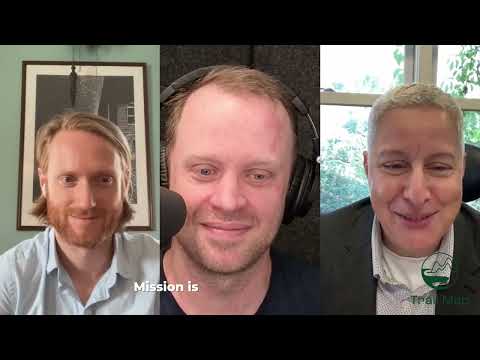
Amy Devaney – Physical Therapy, the Boston Marathon, and Training the Brain Through the Body
Matt Gregory (00:12): Hello.
Patrick Dyer Wolf (00:13): Hello. How are you?
Matt Gregory (00:16): I'm good, man. today on the show. We've got Amy Devaney. we only refer to her by first and last name in our household. cause her name is, sort of rhymes. and, she's wonderful. She's got a good ring.
Patrick Dyer Wolf (00:20): Yes. yeah. It's got a good ring to it, good snap to it.
Matt Gregory (00:37): Wonderful physical therapist based in Natick, Massachusetts, who I've been lucky enough to go to has helped me work through some injuries to help me run pain free and have better sort of maintenance of my body and sort of mobility. And I was excited about, I know, you and I are both former college athletes and, you know, enjoy sports. And I don't, we really haven't had a sports person on the, on the pod yet. So excited about the conversation. And
Patrick Dyer Wolf (01:17): Yeah. we're finally coming to fruition as a sports podcast.
Matt Gregory (01:22): We're finally coming to fruition as a sports podcast. And it's funny because Heejin has an appointment with Amy directly following our recording of this. So she's headed to Amy's. We got her surrounded. She's got a Gregory morning.
Patrick Dyer Wolf (01:35): That's funny, you guys got her surrounded. What specific injuries were you dealing with that led you to her?
Matt Gregory (01:44): I think the answer, well, we can ask Amy, but I think it's a kneecap irritation thing that results from tight hips, tight IT band. It's all connected. Hip bone is connected to the, you know, everything. So, yeah, it'll be a good conversation. And I really appreciate her spending time.
Patrick Dyer Wolf (01:50): Mm-hmm. Yeah, it's all connected. And she, she, she's an athlete. She's a former and present athlete as well.
Matt Gregory (02:13): She's an athlete. Quick story here is my primary care doctor connected me to her and he was running his first marathon and he said that without Amy, he would have never made it through the marathon because she helped train him. It is a good testimonial. Amy and my doctor, Dr. Phillips, ran the marathon the same last year in 2025.
Patrick Dyer Wolf (02:32): a good testimonial. Put that on the website.
Matt Gregory (02:44): and Amy had the flu. Dr. Phillips did not have the flu and she's still, she's still beat him by like hours. so she's a, she's like, one of those freak of nature runners. I mean, to qualify for the Boston marathon, you have to be a serious runner. it, you're not running for charity.
Patrick Dyer Wolf (02:46): Nice. She ran it with the flu. my god. hardcore. I mean, she seems to be that, just looking at her CV.
Matt Gregory (03:07): Yes, yes. So it'll be fun to chat with her today. And if you have any aches or pains, you can call in to our listener line and... Hey, Amy, I've been dealing with my toe hurts. What are some stretches I can do?
Patrick Dyer Wolf (03:16): Yeah, should we do a hotline? Yeah. Yeah. We should do, we could be, we could do a hotline during the intro and outro, kind of like the car guys too. just, car talk. They're Boston.
Matt Gregory (03:33): Yeah. Car talk. Yeah, dude. That's, that's, that's an, I love that idea. I love, I love the idea of having a listeners call in.
Patrick Dyer Wolf (03:44): We're just unfolding and becoming our greatest podcast self.
Matt Gregory (03:47): Yeah, the greatest podcast ever. Like us, follow us. Enjoy the episodes. We've got a great list of former guests and future guests. yeah, looking forward to chatting with Amy today.
Patrick Dyer Wolf (04:05): Yeah.
Matt Gregory (04:05): Hey Amy, thank you so much for joining us today. It's great to have you here.
Amy Devaney (04:09): Yeah, thanks for having me. I'm happy to be here, happy to have a chat.
Matt Gregory (04:15): Do you want to do a like, couple of sentence intro about yourself for our listeners, just to share your background and your words?
Amy Devaney (04:23): Sure. So I'm Amy and I'm a physical therapist. I've been a PT for a little over 15 years, which is insane. That's like aging me at this point. And yeah, so that's, that's my job. I've always been an outpatient, which means like outside of the hospital, people come to me like with a scheduled visit. And I've been in sports medicine my whole career.
Patrick Dyer Wolf (04:35): Yeah.
Amy Devaney (04:48): Um, seeing all kinds of athletes, you know, from the high school ACL to like the adult 70 year old recreational, um, just physically active kind of athletes, I would say. and yeah, I went, I'm from the Boston area. I went to college in North Carolina at Elan university, came back up this way for PT school and stayed even though every winter I. kind of regret my decision to not maybe stay down south. You know, I was only there for four years. No, I like went right back. I, you know, I was going to, I was actually going to go to grad school in North Carolina or South Carolina or Boston. So there were like three options and I blame my husband for me like coming back up this way.
Patrick Dyer Wolf (05:20): Mm-hmm. Did you live there at all other than school or no?
Amy Devaney (05:42): and you know all our family is here and everything but yeah I could have used a few more years down there I would have enjoyed it but my career could have been totally different I don't know.
Patrick Dyer Wolf (05:50): I love it down there. My wife is from Chapel Hill and her parents and brother live there and you know there's various gravitational pulls but I guess if you guys both have family up here that's a strong gravitational pull.
Amy Devaney (05:59): Yes, it is.
Matt Gregory (06:01): How are the seasonal allergies in North Carolina?
Amy Devaney (06:04): So college is when I got allergies. I never had them growing up. And I remember my freshman year thinking I had mono. I was so, I was like in bed and then like you would go outside on the car, like all the cars were like covered in yellow. Like nothing like it is here. You think your car is yellow here, it's like nothing. And so I like started my allergy journey in college and they're actually better now. I don't know. I mean.
Patrick Dyer Wolf (06:07): the pollen's thick. Yeah.
Matt Gregory (06:25): Wow. I don't think I could live there then. I don't think I could live there because it's brutal for me here.
Amy Devaney (06:35): I think your allergies or your body cells change like every seven years. So maybe there's still hope.
Matt Gregory (06:40): Yeah, yeah, maybe.
Patrick Dyer Wolf (06:42): Wait, your body's cells change every seven, like they turn over.
Amy Devaney (06:45): Yeah, they like turn over and like things, yeah, things change about every seven years. I mean, you probably have to fact check like the exact on that, yeah. Yeah, yeah.
Matt Gregory (06:54): We won't hold you
Patrick Dyer Wolf (06:59): Do you say that in the context of thinking about that in your work or is that just something you know about the body?
Amy Devaney (07:05): You know, that's a good point though. I just really think about that with, not so much when people have like, like injuries, I guess. hopefully they recover faster than seven years, but, yeah, definitely when it comes to allergies or like other things that you're like autoimmune stuff, maybe you can, like, you know, figure things out and your body adjusts a little tiny bit.
Matt Gregory (07:16): You Yeah. So you've been a physical therapist for over 15 years. That's a long time. That's super cool. I already mentioned in our intro that I have been lucky enough to be a patient of yours. I guess I'm just curious like from like the physical therapy pathway. You're a doctor, right? Not all physical therapists are doctors. So can you explain like, or am I wrong?
Amy Devaney (07:50): Yeah. Well, at this point, what this point almost everybody is. so when I was, so I graduated high school in 2003 and at that time, like I actually, my senior year of high school is when I was kind of like, what do I want to do with my life? And I ended up getting a pretty bad knee injury and I saw a PT and that's kind of how I went that path. But I remember at the time, obviously you're like, well, how much school do I need to go if I'm going this career path? So at that time it was all doctorate profession, I mean, doctorate degrees, except for like maybe a handful of schools. Like I remember Ithaca actually in New York being still like this master's program. But besides that, and since the early 2000s, it's been pretty much doctorates. And people that already were practicing PTs, they got grandfathered in. like somebody who maybe is in their 60s, like in still practicing might have a bachelor's, but actually a lot of them that are still practicing ended up going back to school and getting a transitional doctorate. So it would be a little less. It was like a year, maybe a year and a half program for some of these things called a transitional doctorate. And so it's like, you've already practiced, you have this experience, but you go back and take a lot of like research and statistic based classes. you're just coming at it with, guess more of a grad school kind of eye. But those PTs, their undergrad was PT. My undergrad was, I mean, I was in exercise science and exercise physiology, but some of the students in my class were like, some people were career changers. They were teachers. Some of them are like a history major. Like honestly, as long as you got your prerequisites in, you didn't have to major in something exactly, but it would make sense to major in like bio or pre-med or exercise physiology. That kind of takes you on that path.
Matt Gregory (09:36): Mm-hmm. Yeah. so you had a knee injury, you saw a physical therapist, that was kind of what taught you about the path. And did you play sports as a kid?
Amy Devaney (09:56): Yeah. I, growing up, I played like every sport. had, I have three brothers and one sister and I don't know if it's just cause they're brothers. mean, my sister was athletic too, but we kind of did it all when we were younger. And then, so I, I mean, I played like soccer, basketball, golf, tennis, like gymnastics. But it's funny cause through it all, was always like the kid who had all the energy and like my coaches would be like, all right, you're in center mid for soccer because you're literally just like running around in circles. And so they like by high school, I ended up basically running track in cross country, which is funny cause it's, mean, it's, it's obviously a sport, but it's, it's kind of different. think if you're, you know, it's not like the skill level of soccer, but you know, you're, you're running around in circles. You have to be athletic, but it's like a different kind of athleticism, but. I really like have always been drawn to like running. So yeah, that kind of led me down that path, but I actually injured my knee from skiing. I was skipping school as a senior. We had senior skip day. We have this like planned senior skip day every year. And it was like that year, I remember we had no snow days. And like as a senior, you didn't, if you had snow days, you didn't have to make them up. And so like for your whole high school career, you're like,
Matt Gregory (10:57): Mmm.
Patrick Dyer Wolf (10:58): Mm. and skipping school.
Matt Gregory (11:01): That'll teach.
Amy Devaney (11:18): can't wait to be a senior and wait for all the snow days and then get out of school early. And so we had no snow days. So we all took it upon ourselves to basically go skiing in like April. It was like the very end of the sea season. And then, yeah, I busted my knee. it was, yes, it was so, it was bad. I mean, at that time, I will tell you, I'm looking back and like everything happens for a reason kind of thing, but I mean, it changed my whole.
Patrick Dyer Wolf (11:33): The gods smited you, smote you.
Matt Gregory (11:44): Mm-hmm.
Amy Devaney (11:47): direction of like where I going to go to school. And I remember sitting in offices of like coaches that I was meeting with. And I was like, like a couple of them were like, well, you can't, you got to walk on now or, know, we were going to give you a scholarship and not tomorrow. Yeah. Yeah. Cause they're like, well, you injured it at the end of your senior year and we need you for cross country season. And we don't know if that's a guarantee. So, yeah, there were.
Patrick Dyer Wolf (12:02): man, that's killer.
Matt Gregory (12:01): because of Yeah.
Patrick Dyer Wolf (12:12): Wait, so were you, sorry, were you lined up for scholarships for, yeah.
Amy Devaney (12:16): Yes, and I still got one to Elon, yeah, I remember I was gonna go to Wake Forest and then I remember just sitting in the office and the coach was like pretty intense and they were like, nope. Or they were like, you can walk on it. I was like, well, okay, but let me look at my other options. Yeah, exactly, I was like, I don't know if I'm gonna run, like what is happening right now? I don't even know what I wanna do with my life.
Patrick Dyer Wolf (12:33): You're like, I can't walk right now, but soon I will.
Matt Gregory (12:33): Yeah.
Patrick Dyer Wolf (12:41): I also, I mean...
Matt Gregory (12:42): Did the PT path like solve your knee issues pretty efficiently?
Amy Devaney (12:48): Yeah, yeah. actually I am still, so it was my, one of my good friends' moms and she's still a PT. She actually has her own practice or, I mean, actually she might, she still sees people, but like she's basically like retired now that she was like very integral in, I don't know, kind of me like falling in love with like what she did. I was like, you, so you're in medicine. but you're also like a teacher for like every single person that comes in, you get to like spend this time with them, teach them about their injury, but also you're like therapeutically helping them like kind of figure out, okay, what does this mean for me now? And then how do we get to, you know, how do we get to week four or five, six? And then what's, what does that mean for the rest? And honestly, it's funny because you're just doing these like simple exercises, but there's like a piece of just the therapy part of it that I was like, really like this. Like I love working with people. I love building relationships. And I also like, I love, I've always loved like science and sports. And so it was kind of like an eye-opening experience for me. Yeah. Yeah. And I was like, I don't know if I want to go through med school. That's a lot of work.
Matt Gregory (13:55): Perfect combo. Yeah.
Patrick Dyer Wolf (14:05): I'm sure it was still a lot of work, what you did.
Amy Devaney (14:07): It was, it was, but you you do kind of, I look at my friends that went that med school path, it's like that many more years before you like finally get, like you're in your job. It's like, you know, another like four years after I felt like I was behind some of my friends that, you know, they graduated from college and maybe they were also in, they could have been getting a degree, like a business degree, but they had a job. And so I, I'm like, my gosh, I'm like three years down the road from even getting a job, you know, you're in.
Patrick Dyer Wolf (14:20): Yeah, and then you
Amy Devaney (14:36): PT school, it's like 100 % of your time. But then my friends that are in like, were in med school is like, oh my God, that's another like four years or even more than that. If you go into like some of these surgical specialties.
Matt Gregory (14:46): Yeah. I'm I'm glad they have that much school, but I also understand the flip side of it. If you're going to cut me open, I want you to. Yeah.
Amy Devaney (14:53): I know. I know. I think I thought too as like a family, her family. Totally. Like you're gonna be a surgeon. Yes, you need to be practicing that a lot before you do that on me.
Matt Gregory (15:04): Yeah.
Patrick Dyer Wolf (15:06): So I think, so it seems like you're saying, Amy, that this career for you has been a great synthesis of a few interests, you know, like science, sports, helping people, you know, doing things on a one-on-one basis. It seems really satisfying, you get to like see somebody's problem through, you know, see them repeatedly. And Matt, you've actually been a patient of Amy's.
Matt Gregory (15:29): Mm-hmm, true.
Patrick Dyer Wolf (15:32): Do you think you guys can talk me through how that went and like what the steps were and how it Matt how it helped you and Amy what you was Matt was Matt a good patient? Did he do you live up to his?
Amy Devaney (15:44): And I'm not just saying that. mean, I wouldn't obviously if you were a horrible patient, we'd probably be joking about it and you would already know that. But no, Matt was an awesome patient. so the best patient is somebody who is like, really just open to trying to help like work together to solve like this this problem or you know, injury or chronic like things that are going on. And then someone who is like honest about okay, this is how much time I have to give to it because really like for PT, it's so much of how you're able to get the person to change of behavior or to add in a whole chunk of time that they're going to be working on something that, that they obviously have a goal to get to a certain point. But the ideal patient, mean, Matt, you were like, okay, like we had on this conversation about how much time do you feel like you can devote to, you know, spending time on
Matt Gregory (16:36): Mm-hmm.
Amy Devaney (16:39): this particular exercise each day or each week or like what does that mean? And then we kind of figure out how that's going to work. Because if I'm telling someone to do something every single day and they literally don't have an hour a day, no one does, like it's not going to get done. And so then we're both just kind of getting nowhere.
Matt Gregory (16:58): Yeah, I've seen PTs before, Amy. And so I mentioned this in the intro, but I got the referral to Amy from my primary care doctor, Dr. Phillips, who's awesome. And so I knew already based on the referral that Amy was going to be great. I think as a patient, one thing that stood out to me about your practice, Amy, was your focus on athletes. And we want to talk to you a bit about that, a bit more about that. but you know, for me, I was, I was running a lot more than I had in the past. I was dealing with some like knee irritation, what another PT had called like knee cap irritation. and, and I also like, somebody who just tends towards like tighter hips, tighter IT bands. and so Amy, I met Amy, I did a, a running assessment with Amy where I ran on a treadmill. And she videoed it and also did some like I wore a belt and was I was able to like see some Analytics around like how how my footfall was and like where my weight was going and and Honestly, like I've done PT in the past and gotten exercise like mobility work But have had trouble like keeping it up, but I've literally done the exercise, I've done the exercises that Amy gave me like three times a week for like months. And it's been like really helpful. It's amazing. I said to you in our last session, Amy, that like, it's amazing to me that like, even after doing the same exercises three times a week for months, like I still feel tight. Like it's like the same, like those areas for me are just like constant, like I have to constantly work on them. I can you just tell us about your decision to create your own practice where you're focused on athletes and like how that's gone?
Amy Devaney (19:04): Yeah. So I've kind of always wanted to, I love, I always loved the idea of like having my own practice. Like, honestly, I remember as a senior in college, we had some class that you had to like do a project on creating a business. It was like, it was probably like sports business or something. And so I remember like my, I, in the project I had created, it was like this wellness studio that was kind of like yoga and PT and it was called like mindful movement. thought it was like kind of creative with like the alliteration. I did not name my practice that, but I remember like so long ago wanting to do that. But then when I got into like after I graduated PT school and I got into like the working world, I was like, I really need to surround myself with like lots of people that already know what they're doing. And then also surround myself with not just PTs, you know, orthopedic surgeons and physiatrists and primary care doctors, like all these people that you're kind of working on with a team, like in a team environment. So I was at Mass General Sports Medicine for like the first seven and a half, eight years of my practice. And then I was at Newton-Wellesley Hospital, partly because I kind of moved out to the, the Burbs. I honestly don't know if I would have left MGH Sports to go to another like institution. If I hadn't moved, I might've just kind of gone off on my own. But I've always been interested in going on my own. But what really kind of made me by the bullet was honestly being able to craft like what I felt like is needed out there with some individuals. So not everybody needs, you know, a certain amount of time or like this crazy evaluation, not figure out like what's going on. You sometimes knee pain is pretty simple. But working in institutions like that are either hospital-based or maybe like the standard PT is you get like literally a half hour back to back to back to back to back with people. And sometimes like your schedule is so full that you see someone once a week for a half hour and you're like rushing through everything. You're like, how are you? Okay, cool. Well, let's move on to your knee. But how's it been going? do you know your exercise? Okay, cool. You have three questions about those. All right, cool. Well, let's do those. then. well, I guess we have time to like stretch your quad. And by the end of that, you feel just terrible. You're like, I feel like I just spurted out a bunch of information. I feel like maybe like I'm not giving the amount of time that someone needs or to listen. Like the therapy effect was kind of just thrown to the side. And then people, I would know they would clearly have questions, but either they would be a little overwhelmed and they were just trying to get through it. Or they're almost like potentially maybe people are just like disinterested in that.
Matt Gregory (21:43): Mm-hmm.
Amy Devaney (21:58): and they're like, I'm not going to ask questions. Like, I feel like I'm just going to, you know, do what I can. Let's get through this PT and kind of go. I mean, that's, that's saying it in a really negative fashion, but basically I wanted to be able to give people more time that made more sense and to create a more personalized like experience. when I was at Mass General Sports, I mean, we saw so many athletes that generally like pretty straightforward where you tear your ACL. You follow a protocol, you see your PT, but then they would generally see a PT assistant afterwards to run them through the exercises. So I was almost more of just a consultant telling people what to do and then not really able to work with them on their actual exercises, make sure they're doing it correctly and teaching them. So a big part of me going out on my own is really just to give people the time and create something that also could be you have your PT, but then you have some performance enhancement. So some people come to me and they're maybe like, what it qualify from like an insurance basis for PT because they're like doing too well, like, you can already run like your insurance companies like, well, that's, you can already run. What do you, what else do you need? You know, I feel like, yeah, I can run, but my knees have been killing me for 10 years. Like, I just want to figure out what's been going on. So I kind of in borderline, sometimes go back and forth between
Patrick Dyer Wolf (23:16): Okay.
Matt Gregory (23:20): Mm-hmm.
Amy Devaney (23:24): PT and then there's like a little performance enhancement piece of things, whether somebody they've had pain and they just want to run more freely or they're trying to be faster or more efficient. And so we can kind of dig into the weeds of that. And that's where for runners specifically, that's, that's how I go. But also a lot of field sports that have running in it. I mean, I kind of pull out that running piece more so in my practice now versus in the past. You know, I've done kind of soup to nuts on, you know, return to sport, whatever their sport is, soccer, lacrosse, basketball, something like that.
Patrick Dyer Wolf (24:00): I have to ask you not to take a left turn, I personally have really benefited from this exercise program that's a subscription video thing. It's a weightlifting thing that we do, but this company has all sorts of things that they offer. It's called Evlo, and it started by, I guess it was started by one or three PTs who are very science-focused in how they design their program. They try to distinguish themselves from the traditional fitness industry that goes for, I don't know, appearance results or intensity or how much you're sweating or something. And they focus on a couple different things, but the thing that's been really great for me is that the phrase they use a lot is gentle consistency. Even if you can't do the things you're supposed to do every day, even if you miss a whole week, just come back and keep letting the parts of your body know that they can do stuff. do it in a way that doesn't, that feels safe. A lot of like getting in and out of a parasympathetic nervous state where like, know, both warming up and then at the end, just like not really stretching per se, but like moving the body just like gently in its, you know, capable paths. For me, this has been like revolutionary. I've been a I've been an athlete my whole life. My mental health, mental and physical health are all bundled up. now at this point, I tie it directly to if I can do these exercises and calm my body back down, I'm just light years better than I was. I used to have this neck and back pain going all the way down my side, and that's just kind of not there anymore. That gets into a whole other thing about pain and how it's like both mental and physical. But I'm just wondering if any of that like, you know, the gentle consistency, if you think about any of that neurological stuff in your practice, if any of that stuff resonates with what you're trying to do.
Amy Devaney (26:32): Mm-hmm. Yeah, well, honestly, over the years, I think about it, I don't really say this out loud to people unless like they're, can kind of tell they're like interested in it. But I honestly feel like as a PT, we're training the brain. Like the whole, the whole thing is you're training your brain through the pathway of your body moving. And so like the muscles are our engine and the healthier our muscles are. the healthier our brain is and vice versa. And so in our brain being like the command center, but also really like our central nervous system, which is our brain. And then connected to like all these, all these nerves, like throughout the whole thing. And they can't work without each other. so I, for sure, like when I meet a new patient, I tried to get a sense of like, and this is where this is not something I ever say to them, I try to get a sense of like maybe where they are at with with just stress levels and and kind of or are they someone who is they tend to push their body all the time? Or are they someone who tends to like, you know, I have an injury, I don't and then I do nothing. And so neither one of those things are good. And so I try to get a sense of like, whatever type of person that is someone who's always pushing or never pushing, like let's kind of bring them into that middle, which is maybe what you're talking about is this kind of gentle consistency. And then I also try to frame it with like, okay, some of this stuff might feel boring, but like just do it, go through the boring stuff and get just get good at that or just create a pattern of like a consistent, whether it's a movement pattern or time where you're you're moving and you're also, maybe it's you're trying to rev up your body or calm your body down, or maybe you're doing both in one session. But that then taps into that autonomic nervous system where we need both our sympathetic and parasympathetic nervous systems to kind of be in balance. And I mean, now this day and age is so cool. Like I got my Oura ring on right here. So like all these devices that they have, Garmin watches, Oura rings, I was laughing this morning because...
Patrick Dyer Wolf (28:54): Yes. All
Amy Devaney (29:06): The point being like it's of telling us what our HRV is, which is kind of like our parasympathetic autonomic system and our sympathetic autonomic system. And you're like, those need to be balanced. Cause if they're tipping the scale in one way the other, we're not going, we're not doing well. But I was laughing this morning, charging all my devices. I was like to my husband, I'm like, this is ridiculous. But also it's just like an interest to me. I love having the information. And I think.
Patrick Dyer Wolf (29:15): comment.
Matt Gregory (29:26): Thank
Amy Devaney (29:35): I'm not someone who's like, my God, I'm like living and dying by all my devices, but I do love kind of having those available to make sense of it all. And it's what I do day to day too. I work with other people trying to help them on their like health journey. mean, right through like knee pain or through this tendon that's been killing me for six months. You're like, okay, well what else is going on? So a hundred percent that like, I love that you brought that up.
Matt Gregory (30:05): So I have on the same vein, I have a question because you talk about the distinction between PT and performance enhancement. I'm kind of like, and I actually asked a PT about this that I saw in the past. I was like, why isn't PT just something that everybody does? And we've already talked about like insurance being like the gatekeeper a lot of times to working with somebody like you. But like given that it is such a delicate balance, you know, in our bodies and you know, even if somebody has an acute injury or not, like it seems like the stuff that you're doing is gonna help everybody.
Amy Devaney (30:48): Right. There is. So we have the American Physical Therapy Association, which is our headquarters for overarching as PTs in the United States where you get credentialed and licensing and all that. And then there's a lot of subspecialties. So they are currently trying to create a primary care. subspecialty, which is really interesting because I think part of that is to get basically have PT as like almost like primary care for your movement system, right? And the movement system, meaning like, honestly, your nervous system connected with, mean, heart like your whole body. not just muscles and bones, that's like your musculoskeletal system, but like that is so intertwined with your nervous system. And so there is like work currently being done. And then there's some obviously like the whole insurance logistics side of things is just where, you know, what is that going to look like? Is that going to look like, cause everybody generally for with insurance, like generally you get, you know, one or two, you know, what, physicals per year where you're not paying like extra, it kind of comes with your health insurance package. But yeah, PT, I think should be part of that where you go to your primary care once a year, go to a PT once a year as your primary care PT. And then maybe you see them, but maybe you just are using that almost as injury prevention. And you're like, I would think of, you know, I would be doing a general exam. You're like, okay, raise your arms up. Like what the heck is going on with your right shoulder? You know, and so if someone's like, yeah, I don't know, it doesn't hurt yet. But like, here's some things to do. And maybe they don't need to like go and see you for manual therapy, but having some guidelines and or having a checkpoint where you're like, this is what we measured last year. This is what we're measuring this year for range of motion and strength. Like your range of motion is the same, but why is your strength going down? And sometimes I think having those numbers, people are like, well, there's general things that happen with aging our strength. goes down, right, we lose muscle mass over the years. And that has a big impact on our general health. And people don't, I think, always make that connection. There's definitely a change and a shift. And there's a lot more information out there now. But honestly, the more muscle mass you have, like the younger you are, basically, which is really interesting. And so and it's a really kind of there's an easy way to fix that. It's just a matter of people don't know what to do and when and how to you know, sometimes I think people think it's like an all or nothing. It's like, actually, you really don't need to do tons to just be a little bit better. So I think that would be amazing. And I do hope I think we're kind of going and trending in that direction as an organization, like as a physical therapy profession.
Matt Gregory (33:49): Mm-hmm.
Patrick Dyer Wolf (33:50): make it more of a preventative and just like, you know, ongoing, like instead of, instead of not, you know, not brushing your teeth and just showing up at the dentist and being like, what do you think? And like not to, not to, you know, keep bringing it back to my exercise videos, but the other thing that they do in these videos is make sure that, well, you're supposed to be on all of these exercises getting to muscular failure. It's like, like it's not just, you know, gentle. It's like,
Amy Devaney (33:53): Mm-hmm. Right?
Patrick Dyer Wolf (34:20): They're trying to build muscle. That's the goal. And it's not about full body systemic fatigue and wearing yourself ragged. It's just making sure that you're using a particular muscle until it can't go anymore. And then you rest it. And that's how it grows. And then, just like you've been saying and I was trying to say before, doing that has just given me more... like mobility and less pain and better mental health and like just more ability to move about my day more and more than like a lot of the other things that I was trying to do before I did a lot of yoga. I still run. But like that more than any of those other things, you know, together with the manager. I don't have an aura ring. I should probably get into that game too, but.
Amy Devaney (34:58): Mm-hmm.
Patrick Dyer Wolf (35:19): I didn't even know you could measure your
Amy Devaney (35:20): Not sponsored by them.
Patrick Dyer Wolf (35:23): parasympathetic whatever.
Amy Devaney (35:25): Yeah, it measures your one of the biggest things is it gives you like your HRV, which is your heart rate variability, is your ability. Yeah. think that's. Yeah, so you want it to be well, everyone's is different. But basically, if it's higher, that means like when you're sleeping, you're able to basically go in and out of your kind of parasympathetic or sympathetic nervous system. So
Matt Gregory (35:29): Mm-hmm.
Patrick Dyer Wolf (35:31): your Honda HR-V. Heart rate variability, okay, yeah, yeah.
Amy Devaney (35:55): It's basically your ability to be able to go up and down and not just kind of, like if you're stressed, you're kind of like in this tense state and everything kind of walks down. Even like, you know, this is where even your heartbeat, it just becomes very like rigid and it's always the same versus being able to be very like fluid and change as needed. So it's, it's cool. I actually, the reason why I get it, I'm the type of person who pushes. And so I had my own injury this like last.
Matt Gregory (35:58): Mm-hmm.
Patrick Dyer Wolf (36:02): Yeah. Mm-hmm.
Amy Devaney (36:24): July. mean, like, and part of it is because, like doing a million things and just kind of not slowing down. And I'm like, Oh, my gosh. And then my my I was blaming it on my Garmin and just being mean to me. I think maybe I should listen to my Garmin And then I was like, let me get another thing. And let's see if this is because I was is it just an inaccurate device? Or like, is this something that I need to? I guess I need to go to bed a little bit earlier every night and make like change my habit. Oh, yeah. Not rested.
Matt Gregory (36:48): Is it telling you you aren't resting enough? Yeah.
Amy Devaney (36:53): Poor recovery, yes, all these things. And I was like, nah, I feel fine.
Matt Gregory (36:59): Yeah, it's interesting. And I know like Whoop which is a Boston company, you know, is all about like their whole, their whole platform is all about recovery. I've tried them all. so I, I agree. I think the data is interesting. I think for me, you know, it's easy to get, like if I wake up a few days and I'm like, poor sleep score, like it kind of gives me a little anxiety. so yeah.
Amy Devaney (37:08): Mm-hmm.
Patrick Dyer Wolf (37:21): Mm.
Amy Devaney (37:26): still kind of does, but the Oura rings make it nicer. It'd be like on a Saturday night, didn't sleep as well last night, but that's pretty typical for all of our clients. It was just like really funny. It's like, that's okay. You know, this is pretty typical, but maybe you should get back on track tomorrow.
Matt Gregory (37:35): Ha ha ha.
Patrick Dyer Wolf (37:35): Yeah, that's okay. Well, it's an interesting large question about how do you actually encourage people to do something? I mean, a lot of people were doing Duolingo. I wonder how many people actually learned a language from it. there's a lot of, I did it a lot, there's a lot of alerts being like, hey, you didn't practice your Portuguese. But it's like, does that, what is that? Yeah, yeah, yeah. But I, right, exactly.
Amy Devaney (37:47): Yes.
Matt Gregory (37:51): Okay. They're aggressive Duolingo is aggressive. Like some of that language I'm like, God, unsubscribe.
Amy Devaney (38:11): Right, right. You just kind of at some point you feel if you're feeling bad about yourself and this actually in the looping it back to kind of as a PT same thing you're like, okay, how much how many like, how many times do I like tell someone the same thing and if we're not getting anywhere like, let me think about either how I'm telling them or why are they not motivated? Like, let's figure out the why. And also, let's be kind about it and figure out like, but let's also be honest, like
Patrick Dyer Wolf (38:36): Yeah.
Amy Devaney (38:40): Okay, if we're not doing the thing, we're not gonna have a change. So like, do you really want to change? And like, why do you want to change? Is it because, you know, I don't know, like, is it just because of pain? Honestly, like, if someone tells me they just like, if their goal is to just get rid of their knee pain, like, well, how and why and why is that impacting you? Is it because you can't go up and down the stairs. Like, okay, well, that's our goal then to be able to go up and down the stairs. Yes, to have a right. It's not just this like, I just this uncomfortable feeling.
Matt Gregory (39:10): It's like more about like, what is your goal? Yeah. Yeah. Yeah, I think there's like a mentality with athletes, you you sign up for competitions, you you have that next thing that you're working towards. And I think like for a lot of people, especially like as you get older, you're not part of, you know, sports teams anymore necessarily. You don't have that same motivation. So yeah, it's an interesting, that's an interesting way. Cause I think a lot of people like, you know, might be driven by, you know, their Apple watch saying like, you haven't gotten up in an hour, like you should get up. And that's that kind of, I wonder, I wonder whether there's a way to reframe those kinds of prompts to be more like, you know, you're trying to train for a 5k, like why don't you walk around the block or something like, you know, to have it be more goal oriented versus like a lecture
Patrick Dyer Wolf (40:12): I mean, it probably works differently for every person, I would imagine. If that's the trouble with it, it's like, how do you customize? mean, that could be better served by a human, a PT, a physical therapist. We briefly, sorry, go ahead.
Matt Gregory (40:14): Yeah, yeah. Yeah, yeah.
Amy Devaney (40:26): Yeah. No, well, it's interesting because also when you, so when you're working with athletes, like they're so goal oriented. there's some of that is easy. Like that makes my job, my job as trying to figure out the mechanics of it easy, right. but the maybe not easy part is someone who's that's, that's so goal oriented or they're just so driven to get to like, you know, okay, well you said at six weeks, I can start running. I'm going to start running. So you almost have to slow them down. But like, I honestly love like working with people where it is a little bit of a challenge to figure out, like it might, I mean, it can be kind of grueling, like the first, let's say four weeks where like, we're not getting anywhere. Cause this person, they came to me because their doctor told them to come and they're not really sure. They don't even believe in PT. They hate exercise. Yes. And so some of those are my favorite because you, it's like this journey that you're trying to figure out what's going to make them tick.
Matt Gregory (41:11): Thank
Patrick Dyer Wolf (41:14): You gotta convert them.
Amy Devaney (41:25): And then like, how do you get them or almost like trick them into like moving more? You're like, okay, like let's make it, I don't know. Do you like gardening? Like let's get out in the garden. And like when you're going down, like I want you to go up and down. Like, so instead of maybe just like hanging out and spending over weeding, like do some squats there. So like just add in some, some movement to people's day to like something that they already enjoy. versus, you know, the definitely the athletes were as a traditional sports medicine PT, you're like, that's pretty easy. Like they're already motivated. They're already have this time of day that's carved out. You almost have to slow them down, but the people that can be like really rewarding and also interesting are the ones that like are the total opposite of the spectrum. And I'll still see them even as I mean, sports medicine is this muddy world. It's really orthopedic, to be honest.
Matt Gregory (42:17): Mm-hmm.
Amy Devaney (42:24): So you get a lot of different people and you're not going to turn someone away. You know, someone found you. Like you don't run at all. Why would you come see me? Then no.
Matt Gregory (42:28): Do you think?
Patrick Dyer Wolf (42:30): What if they're a Yankee fan?
Matt Gregory (42:35): Do you think though that like some people are scared to see you because they don't view themselves as athletes?
Amy Devaney (42:42): I mean, I have had, don't, that's such a good, that's a good question. I mean, I would say with those, I might not even know if they would come to me at this point, but I know that, so when I was at Mass General, because we were very much like this, like our sports medicine kind of, our practice was like very separate of the rest of the outpatient PTs. That was like orthopedic.
Matt Gregory (42:53): show up, right? Yeah, yeah.
Amy Devaney (43:10): And we were like connected hallways in the same hallway as like the orthopedic surgeons. But we would get, because we would see such a high volume that sometimes if the main hospital like would have a longer wait time, we would have, you know, a local, let's say like an older person, someone in their eighties that lives in Beacon Hill and they can come over because it's very convenient for them. So they'd come over and be like, I think I'm in the wrong place, but hopefully you can see me. I hope you don't mind. don't want to waste your time. Like it was, I would feel so bad. I'm like, no, this is like, as long as you are not, you know, as long as you can get around the clinic, cause it is a fast moving clinic and you feel like you're safe here. Like awesome. Let's like, let's do this. And you can be motivated. Like you can be motivating to that, you know, 15 year old on the bike. Cause they're just like, Oh, this person is, you know, has a different, they're in a different part of their life. And then you're.
Matt Gregory (43:54): Yeah.
Amy Devaney (44:08): motivating and kind of each other in a different way. definitely in those environments, people will be like, am I in the wrong? Like, am I in the wrong section of the store?
Patrick Dyer Wolf (44:18): Yeah.
Matt Gregory (44:20): But I'm curious about your earlier in the conversation you said that you were kind of focusing your practice to be more focused on runners versus like general sport. Is there a reasoning behind that?
Amy Devaney (44:36): Partly just cause I love it. Yeah. Partly cause I love it. And I think honestly also being out, like when you're kind of an independent practitioner that also kind of has a model that I do where it's, kind of is a lit it's PT, but also sometimes it might shift where like there are times where I'm like, this is not PT anymore. It's really truly like, you don't have pain. You're just now almost like personal training performance enhancement. then
Matt Gregory (44:37): Yeah, okay.
Amy Devaney (45:04): to be able to have a practice like that, you kind of need to have some sort of niche to be honest, because that will differentiate you or me from like, and I mean, there's so many PT practices. So part of it is like, I mean, if I have a niche and this is what I like, I love, I absolutely love that. But I initially hesitated because I'm like, do I want to totally go in this niche? And then people that, you know, have shoulder pain. are never gonna come to see me. And then I'm like, well, that's gonna be so sad. But I still have people that I've seen in the past that, you know, they're like, hey, do you still remember the shoulder? Like, yes. Exactly. Yeah, Whole body.
Patrick Dyer Wolf (45:44): You work on shoulders.
Matt Gregory (45:45): Are you legs only? Are you a full body joint?
Patrick Dyer Wolf (45:50): I was, I was, I played soccer too as a kid and in high school, but I, in freshman year of high school, I didn't make the soccer, the JV team. And so then I went with like tail between my legs to the cross country coach. And I was like, can I be on the team? And he was like, we gotta be second fiddle. All right. Yeah, come on, we're going, we're running. Like, get out to the, but like it, it kind of, was a blessing for me because it opened my eyes. Cross-country is so hard, but it's just like there's something pure about it. You're just doing one thing. And it's very meditative and scary in that way, where it's just like, just do this thing and do it better. But it also just became my default method of exercise for my life. and it's kind of, don't know, it's, feels like it's the most natural human exercise that you can do is just like, just go. and it also is, it also is just like a, yeah.
Amy Devaney (46:52): I know, I agree. It's honestly so pure, like it is. it's like, talk about like fight or flight, right? If you're stressed, go run. And when I come home, I will be tired. So I'm gonna feel better. and it's so, but running is hard on your body when you get older, right? So that's where I think part of my passion is I like, for me, it's so like mind, body. It's like the time that I have alone or it's the time that I...
Patrick Dyer Wolf (47:00): Right. yeah.
Amy Devaney (47:22): connect with people like I have these different groups that I'll run with that I feel very lucky to have kind of found and like we run at like five in the morning and you kind of have this like just either like very dumb conversation or you're like telling them your life story and you're like, my God, I haven't told anyone this and you just happen to be like running alongside someone in the dark and you're like best friends even though you maybe met like two weeks ago. So like there's some
Matt Gregory (47:36): You
Amy Devaney (47:49): level of community with runners in particular that is just very pure and I love that. And I, I don't know, I partly like would love to like convert more people to that, but also there are people that just like never, I hate running, like I never want to do it and that's fine. But I just love like how it is so pure. You don't need any equipment, but you do need to be strong. Your body needs to be able to handle it. So there's some level of like. understanding how do you do it in a healthy way so you can keep doing it.
Patrick Dyer Wolf (48:20): You gotta know how much you can take. My son just started doing track, he's in fourth grade. And he also has this video game called Ring Fit, which has a little ring that you plug the Switch controller into and you're running and you put one around your leg. You're running and defeating bad guys and you're squeezing the thing and shooting fireballs at the dragons and whatever. Yeah, it's pretty great.
Amy Devaney (48:22): Yeah. Wait, I love that. I need this.
Patrick Dyer Wolf (48:44): But he was having so much fun, he did like 200 squats or something and then he had track practice after it. He was like, I'm sore. I was like, yeah, man. It's like, you just gotta, it's pretty awesome. But like, just, yeah, it's a lifelong process of just like knowing what your body can handle and needs and how it can, you it's, you said the word balance a few times already, but it's, it has to be a balance, I think.
Matt Gregory (48:54): I might have to get this for Will too, that sounds great.
Patrick Dyer Wolf (49:10): And you were saying also just before you were talking about the mind body, in terms of the running community and just the ritual and the, I wanted to take it back to, this is a little bit of a left turn, but I'm curious how you think about, practically, philosophically about pain. I had kind of another great landmark experience recently reading this book, which, You may or may not think is is hogwash, but it's it's called mind over back pain by John Sarno who was he was a And the you know, do you know that one? So I'm really curious what you think about it Yeah
Amy Devaney (49:45): Yes, I know that both. Yes, yes, yes. So I haven't read that book, but I know people have like alluded to that. But so where are you? You finished the book?
Patrick Dyer Wolf (49:58): Yes, and it's, you know, just to sum up for people, it's just sort of, it's trying to break a mental cycle that happens when there is, you know, a trauma occurs. But for many people with like chronic back pain or different types of, you know, pains that won't seem to go away, there's just been like a loop that's created in the brain that's, your mind is trying to protect a part. but it's stuck in sending the signal so you don't use it as much and then it just kind of compounds. And it's about trying to stop that. This is very simplified. All of this to say just so much of pain, mean pain is mental. It's the mind's response to what happens in the body. I'm just, I don't know, I guess I'm curious to. to hear how you think about it, if any of that makes sense to you or not.
Amy Devaney (51:02): Yeah. Yeah. I mean, in the past, like probably 10 years or so PT there's been so much more research on pain, like the neuroscience of pain and neuroplasticity, meaning like your, your nervous system and your brain is very, it can, it's adaptable, right? And good and bad. So usually, so you have said injury. And with that injury, we have a whole experience that's happened with that. It could be very traumatic, right? You could be in a car accident where someone dies, right? I mean, this is very morbid, but like someone dies in this car accident, a loved one, and you survive, but you break your back, you know? Or you have a rib injuries, you break your pelvis, like you have a major recovery as well. And so all of those things are gonna heal. within their time, right? Anything like musculoskeletal, mechanically, that's going to heal your body. It lays down scar tissue, it patches it up, but you still have this experience and you still in that pain, initially that's an alarm system, meaning like it's going to tell you not to move because if your back hurts, it's because you have a broken bone. Don't move. That's very important. It's telling you a hundred percent, right? It's telling you that.
Patrick Dyer Wolf (52:19): Yeah, don't do further damage.
Amy Devaney (52:23): But that all gets muddied with like these experiences of that initial kind of that initial injury. And that also can kind of carry forward where at some point your body can't differentiate between acute injury and actual tissue damage and basically like kind of nervous, heightened nervous system where you have increased. pain receptors in this area that have kind of also built up over time as basically a protective response, but then it's kind of gone, you know, that part hasn't healed. And so there is a lot of different techniques around this. There is even sometimes as a PT, if I see someone that's in chronic pain, meaning it's technically if you've had an injury for more than 12 weeks, so you still have this pain, you're like, okay, well, it should be healed. And some of that is because people are doing too much. You're like, okay, let's, you know, let's scale back and change what you're doing. But sometimes it's literally like fully healed and people still pain and they can't explain it. And so that's where as a PT, we describe this to people. And sometimes just knowing that you're like, okay, that pain that I have in my knee, I can walk upstairs and that those stairs are not going to make it worse. So then At some point your body gets used to that, right? You obviously maybe need to strengthen certain areas and that's what we test out from a mechanical standpoint. But people knowing this and being kind of armed with that information can be very helpful. It doesn't though work that easily. think there's still, you're like, okay, I know this pain is not harmful for me, but it still hurts. Like what do I do? So there's all different methods out there. And even there's different methods where
Patrick Dyer Wolf (54:05): Mm-hmm.
Amy Devaney (54:09): So maybe you do, this is maybe why someone does yoga. They're not doing it for the physical part. They're doing that to like calm their nervous system or Tai Chi or acupuncture. Honestly, even with dry needling and sometimes even with just manual therapy and like calming kind of the, you're changing the sensory input to then get a better sensory output, basically to try to get rid of that pain cycle. But yeah, it's really, I mean,
Patrick Dyer Wolf (54:17): Yeah.
Amy Devaney (54:38): If a PT doesn't understand that, that's bad. Like at this point, that's very well known to like as PT's we're still, we might still be kind of treating it. Like we still need to look at things from a mechanical standpoint. But if we're like, wait, all of that is pretty mechanically sound, but there's also an additional layer of something else that we either need to kind of bring forward or figure out this with somebody. And sometimes it's just getting people to like feel safe to move. And sometimes it's kind of easy. Other times it can be very challenging and then you have to bring in also like a psychologist, right? Or people will do things like they might be journaling, you know, for 20 minutes a day and then doing some meditation and it brings up all these feelings. like, my God, why is my knee hurting right now? Like, what the heck? And so, yeah, everyone's different with that. And that's not my specialty, but I think someone who's really had chronic pain that we can't fix with like some sort of strategic level of just having a exercise.
Matt Gregory (55:23): You
Patrick Dyer Wolf (55:24): Yeah.
Amy Devaney (55:36): pattern, which exercise also is shown to improve your ability to deal with pain. Even just lower level cardio can be very helpful to deal with that. But if I'm not getting anywhere with that, then we have to bring someone else in, you know, and have them figure out another part of it that they can start to work on.
Matt Gregory (55:54): we're almost up at time here and want to be, I know these conversations.
Patrick Dyer Wolf (55:56): Jeez, already, these things.
Amy Devaney (55:58): No, I was nervous. We weren't going to have anything to talk about. I was like, I'm not that interesting, but you guys are. We can hang out. We could go for a run. Then you'll get all the juicy details. People open up on the run. Right, right, right.
Patrick Dyer Wolf (56:06): do part two. Yeah, yeah, a running episode. Yeah, 5 a.m. tomorrow.
Matt Gregory (56:07): Yeah, yeah, we'd go for a run. That'd be awesome. But Amy, I... Before we wrap up here, I think we should talk for a second about your own athletic pursuits. I know you've run the Boston Marathon a number of times. You've qualified for the Boston Marathon. I know that this past winter you got an injury that you're working through yourself to get ready for the Boston Marathon. Curious how your own goals, your own athletic goals connect to like how you give treatment if they do connect.
Amy Devaney (56:48): Yeah, I think so. My, it's so funny. feel like there's some level of running that I just, when it comes down to it, I just love, I'm just happy to be out there and I love doing it, but there's always a level also. And I think a lot of runners will probably say the same thing or even at certain endurance athletes. There's like that.
Matt Gregory (56:49): I think I know it.
Amy Devaney (57:09): you're just trying to be like the best you can be, right? So you're like, okay, what is my potential? And that's going to change over like, and some of that is just like, I could be better if I had more time. But you know, but like, if I trained more, right? But so I think when I, I don't know if it, I don't push my own like kind of feelings about like what I want to like, let's say, athletically achieve.
Matt Gregory (57:19): I'm
Amy Devaney (57:35): compared to like my patients, but I try to come to the table of meeting them like where they are. And also like if there are people I think that come to me that have goals that are really like, I would probably say they're somewhat unreachable. And so I would never say that to someone, but like, okay, well let's figure out what we can do to even try to get there. Right. And so I'm always trying to, you know, keep the ceiling open, I guess to. say, like, I mean, I guess there's so much like humans are so inspiring when you say like the sky is the limit, like, that's true. But also, we're all working with all these barriers. So you try to figure out which of those barriers can you work through or work around and which things are like not going to change. And so how can that enable you those things that can't change? Can you still make a goal that's going to make you happy? You know? And so, I mean, my There's so many things I look back and I'm like, my God, there, wish I achieved certain things, but also why that doesn't make me a better person. but I also think I'm like, well, what does that mean for me now? Now I'm in my forties. My goal now is not even time for anything. I just would like to run the Boston marathon for every year in my forties. And this year I shouldn't have run it, but I had to, I had to finish it. Two of my brothers ran. It was, you know, it was.
Patrick Dyer Wolf (58:55): Ha!
Amy Devaney (59:00): It was awesome. It was so worth it. didn't, I also as a PT, I knew I wasn't going to do it if I knew I was going to then not be able to run for like three months or like whatever. I'd like, I'm not going to be stupid. but also like if I can run it and enjoy it and it's kind of going to suck at the end, cause I'm not trained at all and it's going to be painful, but like it was worth it. And like, one of my goals is to just be able to finish it every year in my forties, which
Matt Gregory (59:09): Uh-huh.
Amy Devaney (59:30): So Boston means you need to qualify, which so that might be lofty, but you know, we'll see how it goes. I'm at the very beginning of that. I was like, I can't start a goal and then not do it the first year.
Matt Gregory (59:42): Yeah, well, mean, you did you break your ankle or did you you did something to your ankle, right?
Amy Devaney (59:47): Yes, I broke my ankle. I fell on ice after a run that I did inside to avoid the ice. And my dog, I was walking my dog. I was walking my dog and she like pulled me and I just stepped on complete black ice. It was like, it was at 6 a.m. It was like pitch blackout. And we live on a pretty, like a very steep hill. It was like right in front of my driveway. And yeah, she just kind of pulled me and I just stepped in a complete black ice and it was straight downhill. So I just went flying.
Matt Gregory (59:53): and what month was that.
Patrick Dyer Wolf (59:54): no.
Amy Devaney (1:00:17): And yeah, I broke my ankle. It could have been a lot worse. Like I didn't need surgery. I mean, I see in my head when I fell, was like seeing like all the patients I've had that have had these major ankle breaks where you have like pretty massive surgery. And I was like, no. And so I was lucky, but yeah.
Matt Gregory (1:00:35): Yeah.
Patrick Dyer Wolf (1:00:36): Do you, is your, my, Mary, my wife is my main exercise partner. Is your family into running or exercise with you?
Amy Devaney (1:00:48): My husband was until we got married. He ran the Boston Marathon the year when we were engaged and we laugh about it to this day because he's more of a, he likes real sports. says like, no, he likes to like be in a game. more, you know, hockey or golf
Matt Gregory (1:00:51): Yeah.
Patrick Dyer Wolf (1:01:02): And then.
Amy Devaney (1:01:09): so we do sometimes, like, and my, actually one of my daughters, though, my eight year old daughter is very much like, so she'll ride her bike now. She'll ride her bike for like eight miles and I'll just run alongside her. And that's like our Sunday. It's the best. It's like our Sunday morning, like routine. She was really mad at me when I had an injury and I couldn't, she's like, mom, when are you going to be able to run with me? I want to get back on my bike. It's springtime. I'm like, okay.
Matt Gregory (1:01:20): that's awesome.
Patrick Dyer Wolf (1:01:20): That's awesome.
Matt Gregory (1:01:35): That's so cool. Well, this has been such a cool conversation and very different from any other conversations we've had on Trail Map so far. think it's fun to chat about this goal setting, of, you know, using your body, you know, athletics, all of those, all the different pieces that we've touched. It's been really awesome and inspiring to me and I'm sure to our listeners. So thank you, Amy, for spending time with us here.
Amy Devaney (1:01:37): So yeah, so that's been fun. You're welcome. was such a pleasure. I feel like we barely scratched the surface, you know, but that's, that's how it goes.
Patrick Dyer Wolf (1:02:06): We didn't even... I know. That
Matt Gregory (1:02:11): Yeah.
Patrick Dyer Wolf (1:02:11): is how goes. We didn't even get into any puns about trails and trail maps and trail running, but we can do that in the outro,
Matt Gregory (1:02:16): Oh yeah, I didn't think about that. Yeah, yeah.
Amy Devaney (1:02:19): I was running on a trail this morning thinking of you guys with my dog. So it made me happy.
Patrick Dyer Wolf (1:02:21): There you go. Nice.
Matt Gregory (1:02:23): Awesome. Yeah. Cool. Well, Amy, thanks again. And we'll be in touch.
Amy Devaney (1:02:31): Yes, for sure. Thanks, guys.
Patrick Dyer Wolf (1:02:35): Thank you.
Matt Gregory (1:02:37): I don't know about you, but I love conversations about fitness and exercise and that was enjoyable.
Patrick Dyer Wolf (1:02:46): Sometimes you gotta lean into your jock self, you know what mean? I can't deny it. My jock roots.
Matt Gregory (1:02:48): Sometimes you do, yeah. Yeah. Yeah.
Patrick Dyer Wolf (1:02:53): in a lot of these conversations, it's like, it's almost about the like, further questions and interests that it stirs up in me more than I learned. Maybe that's what learning is. It's just like, you know, it's the building blocks and...
Matt Gregory (1:03:01): Yeah. Yeah. It's building blocks.
Patrick Dyer Wolf (1:03:09): You know, it was just interesting to hear about how she came to be where she's at in building her own practice and, you know, sort of a niche pigeonholing herself, but not totally. I loved how much she was talking about finding balance in like seven different ways. I wanted to ask her more about like her actual methodologies. Like I know you get, you get exercise and we mentioned the the acupuncture like thing. wonder, yeah, dry needling. I wonder, I guess that's covered in the studies of PT.
Matt Gregory (1:03:47): I think it may be like a a adjacent thing you can study. Yeah, I mean, I think for me, the thing that that was I mean, I know this at some level that like, obviously, the mind and the body are connected. And like, if you take care of the body, it helps with the mind. But I think like hearing hearing your experience about like learning about that, about like what Evlo has done for you. And then, you know, Amy sort of
Patrick Dyer Wolf (1:03:51): Yeah. Yeah.
Matt Gregory (1:04:18): affirming a lot of that, reaffirming a lot of that was really cool. You know, like the way that she was like stressing the like therapy part of PT as being like also a mental part is very interesting.
Patrick Dyer Wolf (1:04:22): Yeah, I agree. And how she was saying, you know, she really wanted to be and is part of a community of other, you know, professionals who come at it from different angles, but it's all the same pursuit, same goal of like health and, you know, making the body able to do things.
Matt Gregory (1:04:43): Yeah. Yeah. Yeah. Do you have a goal, an active physical goal that you're working on right now?
Patrick Dyer Wolf (1:05:05): no. I think it's, I've arrived at a place where I'm just like, my goal is, Like I don't have any numerical goal. just like, I, my goal is to like stoke, stoke the fire of like feeling how I'm feeling, which is, which is good for the first time in a sustained way. Not that I've ever like had terrible injuries, but I've always been kind of like, I don't know how to sit. Like I don't, you know, my, I don't know how to lay down on my pillow, like my whole life, really. I'm just like, I'm not quite comfortable. And now I'm at a spot where I'm like, no, I feel pretty good. And like,
Matt Gregory (1:05:29): That's great. Yeah. Yeah.
Patrick Dyer Wolf (1:05:46): I have less like bouts of insomnia and like I you know, I can just move and like There's a lot of you know There's a piece of it where like some things that happen to me where I would have been like, I'm gonna throw my back out or like my foot's gonna hurt for a week. It's you just kind of like let those negative Juju's pass through you a little more quickly like it's not that you don't get hurt or like the bad things don't happen to you, but just like
Matt Gregory (1:05:49): Great. Yeah.
Patrick Dyer Wolf (1:06:16): I don't know, my goal is to maintain that sort of like fluidity and I think she was describing it in, what is it, HRV? rate variability, you probably know all about this.
Matt Gregory (1:06:27): Rate variability, yeah. I know it as a stat and I've seen it tracked on my trackers and stuff. I'd never heard of it being described as kind of the, I've never really looked into what it means to be honest.
Patrick Dyer Wolf (1:06:44): Yeah, I gotta read a little bit more about it now too, because I think I've heard the term, but I haven't really learned about it. But it makes sense to me in a greater scheme of just how do you make yourself and your systems adaptable and flexible? If you're too static, you're gonna get knocked down or knocked over. You gotta be able to like...
Matt Gregory (1:06:48): Yeah. Yeah. Yeah. Yeah. Yeah. It's, it's, it's, yeah, it's really, it's really interesting stuff. And I feel like, I see it now as a parent and also I think back to my own youth, like, I didn't, I was never one who did like organized sports until like fifth grade. so I came to organize sports pretty late.
Patrick Dyer Wolf (1:07:30): Mm-hmm.
Matt Gregory (1:07:33): and I also was somebody that grew a lot, early on, like I, I, think I was over six feet in sixth grade. what's that tall guy? Yeah. and I think I was a little bit scared of my own physicality and, and I think the, so my, my getting to be an athlete and becoming an athlete and becoming a rower and in college, like,
Patrick Dyer Wolf (1:07:42): Torge. Torge.
Matt Gregory (1:08:03): that was really about like learning how much I could push my body, how hard I could go. But like this, you know, that, and that was that's sort of what I knew of sports was like, go as hard as you can. yeah, yeah. And then, and, and I think now, I think now I really, for the first time coming to this, like, what does it look like to be in balance? And like, you know, and I think
Patrick Dyer Wolf (1:08:18): Right. That's what it's always, yeah. Totally.
Matt Gregory (1:08:34): That makes sense. Like in your 40s, like you're like trying to figure out, okay, what's sustainable here? Uh, Heejin and I also had a conversation a couple of days ago about how in more Eastern cultures, like there's a big focus on rest, um, as being like an important part of taking care of yourself. I kind of had this realization last week. I'm like, I'm pushing too hard. Like I need to, I need to give myself a little bit of a, a rest here. Um, and And I think our Western culture is a lot more like, what's the next big goal? What's the next thing you're trying to achieve?
Patrick Dyer Wolf (1:09:11): Yeah, it's a little bit masculine, a little bit like party all night, work all day, know, Odysseus, no. But yeah, and to push back on that, this is the thing, you're perceived as being then maybe anti-masculine or anti-sports or something, it's like, no.
Matt Gregory (1:09:18): Yeah.
Patrick Dyer Wolf (1:09:42): just trying to calibrate it. And I think I was gonna say before you said what you said, like it seems encouraging to me to be in a time where it seems like, know, areas like physical therapy, hopefully medicine, you know, are arriving more at a spot that seem more balanced in terms of. you know, however you want to describe it, the yin and the yang of like, you know, activeness and the recoveriness, like these things are, I think we're getting more towards that point. That's one of the big takeaways I have, you know, from listening Amy to.
Matt Gregory (1:10:12): Yeah. Yeah. Yeah. Yeah, but sort of, but also there's evidence to the contrary. Like I think the degree to which youth sports are just like intense today is like, you know, is even greater than when we were kids. so I, no, no, no. I mean, I think you're right as adults, but it's like, okay, okay, adults, you're recognizing the importance of balance in your life about rest in your life. Like, why are we pushing our kids that hard?
Patrick Dyer Wolf (1:10:39): Yeah. That's true. Dang it. Yeah.
Matt Gregory (1:10:58): And that's something that I like taking away from this conversation. I'm like, know, Amy has the like science credibility to make arguments like that about the importance of balance in the goals that we set. And I wonder sometimes about like somebody like Amy using her platform to help to influence the way that people think about goal setting and... And I'm not saying that she needs to do that in order to achieve anything good, but it's just an interesting line of thinking.
Patrick Dyer Wolf (1:11:43): Do you have new, do you have goals? Do you have sports goals?
Matt Gregory (1:11:46): Well, I've been, I've, I've, Heejin and I have been working the last year plus with a trainer in Brookline, three days a week. He's been on the show, John Carter. That's really helped me build strength. I put on like 12 pounds of muscle in the last year. And, you know, I think I was, I was, didn't do enough in the way of muscle. building before that. And then I've also done a lot of running. I mean, not a lot, but like about 10 miles a week. And I think what I'm feeling with my body is that like just having running be my cardio isn't really working for me because it is hard on your body. And even with everything that I'm doing to I stretch and take care of myself. It just feels like, like I mentioned, every time I do Amy's exercises, I feel like I'm tight. And I think that that's a sign that maybe I need some more balance. So I'm thinking about adding stuff like cycling and swimming into the overall routine, just to have some balance.
Patrick Dyer Wolf (1:13:08): Yeah. Do triathlons. No, was, was, I was into swimming like for a while and, kind of got knocked off by COVID and then didn't get back in literally and figuratively, but swimming is great. love it. I love swimming.
Matt Gregory (1:13:12): Yeah, maybe. Yeah. Yeah. Well. Here we are on the sports podcast. This was a fun conversation. Hope you enjoy the beautiful spring weather and nice to chat, Pat.
Patrick Dyer Wolf (1:13:30): Sports Medicine podcast. Love it. I hope you achieve all of your sports goals and non-sports goals.
Matt Gregory (1:13:47): Yes, all goals checked off. All right, man.
Patrick Dyer Wolf (1:13:49): Yeah, but see ya. You too.
Matt Gregory (1:13:53): Be well.